

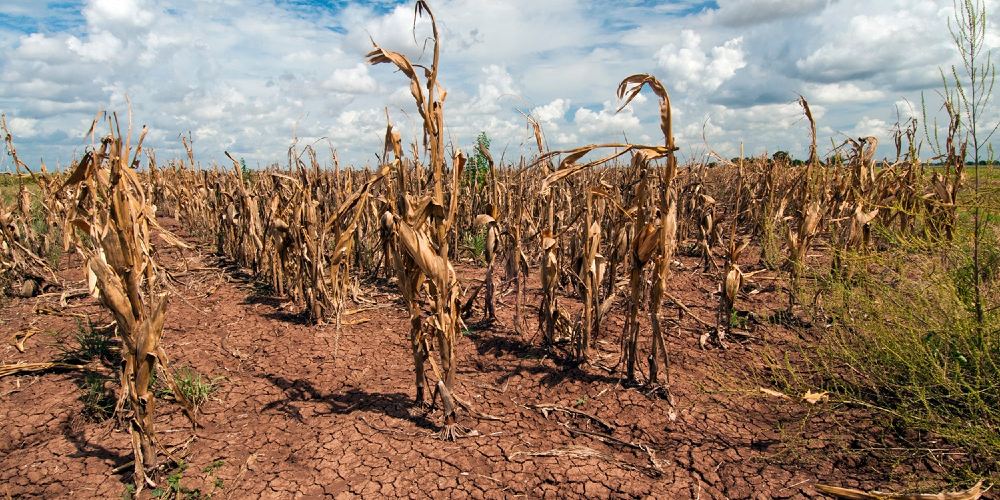
STORY AT-A-GLANCE
- It’s becoming increasingly clear that severe food shortages are going to be inevitable, more or less worldwide, and whatever food is available will continue to go up in price
- The cost of agricultural inputs such as diesel and fertilizers is skyrocketing due to shortages — caused by a combination of intentional and coincidental events — and those costs will be reflected in consumer food prices come fall and next year
- Mysterious fires, alleged bird flu outbreaks and other inexplicable events are killing off livestock and destroying crucial infrastructure. Since the end of April 2021, at least 96 farms, food processing plants and food distribution centers across the U.S. have been damaged or destroyed
- The global food price index had risen 58.5% above the 2014-2016 average as of April 2022, due to a convergence of post-pandemic global demand, extreme weather, tightening food stocks, high energy prices, supply chain bottlenecks, export restrictions, taxes and the Russia-Ukraine conflict
- Combined, all of these factors set us up for guaranteed food shortages, food inflation and, potentially, famine in some places, so now is the time to prepare
Two years ago in May 2020, I predicted the COVID-19 pandemic would be followed by famine, thanks to the intentional shutdown of businesses and global supply lines.1
Depending on where you live, you’re now starting to see shortages to a greater or lesser degree. But regardless of how things appear right now, expect changes, potentially drastic ones, over the coming months and into 2023, because that’s when the diminished yields from this current growing season will become apparent.
With each passing week, it’s becoming increasingly clear that severe food shortages are going to be inevitable, more or less worldwide, and whatever food is available will continue to go up in price.
The cost of agricultural inputs such as diesel and fertilizers is skyrocketing due to shortages — caused by a combination of intentional and coincidental events — and those costs will be reflected in consumer food prices come fall and next year.
On top of that, mysterious fires, alleged bird flu outbreaks and other inexplicable events are killing off livestock and destroying crucial infrastructure. Since the end of April 2021, at least 96 farms, food processing plants and food distribution centers across the U.S. have been damaged or destroyed by fire (see below).2,3
An estimated 10,000 cattle also perished in Ulysses, Kansas, in mid-June 2022,4 under mysterious circumstances. The official claim is that the cattle died from heat stress, but that seems highly unlikely. Heat could conceivably kill some weaker cattle, but 10,000 on the same day?
Recorded temperatures were said to be around 100 degrees Fahrenheit at the time of the loss,5 but other states have also had 100-degree temperatures, with no recorded cattle deaths.
Combined, all of these factors set us up for guaranteed food shortages, food inflation and, potentially, famine in some places. If you’re still sitting on the fence, I would urge you to get off it and begin preparations. Those who fail to prepare are likely to find themselves in an incredibly difficult situation this fall and next year. Don’t let that be you.
How Bad Is It?
In May 2022, a number of experts started speaking out about the inevitability of coming food shortages. The United Nations Secretary-General António Guterres warned of “the specter of a global food shortage in coming months” unless international action is taken,6 and The Economist featured “The Coming Food Catastrophe” on its cover.7
During the 2022 World Economic Forum (WEF) meeting in Davos, Kristalina Georgieva, managing director of the International Monetary Fund, told attendees that “the anxiety about access to food at a reasonable price globally is hitting the roof,”8 and President Biden, in March 2022, told reporters that food shortages are “going to be real.”9
A May 30, 2022, Reuters report10 showed the global food price index had risen 58.5% above the 2014-2016 average as of April 2022, due to a convergence of “post-pandemic global demand, extreme weather, tightening food stocks, high energy prices, supply chain bottlenecks … export restrictions and taxes” combined with Russia’s invasion of Ukraine.
Together, Russia and Ukraine account for as much as 12% of all globally traded calories,11 making the timing of the conflict a particularly perilous one for the world. Not surprisingly, countries that are heavily reliant on imports have seen the steepest food price increases.
In early April 2022, Rockefeller Foundation president Rajiv Shah and Sara Menker, founder of Gro Intelligence, published an op-ed12 in The New York Times blaming “Putin’s war” for the looming food crisis but, clearly, we were already on the path toward global famine long before Putin entered Ukraine.
Weather, for example — whether natural or manufactured — plays an important role. As noted by Shah and Menker, “historic drought” plagues many parts of the world, including the U.S. Midwest, Brazil, Argentina, North Africa, the Middle East13 and India.14 Meanwhile, China’s agricultural lands are drowning under the “heaviest rains in 60 years.”15
How Bad Will It Get?
While it’s difficult to predict just how bad it will get in any given area, it seems safe to say that everyone should prepare for some degree of food shortages, regardless of where you live, as we’re staring at a perfect storm of confounding factors that are global in nature and therefore can cause far-reaching and somewhat unpredictable ripple effects.
As noted by David Wallace-Wells in a June 7, 2022, New York Times op-ed, referring to the price index charts published by Reuters and Shah and Menker:16
“… one thing charts like these do not obviously signal is mass starvation. And yet, according to David Beasley, the former Republican governor of South Carolina who now leads the U.N. World Food Program [WFP], that is what they imply:
[T]he possibility that, as a result of an ongoing food crisis exacerbated by the war in Ukraine, climate change and the continuing effects of the coronavirus pandemic, 323 million people are ‘marching toward starvation’ as we speak, with 49 million ‘literally at famine’s door’ …
[It] is worth keeping in mind that 49 million is not the number facing ‘acute food insecurity,’ to use the W.F.P.’s technical category distinction.
That number is the much higher one: at least 323 million, which is up, Beasley says, from 276 million before the war, 135 million before the pandemic and 80 million when he joined the W.F.P. in 2017 — a fourfold increase in a single leadership term. Forty-nine million is just the number of those at most immediate risk of death.
Before the war, ‘I was already warning the world that 2022 and 2023 could be the worst two years in the humanitarian world since World War II,’ Beasley says, speaking with me from Rome on last Friday.
‘I’m trying to tell everybody how bad it is — how bad it’s going to be. And then, the next week, I’m like, you know, wipe that clean — it’s worse than what I was saying’ … Beasley believes that 2023 could take a still darker turn.
This year’s price crisis could be succeeded by a genuine supply crisis, in which food is pushed out of reach for many millions not just by price but by ongoing structural conditions (including the failure to plant next year’s harvest in Ukraine and the surge in the price of fertilizer, which can be one-third or more of farmers’ total annual cost), and the world could experience the once-unthinkable: a true shortfall of food.”
According to Menker, the current problem is “not cyclical” but rather “seismic” — “It’s not a moment in time that’s going to pass.”17 Wallace-Wells writes:18
“She cites a longer list of causes, including not just the demand shocks caused by the pandemic and related supply-chain issues but ‘a record number of supply shocks’ that are ‘all climate related,’ such as the rebound of China’s pig population from swine flu and the resulting increase in demand for feed, the problem of public debt in poor countries, the spillover effect of the price of one commodity driving up another and that driving up a third, and so on.
‘Any one of those issues on their own would be considered a big market event. But when you have five of them happening at the same time, that’s what makes it seismic,’ she says.
Russia and Ukraine’s transformation into ‘bread baskets of the world’ was ‘the agricultural miracle of the last sort of 30 years,’ she says, invalidating cataclysmic predictions made by people like Paul Ehrlich and the Club of Rome.
To take that supply off the market — ‘it’s not an inconsequential fuel to the fire,’ she says. As for the ultimate scale of the impact? ‘I think it’s going to be as big as we make it.'”
Globalization Is a Failed Model
That said, Wallace-Wells points out that agricultural economists appear somewhat more optimistic, as “most food is consumed domestically, not traded on international markets.” So, in many areas, there may be substitutes available for shortages.
According to agricultural economists, “at baseline, there is no true global food shortage, only that unassuming-sounding ‘price crisis,'” Wallace-Wells says,19 and price problems are fixable. It can take time, however, that many won’t have. Personally, I’m not so sure relying on agricultural economists’ optimism is a good idea.
Even though a lot of food is produced and consumed locally, farmers everywhere are struggling with soaring overhead and shortages of required inputs. And, if local farmers can’t grow food because of it, there won’t be any substitutes available when imports lag.
As by Daniel Greenfield with the Gatestone Institute International Policy Council notes, globalization has left the United States extremely vulnerable, as globalization “globalizes the ineptitude of the global order”:20
“Globalization advocates … just recreated Marxist central planning with a somewhat more flexible global model in which massive corporations bridged global barriers to create the most efficient possible means of moving goods and services around the planet …
What an interdependent world really means is Algerian Jihadists shooting up Paris, gang members from El Salvador beheading Americans within sight of Washington D.C., tampon and car shortages caused by a war in Ukraine …
The technocratic new world order of megacorporations consolidating markets and then doling out products with just-in-time inventory systems now flows through a broken supply chain. Rising inflation and international disruptions makes it all but impossible for even the big companies to plan ahead, and so they produce less and shrug at the shortages.
We’re in a wartime economy because our system has become too vast and too inflexible to adjust to chaos. Biden keeps trotting out the Defense Production Act for everything until, given time, the entire economy has been Sovietized. The more that the government tries to impose stability on the chaos, the less responsive and productive the dominant players become.
Market consolidation due to government regulations has left a handful of companies sitting atop the market. When one of them, like Abbott for baby formula, has a hiccup, the results are catastrophic …
Behind all the brands on the product shelves is a creaky Soviet system in which a handful of massive enterprises interconnected with the state lazily crank out low-quality products from vast supply chains that they no longer control and feel little competitive pressure to perform better …
Under stress, the failure points are all too obvious, and what is less obvious is that the system has no intention of repairing any of them … An out-of-touch elite responds to problems with meaningless reassurances, glib jokes and wokeness. Like Soviet propaganda, the only thing corporate statements communicate is the vast distance between the lives of those running the system and those caught inside its gears …
Biden and the Democrats have been eager to blame companies for ‘profiteering’ from the inflation created by federal spending … The Democrats were the biggest champions of globalization. Their regulations led to record market consolidation and domestic job cuts.
Corporations were pressured to export dirty Republican jobs to China and keep the ‘clean’ Democrat office jobs at home. The devastation wreaked havoc on the working class and the middle class, and rebuilt our entire economy to be dependent on China and a worldwide supply chain only globalists could believe was bulletproof … After selling off American economic sovereignty, globalists proved unable to maintain global stability.”
Don’t Panic. Prepare
While the prognosis is grim, panic is not the appropriate response. Taking clear-headed action to get prepared would be far better. Once you’ve shored up some basic supplies and backups, you’ll feel more at ease, knowing you’re prepared to handle whatever crises crop up next.
As for how to prepare and what to stock up on, that’s going to depend on your individual situation, location and financial means. A person living in the country surrounded by farmers and clean, freshwater brooks is facing a very different situation from someone living in a concrete jungle.
So, assess your surroundings and personal situation. Then, go through and determine how you can solve some of your most pressing needs, such as:
•Securing a potable water source and the means to purify less-than-ideal water sources — Examples include stocking up on water purification tablets or drops, and/or independent water filtration systems such as Berkey that can filter out pathogens and other impurities (meaning a filtration system that is not tied to the tap in your home, in case pumps go down and you have no tap water).

Even a small survival water filtration system is better than nothing, as drinking contaminated water can result in serious illness and/or death. Having a rain barrel connected to your gutter downspout is a good idea. You can use it to water your garden, and in a worst-case scenario, you have a source of fresh water to drink, cook and take sponge baths in.
•Buy shelf-stable and nonperishable foods in bulk — Freeze dried foods, for example, have a shelf life of 25 years or more. Canned foods and dry staples such as rice and beans can also stay viable long past their expiration date under the right conditions.
Other good options include canned salmon, canned cod livers, sardines in water (avoid ones preserved in vegetable oil), nuts, powdered milk and whey and other nutritional powders you can mix with water.
Ideally, you’ll want to store food in a cool, dark place with low humidity. Bulk packs of rice and beans are best stored in a sealed food-grade bucket with some oxygen absorbers. Vacuum sealing food can also extend shelf life.
•Energy backups — To prepare for eventual energy shortages, brownouts, rolling blackouts or a complete shutdown of the power grid, consider one or more power backups, such as gas-powered generators and/or solar generator kits such as Jackery or Inergy. Having backup power can prevent the loss of hundreds of dollars worth of food if your home loses electricity for more than a couple of days.
Scale up and diversify according to what you can afford. Ideally, you’d want more than one system. If all you have is a gas-powered generator, what will you do if there’s a gas shortage and/or if the price skyrockets into double digits? On the other hand, what will you do if the weather is too overcast to recharge your solar battery?
•Cooking backups — You also need some way to cook water and food during a blackout. Here, options include (but are not limited to) solar cookers, which require neither electricity nor fire, small rocket stoves, propane-powered camping stoves and 12-volt pots and pans that you can plug into a backup battery.
•Start a garden and learn some basic skills — The more food you can produce at home, the better off you’ll be. At bare minimum, stock up on sprouting seeds and grow some sprouts. They’re little powerhouses when it comes to nutrition, they’re easy to grow and are ready to eat in days rather than months.
If you have the space, consider starting a garden, and if local regulations allow, you can add chickens for a steady supply of eggs. (Just remember that they too may need additional feed.)
Also, start learning some basic food storage skills such as canning and pickling. While it can feel intimidating at first, it’s really not that difficult. For example, raw, unwashed, homegrown eggs can be preserved in lime water — 1 ounce of lime (calcium hydroxide, aka “pickling lime”) to 1 quart of water — thereby extending their shelf life to about two years without refrigeration.21
The lime water basically seals the eggs to prevent them from spoiling. Before using the eggs, be sure to wash the lime off. This does not work with commercial eggs, however, as the protective coating, called “bloom,” is stripped off during washing.
Fermented vegetables are also easy to make and will allow you to store the proceeds from your garden for long periods of time. For inspiration, check out my fermented veggie recipe. In the video below, I explain the benefits of using starter culture and kinetic culture jar lids. They’re not a necessity, but will cut the odor released as the veggies ferment.
Expect Drastic Changes
Remember, The Great Reset includes the recreation of the global food system. That’s why we can be so sure that none of the current problems will be effectively addressed or counteracted.
They intend for the current food system to fall apart, so they can then “solve” the problem by introducing a new system based on patented lab-grown synthetic and genetically engineered foods, along with digital identity, carbon footprint tracking and a programmable centralized digital currency to track not only what you eat but also everything else you do.
The end game is total control of the global population, and this will require the destruction and dismantling of current systems, including the food system. The only way out of this intentional chaos is to become more self-sufficient and create alternative parallel systems locally, outside of the globalists control.
- 1 New York Times April 22, 2020 (Archived)
- 2 Think Americana June 16, 2022
- 3 Pro Deo et Libartate Substack June 11, 2022
- 4, 5 Progressive Farmer June 14, 2022
- 6, 8 NPR May 23, 2022
- 7 The Economist May 19, 2022
- 9 Farm Policy News March 25, 2022
- 10 Reuters May 30, 2022 (Archived)
- 11, 16, 17, 18, 19 New York Times June 7, 2022 (Archived)
- 12, 13 New York Times April 5, 2022 (Archived)
- 14 Down To Earth May 11, 2022
- 15 CNN June 21, 2022
- 20 Gatestone Institute International Policy Council June 20, 2022
- 21 Twitter Pissed off Panda June 12, 2022

Two Storms, One Harvest

Every food crisis in living memory has been a one-shock event. The 2008 price spike was a commodity bubble. The 2020 shortages were a logistics failure. The 2022 grain scare was a war on one exporter’s ports. Each time, the system bent, adjusted, and recovered, and each time the experts assured us afterward that global markets are simply too big and too diversified to fail.
What nobody in Washington seems eager to discuss is that 2026 is shaping up to be something the modern food system has never actually faced. Two independent shocks, one climatic and one geopolitical, are converging on the same harvest cycle at the same time. Not sequentially. Simultaneously.
Start with the weather. The Pacific Ocean is currently building toward what forecasters now openly call a record event. NOAA’s Climate Prediction Center puts the odds of at least a strong El Niño near 88 percent, with roughly two in three odds it reaches “very strong” status, the tier reserved for perhaps three or four events in the entire satellite era. Every major global model now projects a median peak in Super El Niño territory, and most of them project it exceeding the 2015-16 event, which until now held the modern record. Sea surface anomalies were already brushing the super threshold in mid-July, months before these events normally peak. The atmosphere has already shifted into El Niño mode, and the event is forecast to crest in late fall and early winter.
This is not about “climate change.” It’s about the standard cycles of weather, and the cycle we’re currently in is one that has likely devastated societies in the past. We’re better prepared as a society today, but not all Americans are equally prepared.
Serious households have started doing the quiet math on their own. Grocery bills tell part of the story, and the forecast maps tell the rest, which is why long-term food storage has moved from fringe hobby to mainstream line item in the family budget, with established suppliers like Heaven’s Harvest seeing demand from people who five years ago would have rolled their eyes at the idea. That instinct is not paranoia. It is pattern recognition, and the pattern is worth walking through carefully.
Editor’s Note: Heaven’s Harvest IS a sponsor, but the warnings of this article are real and would be written even if we didn’t have a survival food sponsor. With that said, those who take advantage of what they offer can use promo code “Patriot” for 15% off.
The Fertilizer Clock Is Already Running
While the Pacific warms, the second shock has been unfolding in the Strait of Hormuz. The conflict with Iran turned the world’s most important energy chokepoint into a contested waterway, and the consequences reach far beyond the gas pump. Roughly a third of global fertilizer trade moves through Hormuz, and the disruption sent urea prices up 86 percent year over year by March, with a 53 percent jump in a single month.
The World Bank projects energy prices rising about 24 percent in 2026 and fertilizer about 31 percent. By its own accounting, fertilizer prices ran 35 percent higher in the first five months of this year than the same period last year.
Here is the mechanism the nightly news will not explain. Fertilizer is not a grocery item. It is a time-delayed input. The nitrogen a farmer in Iowa or Punjab could not afford to apply this spring does not show up as a problem this spring. It shows up as a thinner harvest six to twelve months later.
The World Bank’s own food security brief concedes that the effects of reduced applications earlier this season “are likely to become visible only later in harvest outcomes.” Translate that from institutional language into plain English and it means this. The damage is already done, it is already in the ground, and we are simply waiting for it to arrive on the shelf.
Now check the calendar. Six to twelve months from the spring planting season lands us squarely in late 2026 and early 2027. Which is precisely when the strongest El Niño in the instrumental record is forecast to peak, bringing its signature droughts to Southeast Asia, Australia, southern Africa, northern Brazil, and South Asia, the very regions that grow the world’s rice, sugar, and oilseeds.
The World Bank warns openly that a strong El Niño “could disrupt multiple crop belts simultaneously” on top of the conflict-driven input costs. Their baseline projection assumes the Middle East disruptions ease by autumn. What in the last two years of Middle East history suggests that assumption is safe?
The System Has No Slack Left
The comfortable answer is that global markets always adjust. But adjustment requires slack, and the slack is gone. Global cereal production is expected to decline from last year’s records even before El Niño does its work. The UN World Food Programme, hardly a den of right-wing preppers, is calling this the most significant disruption to its supply chains since Covid and the invasion of Ukraine, and its supply chain director put the stakes bluntly.
Today’s supply chain challenges are tomorrow’s hunger crisis.
There is also a political dimension that markets cannot price. When food gets scarce, governments do not behave like economists. They behave like politicians. Export bans, hoarding mandates, and panic buying at the national level turned the modest rice shortfall of 2008 into a global crisis, and analysts are already warning that import-dependent nations are the first dominoes.
The 2015-16 Super El Niño, a far weaker event than what is now forecast, threw tens of millions into food stress across Africa and Asia. This one is projected to be stronger, and it arrives with fertilizer already rationed by price and shipping lanes already contested by missiles.
What Joseph Knew
Scripture does not treat preparation for lean years as faithlessness. It treats it as wisdom delivered in advance to those willing to act on it.
Behold, there come seven years of great plenty throughout all the land of Egypt: And there shall arise after them seven years of famine; and all the plenty shall be forgotten in the land of Egypt.
Joseph did not respond to that warning with a hashtag or a committee. He stored grain during the years of abundance, and when the famine came, Egypt stood while its neighbors begged. The lesson is not that famine is certain. It is that the time to prepare is precisely when preparation still looks optional.
Nobody who filled a pantry in a year of plenty has ever regretted it, and nobody standing in an empty aisle has ever been glad he waited for certainty.
None of this calls for panic, and panic is the enemy of sound judgment anyway. It calls for the same unglamorous prudence our grandparents considered ordinary. Keep some cash margin, know your local growers, and put real food in deep storage while it is cheap and available, because the entire arc of this story is that cheap and available is a closing window.
Families looking for a straightforward place to start can visit Heaven’s Harvest and use promo code Patriot for 15 percent off long-term storable food. The forecasts may yet soften, the strait may yet reopen, and we should pray they do. But hope is a fine thing to hold and a foolish thing to eat.

It is called “per plan”.
Why is it so hard to understand that this intentional? They’ve been murdering people with horrible Covid treatment protocols and killer vaccines for two years,