

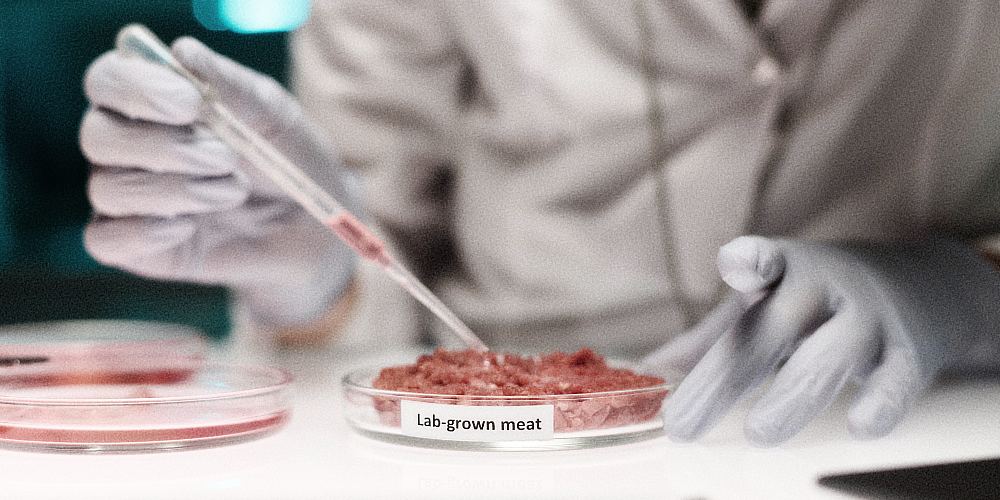
- A Florida federal judge upheld a state ban on lab-grown meat sales, rejecting Upside Foods’ argument that their cultivated chicken should be treated like conventional poultry under federal law
- Research from UC Davis suggests lab-grown meat production is more resource-intensive than traditional beef, requiring substantial energy and water for growth mediums and bioreactor systems
- The production of lab-grown meat faces challenges with endotoxin removal, which can add up to 25 times more environmental impact and requires energy-intensive purification methods
- Lab-grown meat production requires extensive cell replication, raising concerns about cellular dysregulation and health risks, while lacking essential nutrients found in conventional meat
- The court’s decision could encourage other states to pass similar laws restricting lab-grown foods, setting a precedent for regulation of these products across U.S. markets
(Mercola)—In a landmark ruling, the U.S. District Court in the Northern District of Florida upheld a state law banning the sale and distribution of lab-grown or “cultivated” meat.1 This law, enacted by the Florida Legislature, specifically prohibits companies from selling any meat or food product developed from cultured animal cells, like those grown in bioreactors.
The case centered on Upside Foods, a company at the forefront of cultivated meat technology, which argued that its lab-grown chicken should be treated like conventional poultry under federal law. However, under Florida’s new regulations, these products are barred from markets statewide.
For Upside Foods, this means any continued efforts to distribute their products in Florida could result in criminal penalties, civil fines and stop-sale orders. With this ruling, the court’s stance signals support for traditional meat production over cell-cultured alternatives in the Sunshine State.
Upside Foods’ Challenge to State Regulation
Upside Foods petitioned the court for an injunction to stop the ban’s enforcement, claiming that Florida’s restrictions contradicted federal law, namely the Poultry Products Inspection Act (PPIA). They argued that the PPIA gives the U.S. Department of Agriculture (USDA) exclusive authority over poultry inspection and labeling, which should extend to their cultivated chicken products.2
Upside Foods also cited its history of marketing and distributing lab-grown chicken in major markets like Miami, claiming that the Florida ban has hampered its business plans, including partnerships with chefs and local events.
However, during the court hearing, the judge found that Upside Foods failed to show its lab-grown chicken fell under USDA definitions of “poultry” or “poultry products” as intended in federal law, making it unlikely to succeed in its argument that federal law overrides state regulations.
Federal law defines poultry products as any carcass or product made from a bird, but the judge found this definition did not clearly encompass cultivated meats developed from cells instead of whole animals. Without a precise federal standard for cultivated meats, the judge ruled that Florida’s law could stand because it does not directly contradict any federal law regarding poultry.3
In his judgment, Chief Judge Mark E. Walker observed that since the USDA has yet to issue specific standards for cell-based meats, Florida has the authority to regulate these products as it deems appropriate. This ruling suggests that, for now, individual states have discretion in deciding how or whether cultivated meats can enter their markets.
Food Safety, Labeling and Ingredient Standards at Issue
Upside Foods also argued that Florida’s ban imposed inconsistent standards regarding ingredient labeling and food safety. Under the PPIA, only the USDA sets requirements for the labeling and composition of poultry products in the U.S. However, the judge did not find the ban imposed any new ingredient standards that would conflict with federal law, as it outright prohibits lab-grown meat rather than imposing complex labeling requirements.
The court noted that without specific federal guidelines for cultivated meat, there was no basis to conclude that Florida’s ban on the product’s sale created an inconsistent or “additional” ingredient requirement. Therefore, the judge upheld that Florida’s law does not impose conditions in conflict with the PPIA’s inspection and labeling requirements, allowing the state to exclude lab-grown products from shelves without breaching federal regulations.
This case highlights the ongoing debate over whether lab-grown meat will be regulated and accepted across U.S. markets, or if states will continue setting their own standards for such products. The court’s decision sets a precedent that could embolden other states to pass similar laws restricting lab-grown foods.
“We are not surprised by the judge’s rejection of Upside’s preliminary injunction,” Florida Sen. Jay Collins told Children’s Health Defense. “The dangers of cultivated meat far outweigh any misleading environmental claims. Floridians will not be lectured by billionaires like Bill Gates on how to feed their families.”4
High Environmental Costs of Cultured Meat Production
While lab-grown meat is often hailed as a sustainable alternative, research reveals its significant environmental footprint. A recent life cycle assessment (LCA) from the University of California, Davis, examined the “cradle-to-gate” environmental impacts of animal cell-based meat (ACBM).5
The findings suggest that cultivating lab-grown meat is more resource-intensive than traditional beef production. Specifically, cultured meat production requires substantial energy and water for creating growth mediums, refining cell-culture components and managing bioreactor systems.
The process also involves high greenhouse gas emissions and fossil fuel depletion. When growth medium purification is factored in — a necessity for safe production — the carbon emissions for cultivated meat rise dramatically, in some cases exceeding conventional beef’s emissions.6 The environmental burden of fake meat, therefore, may be higher than previously estimated, challenging the assumption that lab-grown meat is inherently eco-friendly.
Another major challenge in cultured meat production is the removal of endotoxins, toxic byproducts from bacterial contaminants. Endotoxins pose risks to cell health, and their presence in animal cell cultures requires purification methods that are both energy-intensive and costly.
The study highlighted that removing endotoxins from growth media could add up to 25 times more environmental impact than baseline levels.7 For example, purifying the medium for cultured meat production to meet food-grade standards consumes significant energy, exacerbating the production’s carbon footprint.
Current methods for endotoxin removal rely on advanced chemical processes, which drive up both resource use and emissions. This means the environmental toll from cultured meat production offsets its perceived sustainability benefits.
Dependence on Highly Refined Growth Mediums
Lab-grown meat relies on specific nutrients, proteins and vitamins to grow cells effectively in bioreactors. These refined components are typically sourced from animal byproducts like fetal bovine serum (FBS), which poses ethical and environmental issues. While alternatives to FBS are being explored, they still require a high degree of refinement to ensure cell safety.
Purifying these materials introduces significant environmental and financial costs, given the energy and resources needed to prevent contamination. The Davis study modeled scenarios involving refined mediums, finding that production of 1 kilogram of ACBM could demand over 1,000 liters of growth medium, depending on purity needs.8
This substantial input places further strain on the environment, countering claims that cultured meat is a low-impact alternative to livestock. Further, for lab-grown meat to become a staple, the industry must scale production, which would require extensive new infrastructure and energy investment.
The Davis study estimates that an industrial-scale lab-grown meat facility would demand nearly 10 million liters of bioreactor capacity.9 This massive infrastructure expansion would require high energy inputs and specialized facilities, which further add to its environmental costs.
Meeting production demands would also necessitate scaling the supply of growth medium components, intensifying the environmental load. Additionally, maintaining clean rooms and running bioreactors on a continuous cycle for mass production would multiply these energy requirements.
Lab-Grown Meat Poses Health Risks from Cellular Dysregulation
Lab-grown meat faces health risks linked to the process of cell culture. Culturing cells for meat requires extensive replication and division, raising the possibility of cellular dysregulation, a condition observed in cancer cells. Such uncontrolled cellular changes could alter the structure or nutritional properties of the meat, with unknown implications for human health.10
While production facilities may eliminate abnormal cell lines, the rapid, repeated cell divisions needed to create lab-grown meat introduce variability and the risk of unexpected biological behaviors. These concerns remain largely unexplored, as studies have yet to fully examine the health impact of long-term consumption of lab-grown meat.
Cultured meat’s nutritional profile may also lack the diversity and quality found in conventional meat. Lab-grown meat production allows some control over fat content but fails to naturally provide essential micronutrients like vitamin B12 and iron, both vital for human health.

Attempts to artificially enrich cultured meat with these nutrients risk compromising the natural matrix that enhances nutrient bioavailability in traditional meat. Moreover, studies suggest that the growth medium’s composition could inadvertently inhibit the absorption of certain micronutrients.11 In other words, lab-grown meat could end up offering a nutritionally inferior product, lacking in essential compounds typically provided through whole animal sources.
Additionally, ethical debates persist. While lab-grown meat may use fewer animals, it still relies on animal-derived cells, negating its “cruelty-free” narrative. For consumers who value real, whole foods, lab-grown meat’s engineered origins are far from natural.
Fake Meat Is an Ultraprocessed Food Product
Fake meats are not primarily about health or environmental benefits; instead, they’re a means to phase out traditional farming and replace it with ultraprocessed, patent-controlled food products. If government and corporate entities gain control over food production through lab-grown options, they ultimately gain more control over the people.
Further, lab-grown meat products are examples of highly processed foods that come with a range of significant health risks. These ultraprocessed foods (UPFs) are a disaster for your health, even if they’re “animal-free” or “plant-based.”
A study using data from the UK Biobank analyzed the cardiovascular impacts of UPFs within plant-based diets, showing that a 10% increase in plant-based UPFs raised cardiovascular disease (CVD) risk by 5% and increased CVD mortality risk by 12%.12
Conversely, every 10% increase in consumption of minimally processed, plant-based foods was associated with a 7% reduction in CVD risk and a 13% reduction in CVD mortality. These findings suggest that the degree of food processing — rather than simply whether a food is plant-based — plays a key role in health outcomes.
Despite the growing popularity of plant-based meat alternatives, the evidence warns that their ultraprocessed nature undermines any perceived health benefits. These findings bring attention to the risks associated with other highly processed alternatives, such as lab-grown meat, which involves extensive processing methods similar to UPFs.
A Step Toward Consumer Protection Against Experimental, Ultraprocessed Foods
Florida’s ruling sets an important precedent in safeguarding consumers from the risks associated with lab-grown meats. From unknown health impacts to high environmental costs, these ultraprocessed products carry serious concerns that traditional food systems do not.
This decision stands as a critical move toward ensuring food safety, transparency and public health. By maintaining standards that favor traditional food sources, this ruling moves us closer to safeguarding the food supply against lab-grown products that remain more hype than health.
- 1, 2, 3 Upside Foods V. Wilton Simpson October 11, 2024
- 4 Children’s Health Defense, The Defender October 23, 2024
- 5, 6, 7, 8, 9 bioRxiv April 21, 2023
- 10, 11 Front. Nutr., February 6, 2020, Sec. Nutrition and Food Science Technology, Volume 7 – 2020
- 12 The Lancet Regional Health Europe August 2024, Volume 43, 100948

Two Storms, One Harvest

Every food crisis in living memory has been a one-shock event. The 2008 price spike was a commodity bubble. The 2020 shortages were a logistics failure. The 2022 grain scare was a war on one exporter’s ports. Each time, the system bent, adjusted, and recovered, and each time the experts assured us afterward that global markets are simply too big and too diversified to fail.
What nobody in Washington seems eager to discuss is that 2026 is shaping up to be something the modern food system has never actually faced. Two independent shocks, one climatic and one geopolitical, are converging on the same harvest cycle at the same time. Not sequentially. Simultaneously.
Start with the weather. The Pacific Ocean is currently building toward what forecasters now openly call a record event. NOAA’s Climate Prediction Center puts the odds of at least a strong El Niño near 88 percent, with roughly two in three odds it reaches “very strong” status, the tier reserved for perhaps three or four events in the entire satellite era. Every major global model now projects a median peak in Super El Niño territory, and most of them project it exceeding the 2015-16 event, which until now held the modern record. Sea surface anomalies were already brushing the super threshold in mid-July, months before these events normally peak. The atmosphere has already shifted into El Niño mode, and the event is forecast to crest in late fall and early winter.
This is not about “climate change.” It’s about the standard cycles of weather, and the cycle we’re currently in is one that has likely devastated societies in the past. We’re better prepared as a society today, but not all Americans are equally prepared.
Serious households have started doing the quiet math on their own. Grocery bills tell part of the story, and the forecast maps tell the rest, which is why long-term food storage has moved from fringe hobby to mainstream line item in the family budget, with established suppliers like Heaven’s Harvest seeing demand from people who five years ago would have rolled their eyes at the idea. That instinct is not paranoia. It is pattern recognition, and the pattern is worth walking through carefully.
Editor’s Note: Heaven’s Harvest IS a sponsor, but the warnings of this article are real and would be written even if we didn’t have a survival food sponsor. With that said, those who take advantage of what they offer can use promo code “Patriot” for 15% off.
The Fertilizer Clock Is Already Running
While the Pacific warms, the second shock has been unfolding in the Strait of Hormuz. The conflict with Iran turned the world’s most important energy chokepoint into a contested waterway, and the consequences reach far beyond the gas pump. Roughly a third of global fertilizer trade moves through Hormuz, and the disruption sent urea prices up 86 percent year over year by March, with a 53 percent jump in a single month.
The World Bank projects energy prices rising about 24 percent in 2026 and fertilizer about 31 percent. By its own accounting, fertilizer prices ran 35 percent higher in the first five months of this year than the same period last year.
Here is the mechanism the nightly news will not explain. Fertilizer is not a grocery item. It is a time-delayed input. The nitrogen a farmer in Iowa or Punjab could not afford to apply this spring does not show up as a problem this spring. It shows up as a thinner harvest six to twelve months later.
The World Bank’s own food security brief concedes that the effects of reduced applications earlier this season “are likely to become visible only later in harvest outcomes.” Translate that from institutional language into plain English and it means this. The damage is already done, it is already in the ground, and we are simply waiting for it to arrive on the shelf.
Now check the calendar. Six to twelve months from the spring planting season lands us squarely in late 2026 and early 2027. Which is precisely when the strongest El Niño in the instrumental record is forecast to peak, bringing its signature droughts to Southeast Asia, Australia, southern Africa, northern Brazil, and South Asia, the very regions that grow the world’s rice, sugar, and oilseeds.
The World Bank warns openly that a strong El Niño “could disrupt multiple crop belts simultaneously” on top of the conflict-driven input costs. Their baseline projection assumes the Middle East disruptions ease by autumn. What in the last two years of Middle East history suggests that assumption is safe?
The System Has No Slack Left
The comfortable answer is that global markets always adjust. But adjustment requires slack, and the slack is gone. Global cereal production is expected to decline from last year’s records even before El Niño does its work. The UN World Food Programme, hardly a den of right-wing preppers, is calling this the most significant disruption to its supply chains since Covid and the invasion of Ukraine, and its supply chain director put the stakes bluntly.
Today’s supply chain challenges are tomorrow’s hunger crisis.
There is also a political dimension that markets cannot price. When food gets scarce, governments do not behave like economists. They behave like politicians. Export bans, hoarding mandates, and panic buying at the national level turned the modest rice shortfall of 2008 into a global crisis, and analysts are already warning that import-dependent nations are the first dominoes.
The 2015-16 Super El Niño, a far weaker event than what is now forecast, threw tens of millions into food stress across Africa and Asia. This one is projected to be stronger, and it arrives with fertilizer already rationed by price and shipping lanes already contested by missiles.
What Joseph Knew
Scripture does not treat preparation for lean years as faithlessness. It treats it as wisdom delivered in advance to those willing to act on it.
Behold, there come seven years of great plenty throughout all the land of Egypt: And there shall arise after them seven years of famine; and all the plenty shall be forgotten in the land of Egypt.
Joseph did not respond to that warning with a hashtag or a committee. He stored grain during the years of abundance, and when the famine came, Egypt stood while its neighbors begged. The lesson is not that famine is certain. It is that the time to prepare is precisely when preparation still looks optional.
Nobody who filled a pantry in a year of plenty has ever regretted it, and nobody standing in an empty aisle has ever been glad he waited for certainty.
None of this calls for panic, and panic is the enemy of sound judgment anyway. It calls for the same unglamorous prudence our grandparents considered ordinary. Keep some cash margin, know your local growers, and put real food in deep storage while it is cheap and available, because the entire arc of this story is that cheap and available is a closing window.
Families looking for a straightforward place to start can visit Heaven’s Harvest and use promo code Patriot for 15 percent off long-term storable food. The forecasts may yet soften, the strait may yet reopen, and we should pray they do. But hope is a fine thing to hold and a foolish thing to eat.
