

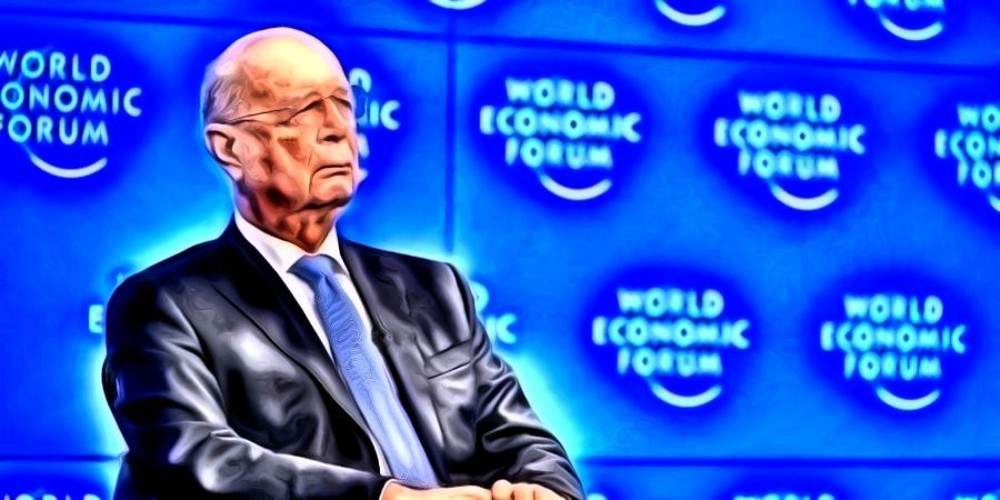
• No matter how noble its stated intentions, the “Great Reset” is at its heart a program for driving political power away from individual citizens and toward the controlling interests of a small international class of financial elites…. For citizens to reclaim power, they must not only embrace the basics of free markets once again but also rekindle a fondness for questioning the motivations of political authorities.
• It is not just kings, generals, and popes who possess great power. Wherever a person, group, or institution is capable — through enticement, coercion, or brute force — of bending an individual’s free will, the structures and instruments of power exist. A local school board, after all, may well have more immediate and intimate influences over a person’s family than the United Nations Human Rights Council and its revolving door of despots who tend to promulgate international resolutions shielding their own crimes.
• Limited regulation keeps the costs of market transactions low. Respect for private property and fair and impartial application of commercial laws encourage capital investment. Refraining from taxing the fruits of an individual’s labor fosters an exponentially more productive labor force. Providing populations with the tools to pursue and obtain knowledge and skills at minimal expense promotes not only an educated workforce but also politically competent citizens.
• The small number of multinational corporations that control most television and print news sources around the globe also control the sociological levers capable of manufacturing or shifting public opinion. Power in any form — political, economic, cultural, spiritual… must always be guarded against as a potential foe.
• “The welfare of the people has always been the alibi of tyrants….” — Albert Camus, Resistance, Rebellion and Death.
• The great mass murderers of the twentieth century attest to this truth. Lenin, Stalin, Hitler, Pol Pot, and Mao killed tens of millions, but they did so, they assured the world, not for their own glory but for the benefit of “the people.”
• It is no secret that money influences politics, no matter how profusely politicians may assert their civic independence from the lobbyists and benefactors filling their campaign war chests.
• Tens of thousands of laws, rules, and regulations make it nearly impossible for any entrepreneur to navigate markets without inadvertently committing infractions or becoming a future target of an ever-growing army of regulatory code enforcers. Citizens are taxed on their wages, incomes, purchases, property, investments, improvements, sales, etc., and should they still possess anything of worth upon their ultimate demise, some agent of the State is likely to take one final cut of their bequeathed estates. The same unit of labor is thus taxed repeatedly along the government’s conveyor belt of confiscation.
• Notably, today’s plutocrats have little interest in truly free markets…. The World Economic Forum, for instance, demands governments take urgent action to combat or address climate change, cybersecurity, online misinformation, artificial intelligence, overpopulation, the use of hydrocarbon energy, farm ownership, food supplies, the elimination of private vehicle ownership, and the imposition of citizen control protocols to defend against future pandemics. Regulation of people and markets is now of paramount importance to those with wealth and power.
• When the uber-elite successfully influence politicians to enact laws that benefit their personal financial interests — a corrupt practice known as “regulatory capture” — they distort the normal dynamics of any free market. When governments mandate more expensive forms of “clean” energy across the market, for instance, wealthy corporations capable of enduring these added costs reap the ancillary benefits of gobbling up the market share abandoned by smaller competitors unable to survive. This is by design.
• This fusion between monied interests and government power has created a type of reverse fascism. Instead of some charismatic political leader in the mold of a Benito Mussolini demanding that titans of industry follow his commands for the benefit of the State and in the interests of the people, a new class of plutocrats now steer the direction of national policies and pay the politicians to make sure the people will comply.
• When market competition is permitted to grow wealth in perpetuity, however, not only does a growing share of the population increase its wealth, but also political power becomes spread out more diffusely. When the “rising tide” of free markets is allowed to “lift all boats,” neither the plutocrat nor communist politburo holds as much sway. For this reason, both communists and plutocrats share a similar goal — minimizing the prosperity of the majority of citizens, while maximizing the political power of a small minority of government officials. Under communism, this type of power arrangement takes the form of an oligarchy, or rule by a small few. Under the World Economic Forum’s brand of oligarchy where the West’s wealthiest manipulate centrally-controlled governments, the result is demonstrably plutocratic.
• When corporate behemoths adeptly forestall their own impending financial deaths through political influence and regulatory capture, however, they cheat the markets at the larger public’s expense.
• For individual liberty to flourish, competing forces must always counterbalance concentrated power in any form. When economic monopoly is used to create plutocratic control over government policy, then it becomes imperative for society to unleash the full potential of market forces to destroy protracted power and wealth and encourage more widespread prosperity.
• Cheap and abundant energy sources reduce the entry costs of building a business. Minimal taxation that seeks neither to confiscate wealth nor to punish successful innovation produces an endless supply of creative talents and energies. Limited regulation keeps the costs of market transactions low. Respect for private property and fair and impartial application of commercial laws encourage capital investment. Refraining from taxing the fruits of an individual’s labor fosters an exponentially more productive labor force. Providing populations with the tools to pursue and obtain knowledge and skills at minimal expense promotes not only an educated workforce but also politically competent citizens.
• Math, science, history, and philosophy have been watered-down to make room for ideological fluff often meant to divide students against each other. The combined and natural effect of all this government-sponsored malfeasance has been that intergenerational social mobility in the United States, once impressively robust, has absolutely plummeted.
• Who benefits when the most basic foundations for creating prosperity are denied to the majority of citizens? Well, those in power benefit because, by rigging the system in their favor and institutionalizing destructive habits, very few people who might challenge their dominion ever rise high enough to do so. The plutocracy wins. The insular and selfish cabal of wealthy elites who populate the World Economic Forum ultimately win. The vast majority of Western citizens, however, lose substantially… over and over again.
A previous essay highlighted the serious threats posed by the World Economic Forum’s “Great Reset” to individual liberty, human innovation, and general prosperity. It is important to expand discussion of these threats by examining the inherent dangers to free nations when so much wealth is concentrated in the hands of so few.
No matter how noble its stated intentions, the “Great Reset” is at its heart a program for driving political power away from individual citizens and toward the controlling interests of a small international class of financial elites. This shift in society’s balance of power has fundamentally changed the relationship between Western citizens and their national governments. For citizens to reclaim power, they must not only embrace the basics of free markets once again but also rekindle a fondness for questioning the motivations of political authorities.
Of all Lord Acton’s persuasive defenses of individual liberty as the highest end of human civilization, one observation remains most memorable: “Power tends to corrupt and absolute power corrupts absolutely.” As well-known as these words are, the universality of their meaning is often ignored. It is not just kings, generals, and popes who possess great power. Wherever a person, group, or institution is capable — through enticement, coercion, or brute force — of bending an individual’s free will, the structures and instruments of power exist. A local school board, after all, may well have more immediate and intimate influences over a person’s family than the United Nations Human Rights Council and its revolving door of despots who tend to promulgate international resolutions shielding their own crimes. A wealthy landowner who exerts hefty influence over agricultural or cattle markets influences the pocketbook fortunes of more modest farmers, too. The small number of multinational corporations that control most television and print news sources around the globe also control the sociological levers capable of manufacturing or shifting public opinion. Power in any form — political, economic, cultural, spiritual — is an abiding challenge to human liberty, and in this way, must always be guarded against as a potential foe.
It is also true that those with power have little incentive to check what they possess and have every incentive to grow and strengthen the powers already in their grasp. Rare, indeed, is the Cincinnatus or Washington who has gained near total control over a nation state only to relinquish such tremendous authority voluntarily and return with humility to the life of an ordinary farmer. Examples of virtuous self-restraint are historic exceptions to power’s innate tendency to become all the more coveted once obtained. So, too, is it uncommon to find those in possession of raw power who ruthlessly or bombastically proclaim their dominance over others. Instead, people and institutions with power prefer to remain somewhat in the shadows, exercising authority in the name of ideas, causes, or populations beyond themselves.
“The welfare of the people,” Albert Camus succinctly noted, “…has always been the alibi of tyrants.” The great mass murderers of the twentieth century attest to this truth. Lenin, Stalin, Hitler, Pol Pot and Mao killed tens of millions, but they did so, they assured the world, not for their own glory but for the benefit of “the people.” Castro and Guevara executed tens of thousands of political prisoners while absurdly claiming they did so in the name of “freedom.”
“Most of the evil in this world,” T.S. Eliot is said to have coldly warned, “is done by people with good intentions.” So when people or institutions wrap themselves in the garments of “good intentions” and proclaim loudly to be working for “the people’s best interests,” that is precisely the time when individual liberty is most at risk.
Today in the West we are confronted with an uncomfortable paradox. At the same time as national leaders defend vague notions of “democracy” against “authoritarian” threats beyond their borders, power and influence continue to rapidly amalgamate into the hands of a small few. It is no secret that money influences politics, no matter how profusely politicians may assert their civic independence from the lobbyists and benefactors filling their campaign war chests. With organizations such as the World Economic Forum openly working to direct the legislative programs and executive actions of nation states across the globe, however, wealthy patrons of elite economic societies have become increasingly vocal about their ambitions toward remaking the world according to their own “Great Reset” designsת while flexing their political muscles within the domestic affairs of discreet nation states for ordinary citizens to see.
Klaus Schwab, the founder and executive chairman of the World Economic Forum, appeared with David Gergen in 2017 at Harvard’s John F. Kennedy School of Government and openly boasted of his influence over many national leaders:
“I have to say when I mention names like Mrs. Merkel, even Vladimir Putin and so on, they have all been Young Global Leaders of the World Economic Forum, but what we are really proud of now is the young generation like Prime Minister Trudeau, the President of Argentina and so on. So we penetrate the cabinets. So yesterday I was at a reception for Prime Minister Trudeau, and I know that half of his cabinet or even more are Young Global Leaders of the World Economic Forum…. It is true in Argentina and it is true in France now….”

When the chairman of an international economic body publicly brags about his leverage over the leaders of sovereign nation states, he can hardly be mistaken as defending the merits of “democracy.”
In a somewhat farcical display of the World Economic Forum’s control over individual nations, it has become eerily commonplace these last two years to hear the leaders of the United Kingdom, France, Germany, Australia, New Zealand, Canada, and the United States all parroting the same “Build Back Better” slogan propagated by Klaus Schwab’s economic club. With wealth and political power bonded densely into such haut monde cabals, the insular prerogatives of the WEF have succeeded in dominating government policies throughout the West.
Both in their immediate handling of the COVID-19 pandemic and their planned response to the harsh economic repercussions dovetailing from prolonged lockdowns, Western nation states have taken many of their cues directly from the World Economic Forum’s policy edicts. Whatever vestige of “democracy” still casts a shadow across North America, Europe, and the South Pacific, it has become unmistakable that plutocracy — rule by a wealthy elite — is fast assuming total control over the West’s future.
Notably, today’s plutocrats have little interest in truly free markets. Unlike J.D. Rockefeller, Andrew Carnegie, J.P. Morgan, and other late-nineteenth-century industrialists and business magnates who made their fortunes in the heyday of economic growth before the massive expansion of the regulatory State, those with great wealth today often champion government intervention in markets. The World Economic Forum, for instance, demands governments take urgent action to combat or address climate change, cybersecurity, online misinformation, artificial intelligence, overpopulation, the use of hydrocarbon energy, farm ownership, food supplies, the elimination of private vehicle ownership, and the imposition of citizen-control protocols to defend against future pandemics. Regulation of people and markets is now of paramount importance to those with wealth and power.
By their nature, regulations (which are indistinguishable from taxes in this effect) make the cost of doing business more expensive and benefit the deep-pocketed monopoly Goliaths at the expense of any upstart Davids threatening their market positions. When the uber-elite successfully influence politicians to enact laws that benefit their personal financial interests — a corrupt practice known as “regulatory capture” — they distort the normal dynamics of any free market. When governments mandate more expensive forms of “clean” energy across the market, for instance, wealthy corporations capable of enduring these added costs reap the ancillary benefits of gobbling up the market share abandoned by smaller competitors unable to survive. This is by design.
By utilizing law and regulation as a sword and shield to prevent potential competitors from entering the market while expanding monopoly power, plutocrats use political patronage and fashionable policy goals disguising self-interest to maintain their own wealth and control. Climate change, public health, sustainable food supplies — the public policy issue is never anything more than an expedient stalking horse for the wealthiest in the West to use cynically in an effort to maintain economic control.
This fusion between monied interests and government power has created a type of reverse fascism. Instead of some charismatic political leader in the mold of a Benito Mussolini demanding that titans of industry follow his commands for the benefit of the State and in the interests of the people, a new class of plutocrats now steer the direction of national policies and pay the politicians to make sure the people will comply.
Notably, today’s plutocrats take a nearly identical position as traditional communists in asserting that the “economic pie” is only so big and can therefore only be divvied up among a growing population in smaller and smaller portions but never actually enlarged. When economic wealth is seen as finite, preventing others from acquiring personal prosperity is necessary for maintaining political power’s status quo. When market competition is permitted to grow wealth in perpetuity, however, not only does a growing share of the population increase its wealth, but also political power becomes spread out more diffusely.
When the “rising tide” of free markets is allowed to “lift all boats,” neither the plutocrat nor communist politburo holds as much sway. For this reason, both communists and plutocrats share a similar goal — minimizing the prosperity of the majority of citizens, while maximizing the political power of a small minority of government officials. Under communism, this type of power arrangement takes the form of an oligarchy, or rule by a small few. Under the World Economic Forum’s brand of oligarchyת where the West’s wealthiest manipulate centrally-controlled governments, the result is demonstrably plutocratic.
For plutocrats, actual free markets are a threat to their habitual control over political power. When real markets exist, endless human innovation regularly upends the market position of any one firm. Yesterday’s industry leader can go bankrupt fast if today’s upstart inventor designs a better or cheaper competing product. Creative destruction is at the heart of free market growth. When product innovation is understood as the single greatest variable for generating long-term economic success, it is easy to understand how difficult it is to stay ahead of the market for any length of time. Rare is the company that manages to innovate so effectively year after year that it survives for decades or longer.
This is, of course, why so much capital is sunk into research and development in constant pursuit of the “next big thing.” It is also why corporations and private investors diversify their holdings so that they may still benefit financially, even when successful innovation occurs far from their domains. When corporate behemoths adeptly forestall their own impending financial deaths through political influence and regulatory capture, however, they cheat the markets at the larger public’s expense. When this alternative, yet corrupt, path to permanent wealth becomes the model for economic “success,” creative innovation takes a permanent back seat to raw political clout. “Absolute power,” in other words, still “corrupts absolutely.”
For individual liberty to flourish, competing forces must always counterbalance concentrated power in any form. When economic monopoly is used to create plutocratic control over government policy, then it becomes imperative for society to unleash the full potential of market forces to destroy protracted power and wealth and encourage more widespread prosperity.
The steps for achieving such a result are no different today than they were when Adam Smith first published The Wealth of Nations in 1776. Cheap and abundant energy sources reduce the entry costs of building a business. Minimal taxation that seeks neither to confiscate wealth nor to punish successful innovation produces an endless supply of creative talents and energies. Limited regulation keeps the costs of market transactions low. Respect for private property and fair and impartial application of commercial laws encourage capital investment. Refraining from taxing the fruits of an individual’s labor fosters an exponentially more productive labor force. Providing populations with the tools to pursue and obtain knowledge and skills at minimal expense promotes not only an educated workforce but also politically competent citizens.
It seems no coincidence, then, that every one of these policy prescriptions is today either stymied or subverted. Political interventionism has precipitated a Western energy crisis. When campaigning for the U.S. presidency in 2008, Barack Obama insisted that he would raise taxes even if doing so ultimately decreased total public revenues because pursuing such a policy was only “fair.”
Regulatory agencies and taxing authorities claim jurisdiction over every element of industry, production, and product distribution. Tens of thousands of laws, rules, and regulations make it nearly impossible for any entrepreneur to navigate markets without inadvertently committing infractions or becoming a future target of an ever-growing army of regulatory code enforcers. Citizens are taxed on their wages, incomes, purchases, property, investments, improvements, sales, etc., and should they still possess anything of worth upon their ultimate demise, some agent of the State is likely to take one final cut of their bequeathed estates. The same unit of labor is thus taxed repeatedly along the government’s conveyor belt of confiscation.
Lastly, in an age of rampant political correctness and “woke” cancel culture, indoctrination and political dogma have supplanted basic education. Math, science, history, and philosophy have been watered-down to make room for ideological fluff often meant to divide students against each other. The combined and natural effect of all this government-sponsored malfeasance has been that intergenerational social mobility in the United States, once impressively robust, has absolutely plummeted.
Who benefits when the most basic foundations for creating prosperity are denied to the majority of citizens? Well, those in power benefit because, by rigging the system in their favor and institutionalizing destructive habits, very few people who might challenge their dominion ever rise high enough to do so. The plutocracy wins. The insular and selfish cabal of wealthy elites who populate the World Economic Forum ultimately win. The vast majority of Western citizens, however, lose substantially… over and over again.
Article cross-posted from Gatestone Institute.


Two Storms, One Harvest

Every food crisis in living memory has been a one-shock event. The 2008 price spike was a commodity bubble. The 2020 shortages were a logistics failure. The 2022 grain scare was a war on one exporter’s ports. Each time, the system bent, adjusted, and recovered, and each time the experts assured us afterward that global markets are simply too big and too diversified to fail.
What nobody in Washington seems eager to discuss is that 2026 is shaping up to be something the modern food system has never actually faced. Two independent shocks, one climatic and one geopolitical, are converging on the same harvest cycle at the same time. Not sequentially. Simultaneously.
Start with the weather. The Pacific Ocean is currently building toward what forecasters now openly call a record event. NOAA’s Climate Prediction Center puts the odds of at least a strong El Niño near 88 percent, with roughly two in three odds it reaches “very strong” status, the tier reserved for perhaps three or four events in the entire satellite era. Every major global model now projects a median peak in Super El Niño territory, and most of them project it exceeding the 2015-16 event, which until now held the modern record. Sea surface anomalies were already brushing the super threshold in mid-July, months before these events normally peak. The atmosphere has already shifted into El Niño mode, and the event is forecast to crest in late fall and early winter.
This is not about “climate change.” It’s about the standard cycles of weather, and the cycle we’re currently in is one that has likely devastated societies in the past. We’re better prepared as a society today, but not all Americans are equally prepared.
Serious households have started doing the quiet math on their own. Grocery bills tell part of the story, and the forecast maps tell the rest, which is why long-term food storage has moved from fringe hobby to mainstream line item in the family budget, with established suppliers like Heaven’s Harvest seeing demand from people who five years ago would have rolled their eyes at the idea. That instinct is not paranoia. It is pattern recognition, and the pattern is worth walking through carefully.
Editor’s Note: Heaven’s Harvest IS a sponsor, but the warnings of this article are real and would be written even if we didn’t have a survival food sponsor. With that said, those who take advantage of what they offer can use promo code “Patriot” for 15% off.
The Fertilizer Clock Is Already Running
While the Pacific warms, the second shock has been unfolding in the Strait of Hormuz. The conflict with Iran turned the world’s most important energy chokepoint into a contested waterway, and the consequences reach far beyond the gas pump. Roughly a third of global fertilizer trade moves through Hormuz, and the disruption sent urea prices up 86 percent year over year by March, with a 53 percent jump in a single month.
The World Bank projects energy prices rising about 24 percent in 2026 and fertilizer about 31 percent. By its own accounting, fertilizer prices ran 35 percent higher in the first five months of this year than the same period last year.
Here is the mechanism the nightly news will not explain. Fertilizer is not a grocery item. It is a time-delayed input. The nitrogen a farmer in Iowa or Punjab could not afford to apply this spring does not show up as a problem this spring. It shows up as a thinner harvest six to twelve months later.
The World Bank’s own food security brief concedes that the effects of reduced applications earlier this season “are likely to become visible only later in harvest outcomes.” Translate that from institutional language into plain English and it means this. The damage is already done, it is already in the ground, and we are simply waiting for it to arrive on the shelf.
Now check the calendar. Six to twelve months from the spring planting season lands us squarely in late 2026 and early 2027. Which is precisely when the strongest El Niño in the instrumental record is forecast to peak, bringing its signature droughts to Southeast Asia, Australia, southern Africa, northern Brazil, and South Asia, the very regions that grow the world’s rice, sugar, and oilseeds.
The World Bank warns openly that a strong El Niño “could disrupt multiple crop belts simultaneously” on top of the conflict-driven input costs. Their baseline projection assumes the Middle East disruptions ease by autumn. What in the last two years of Middle East history suggests that assumption is safe?
The System Has No Slack Left
The comfortable answer is that global markets always adjust. But adjustment requires slack, and the slack is gone. Global cereal production is expected to decline from last year’s records even before El Niño does its work. The UN World Food Programme, hardly a den of right-wing preppers, is calling this the most significant disruption to its supply chains since Covid and the invasion of Ukraine, and its supply chain director put the stakes bluntly.
Today’s supply chain challenges are tomorrow’s hunger crisis.
There is also a political dimension that markets cannot price. When food gets scarce, governments do not behave like economists. They behave like politicians. Export bans, hoarding mandates, and panic buying at the national level turned the modest rice shortfall of 2008 into a global crisis, and analysts are already warning that import-dependent nations are the first dominoes.
The 2015-16 Super El Niño, a far weaker event than what is now forecast, threw tens of millions into food stress across Africa and Asia. This one is projected to be stronger, and it arrives with fertilizer already rationed by price and shipping lanes already contested by missiles.
What Joseph Knew
Scripture does not treat preparation for lean years as faithlessness. It treats it as wisdom delivered in advance to those willing to act on it.
Behold, there come seven years of great plenty throughout all the land of Egypt: And there shall arise after them seven years of famine; and all the plenty shall be forgotten in the land of Egypt.
Joseph did not respond to that warning with a hashtag or a committee. He stored grain during the years of abundance, and when the famine came, Egypt stood while its neighbors begged. The lesson is not that famine is certain. It is that the time to prepare is precisely when preparation still looks optional.
Nobody who filled a pantry in a year of plenty has ever regretted it, and nobody standing in an empty aisle has ever been glad he waited for certainty.
None of this calls for panic, and panic is the enemy of sound judgment anyway. It calls for the same unglamorous prudence our grandparents considered ordinary. Keep some cash margin, know your local growers, and put real food in deep storage while it is cheap and available, because the entire arc of this story is that cheap and available is a closing window.
Families looking for a straightforward place to start can visit Heaven’s Harvest and use promo code Patriot for 15 percent off long-term storable food. The forecasts may yet soften, the strait may yet reopen, and we should pray they do. But hope is a fine thing to hold and a foolish thing to eat.

The WEF is the most evil, demonic, satanic, organization on the planet,and needs to be a figment of history.
And it actually worse than you can imagine — just like a spoiled brat.
Klaus Schwab is a real life James Bond villain. Ernst Stavro Blofeld?
Dissolved, physically, with lye or acid.
“Why the World Economic Forum’s Plutocracy Should Be Dissolved”
Um, because it’s filled with JEWS, who are the ENEMY OF HUMANITY.
The headline and theme of the article should be why the WEF should be dissolved and its members put in jail or executed after nuremberg2 trials!!!
Nuremberg was a TRAVESTY OF JUSTICE.
If that’s the type of court you believe in, I hope you’re a defendant at a Nuremburg trial as well.
Dissolved??? The WEF should be criminally prosecuted for crimes against humanity. That cabal makes Josef Mengele look like a social worker.
No it should not be dissolved. It’s members all of the card carrying freaks right down to Dan Crenshaw should be publicly SHOT, BY FIRING SQUAD, FOR THE WORLD TO SEE! As a lesson for those whom think they are superior!