

It feels as if the march of history is accelerating now. The number of meaningful current events around the globe continues to grow.
We don’t have time to process the Islamic riots across France before turning our attention to Polish Prime Minister Donald Tusk’s attempted judicial coup d’état. While President Trump seeks peace between Russia and Ukraine, the United Kingdom prepares its citizens for WWIII and a Russian invasion. The United States has elections, but Democrat seditionists and subversive members of the American Intelligence Community push for a “color revolution” to topple the Trump administration.
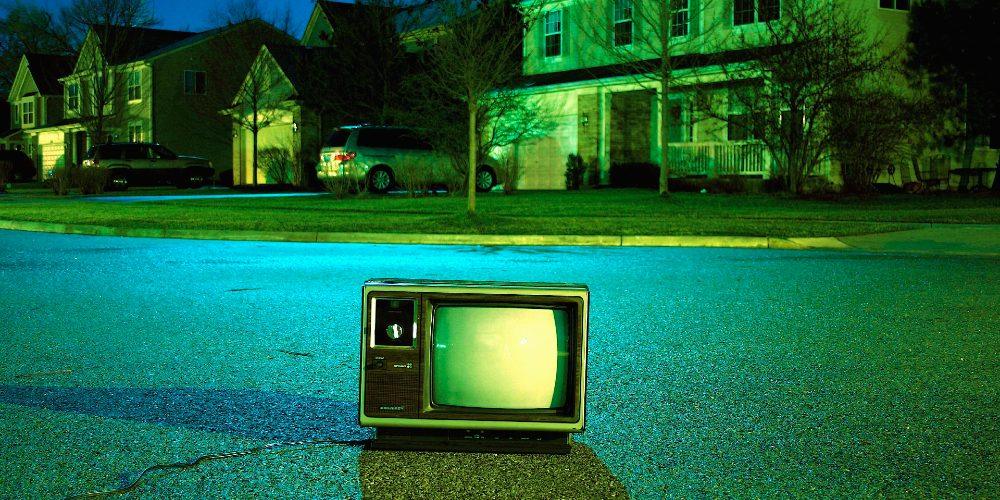
Big events happen every day, and we have scant opportunity to understand what they mean before another comes across our screens. The issue of “screens” is important. If you’re reading this, you are not likely a hermit living self-sufficiently in the woods. Unless you limit your “screen time,” televisions, computers, tablets, and phones are pumping your brain full of information all day long. Even when we’re not consciously reading or watching something on our screens, our brains are picking up signals about the events playing out in the world.
If you are a fan of science fiction, it is not difficult to understand that we are now living in a version of the dystopian worlds that writers such as Aldous Huxley, George Orwell, Ray Bradbury, and Philip K. Dick envisioned. People who possess power in this world have a strong incentive to shape our minds, and they use every available tool to condition our way of thinking.
Information is no longer confined to a book, catalogued in a quiet library. It is blaring at us from all directions.
Different cable news hosts on competing cable news networks repeat the same words and phrases all day long until we find ourselves reaching for those words while having polite conversations in real life.
Songs from pop artists representing different genres push the same messages, and when those pop artists collect awards, they use their acceptance speeches to drive those messages further into the brains of their most loyal fans. Those fans magnify those messages on their social media platforms, and pretty soon, tens of millions of people are expressing the same thoughts.
Movies and television shows teach us to fear or detest “hate speech,” “global warming,” “white supremacy,” “Russian aggression,” “science deniers,” “right-wingers,” “fascists,” “European Union skeptics,” “fossil fuels,” “Islamophobia,” “transphobia,” Christianity, immigration enforcement, Vladimir Putin, and Donald Trump. Any Hollywood character who doesn’t condemn these things is depicted as a villain; any Hollywood character who denounces these things is a brilliant, beautiful hero.
This is information warfare in a nutshell, and it is all around us.
If you look back in time, you will realize that some version of it has always existed.
Twentieth-century newspapers gave us descriptions of the facts filtered through the worldviews of their writers, editors, and publishers. Three broadcast news anchors delivered almost identical accounts of each day’s news. If you scrutinized those newsrooms, though, you realized that newspaper publishers came from the same prominent families that ran parts of the government and that federal licenses required television networks to abide by certain national security protocols.
The same “journalists” who gave each other awards for their “integrity” and “independence” married members of the government. Twentieth-century “journalists” were never really part of a Fourth Estate; they acted as the public relations arm of the American government.
The most important aspect of “journalism” last century was its ability to seduce the reader or viewer into believing that “reporters” are impartial, just-the-facts clerics collecting important stories for the public’s benefit. So long as “journalists” were seen as ink-stained priests who cared nothing for money or fame, they received a certain amount of public respect.
If people could be convinced that “journalists” would risk their lives to inform the public what is “true,” then some people might even consider those “journalists” heroes. Priestly heroes cultivate public trust, and public trust is its own kind of power.
In this sense, the government had no interest in telling Americans not to trust the news. All governments want the public to believe the news because it is through the news that governments disseminate their public messages. In true symbiotic form, newsrooms and governments do not have competing interests. They have a shared interest: to convince the public that what it reads or hears is the “truth.”
The entertainment industry has long played its role in this propaganda program. A small number of publishing houses controlled which books would be printed and sold. A small number of magazines controlled popular opinion. A small number of movie studios controlled what stories were told. When everybody worked in tandem, publishing houses printed books whose authors expressed ideas that the government wanted the public to read.
Magazines recommended those books until they became “best sellers” on newspaper lists. Hollywood chose good-looking actors to play the characters in those best-selling books, and families sat in theaters to hear government-approved programming. Sometimes, movie stars played hero journalists, so that the public remembered that The New York Times and The Washington Post could be trusted to report only the “truth.”
When a propaganda system works well, you don’t notice how all the various agents have clear conflicts of interest. You don’t stop to ask why the deputy director at the FBI would be working with The Post to take down a sitting president (something that both Mark Felt and Andrew McCabe have in common). You don’t wonder whether it’s appropriate for “reporters” to depend entirely upon anonymous sources. You don’t ask whether the billionaire moneymen who own newspapers might have ulterior motives that undermine the pursuit of truth.
You don’t notice that the same families that own movie studios and publishing houses also own multinational chemical plants, pharmaceutical firms, shipping conglomerates, and banking empires. You don’t realize that these wealthy families include members of Congress and the heads of agencies. You don’t see how government officials receive awards from nonprofits and NGOs that are run by the same families handing out awards to authors, musicians, actors, and “journalists” for their professional achievements or contributions to “truth.”
See the problem? Over the last thirty years, the public started to see through this sophisticated network of information warfare and recognize it as the propaganda that it has always been. The expanding web of the Internet allowed people to learn information that had been hidden from them. Email allowed people to communicate with groups much more quickly than traditional phone calls or written correspondence. Social media platforms turned ordinary people into public broadcasters almost overnight.
Comedians lose their power over minds when ordinary people on YouTube are just as funny. Hollywood actors lose their star power when teenagers can become famous just for filming their lives. Publishing houses lose their gatekeeping power when writers publish online. “Journalists” lose their monopoly on objective “truth” when citizen reporters describe current events in real time.
When all these parts of the propaganda machine malfunction together, people finally see the puppet strings moving the various actors. And whether they work in Hollywood or for CNN, the narrative engineers are all actors — people paid to deliver messages that corporations and government officials wish to spread.
This is one of the reasons the march of history is speeding up! The people who have long controlled public opinion realize that they have lost their greatest weapon: legitimacy. Illegitimate systems are unsustainable. So the narrative engineers have been forced to flood the zone with so much information that it becomes ever more difficult to ascertain the truth. Global warming, Russian collusion, COVID, defending democracy, WWIII — the demand on your attention is huge and will get only worse!
As this happens, remember this: Your brain is the battlefield. If you prevent others from using it for you, they will lose.
Two Storms, One Harvest

Every food crisis in living memory has been a one-shock event. The 2008 price spike was a commodity bubble. The 2020 shortages were a logistics failure. The 2022 grain scare was a war on one exporter’s ports. Each time, the system bent, adjusted, and recovered, and each time the experts assured us afterward that global markets are simply too big and too diversified to fail.
What nobody in Washington seems eager to discuss is that 2026 is shaping up to be something the modern food system has never actually faced. Two independent shocks, one climatic and one geopolitical, are converging on the same harvest cycle at the same time. Not sequentially. Simultaneously.
Start with the weather. The Pacific Ocean is currently building toward what forecasters now openly call a record event. NOAA’s Climate Prediction Center puts the odds of at least a strong El Niño near 88 percent, with roughly two in three odds it reaches “very strong” status, the tier reserved for perhaps three or four events in the entire satellite era. Every major global model now projects a median peak in Super El Niño territory, and most of them project it exceeding the 2015-16 event, which until now held the modern record. Sea surface anomalies were already brushing the super threshold in mid-July, months before these events normally peak. The atmosphere has already shifted into El Niño mode, and the event is forecast to crest in late fall and early winter.
This is not about “climate change.” It’s about the standard cycles of weather, and the cycle we’re currently in is one that has likely devastated societies in the past. We’re better prepared as a society today, but not all Americans are equally prepared.
Serious households have started doing the quiet math on their own. Grocery bills tell part of the story, and the forecast maps tell the rest, which is why long-term food storage has moved from fringe hobby to mainstream line item in the family budget, with established suppliers like Heaven’s Harvest seeing demand from people who five years ago would have rolled their eyes at the idea. That instinct is not paranoia. It is pattern recognition, and the pattern is worth walking through carefully.
Editor’s Note: Heaven’s Harvest IS a sponsor, but the warnings of this article are real and would be written even if we didn’t have a survival food sponsor. With that said, those who take advantage of what they offer can use promo code “Patriot” for 15% off.
The Fertilizer Clock Is Already Running
While the Pacific warms, the second shock has been unfolding in the Strait of Hormuz. The conflict with Iran turned the world’s most important energy chokepoint into a contested waterway, and the consequences reach far beyond the gas pump. Roughly a third of global fertilizer trade moves through Hormuz, and the disruption sent urea prices up 86 percent year over year by March, with a 53 percent jump in a single month.
The World Bank projects energy prices rising about 24 percent in 2026 and fertilizer about 31 percent. By its own accounting, fertilizer prices ran 35 percent higher in the first five months of this year than the same period last year.
Here is the mechanism the nightly news will not explain. Fertilizer is not a grocery item. It is a time-delayed input. The nitrogen a farmer in Iowa or Punjab could not afford to apply this spring does not show up as a problem this spring. It shows up as a thinner harvest six to twelve months later.
The World Bank’s own food security brief concedes that the effects of reduced applications earlier this season “are likely to become visible only later in harvest outcomes.” Translate that from institutional language into plain English and it means this. The damage is already done, it is already in the ground, and we are simply waiting for it to arrive on the shelf.
Now check the calendar. Six to twelve months from the spring planting season lands us squarely in late 2026 and early 2027. Which is precisely when the strongest El Niño in the instrumental record is forecast to peak, bringing its signature droughts to Southeast Asia, Australia, southern Africa, northern Brazil, and South Asia, the very regions that grow the world’s rice, sugar, and oilseeds.
The World Bank warns openly that a strong El Niño “could disrupt multiple crop belts simultaneously” on top of the conflict-driven input costs. Their baseline projection assumes the Middle East disruptions ease by autumn. What in the last two years of Middle East history suggests that assumption is safe?
The System Has No Slack Left
The comfortable answer is that global markets always adjust. But adjustment requires slack, and the slack is gone. Global cereal production is expected to decline from last year’s records even before El Niño does its work. The UN World Food Programme, hardly a den of right-wing preppers, is calling this the most significant disruption to its supply chains since Covid and the invasion of Ukraine, and its supply chain director put the stakes bluntly.
Today’s supply chain challenges are tomorrow’s hunger crisis.
There is also a political dimension that markets cannot price. When food gets scarce, governments do not behave like economists. They behave like politicians. Export bans, hoarding mandates, and panic buying at the national level turned the modest rice shortfall of 2008 into a global crisis, and analysts are already warning that import-dependent nations are the first dominoes.
The 2015-16 Super El Niño, a far weaker event than what is now forecast, threw tens of millions into food stress across Africa and Asia. This one is projected to be stronger, and it arrives with fertilizer already rationed by price and shipping lanes already contested by missiles.
What Joseph Knew
Scripture does not treat preparation for lean years as faithlessness. It treats it as wisdom delivered in advance to those willing to act on it.
Behold, there come seven years of great plenty throughout all the land of Egypt: And there shall arise after them seven years of famine; and all the plenty shall be forgotten in the land of Egypt.
Joseph did not respond to that warning with a hashtag or a committee. He stored grain during the years of abundance, and when the famine came, Egypt stood while its neighbors begged. The lesson is not that famine is certain. It is that the time to prepare is precisely when preparation still looks optional.
Nobody who filled a pantry in a year of plenty has ever regretted it, and nobody standing in an empty aisle has ever been glad he waited for certainty.
None of this calls for panic, and panic is the enemy of sound judgment anyway. It calls for the same unglamorous prudence our grandparents considered ordinary. Keep some cash margin, know your local growers, and put real food in deep storage while it is cheap and available, because the entire arc of this story is that cheap and available is a closing window.
Families looking for a straightforward place to start can visit Heaven’s Harvest and use promo code Patriot for 15 percent off long-term storable food. The forecasts may yet soften, the strait may yet reopen, and we should pray they do. But hope is a fine thing to hold and a foolish thing to eat.
