

(Mises)—On Saturday night, Donald Trump announced he intends to appoint Kash Patel as director of the FBI. The news sparked an immediate frenzy from establishment figures across media and politics. Legal and national security “experts” were deployed to the Sunday morning news shows to characterize the move as evidence that Trump intends to politicize the FBI and use it as a weapon against his many political opponents.
The political establishment’s concerns about what a Trump FBI could do mirror a lot of what we’ve heard from the right in recent years as they found themselves in the Bureau’s crosshairs.
But almost all of these complaints and warnings have operated under the assumption that—with maybe the exception of a few bad episodes in the 1960s—the FBI has long been an essential crime-fighting force that has only recently become—or threatens to become—corrupted by politics.
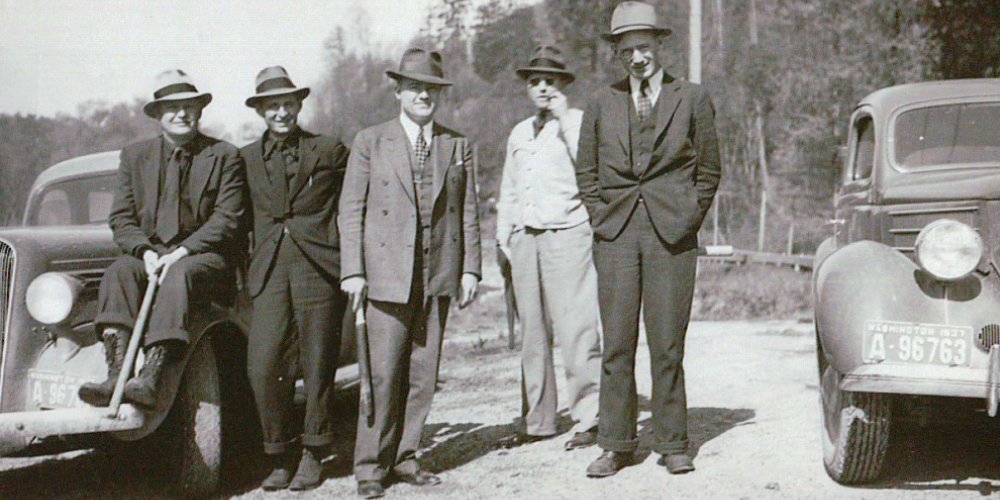
In truth, the FBI has always been used as a weapon against political movements and rivals of the established political class. That’s the reason it was created.
At the end of the 1800s, left-wing anarchists were attacking heads of state all across Europe. In a few short years, the king of Italy, the prime minister of Spain, the empress of Austria, and the president of France were all assassinated by anarchists. While no communist or anarchist movement had yet to take over a country, the tenacity of these activists and revolutionaries was seriously concerning those in power in the United States.
Then, in 1901, President William McKinley was shot and killed by an anarchist while attending a meet-and-greet in Buffalo, New York, which brought his vice president, Theodore Roosevelt, into office. It was President Roosevelt who tapped his Attorney General Charles Bonaparte—the grandnephew of Napoleon—to create the FBI.
The AG was required by law to get congressional approval before creating this new “investigative” service of special agents within the Department of Justice. In the spring of 1908, Bonaparte officially requested the money and authority to create the FBI. Congress came back with an emphatic no.
Members of the House saw through the innocuous language of the request and figured out exactly what the president and AG were doing—creating a secret police force that was answerable only to them.
House Democrats like Joseph Swagar and John J. Fitzgerald and Republicans like Walter I. Smith and George Waldo all loudly condemned the proposal, saying it called for a “system of espionage” comparable to the Tsar’s secret police in Russia that stood in stark contrast to the very principles at the heart of the American system. Congress explicitly forbade the AG from creating this new Bureau.
So what did Bonaparte do? He waited for Congress to break for the summer and then went ahead and created the FBI anyway.
Congress was only notified about the new federal police force half a year later when Bonaparte included a quick throw-away line at the end of his annual report: “It became necessary for the department to organize a small force of special agents of its own.”
So, the FBI was not created in response to out-of-control crime; its creation was a crime.
Immediately, the new Bureau was unleashed on anyone and everyone who was perceived as a threat to those in power. That started with left-wing anarchists but quickly expanded to include many antiwar activists as President Wilson pulled the country into World War I.
From the outset, the FBI operated primarily as a domestic intelligence agency—recruiting spies within groups they were targeting and breaking into their offices and homes, intercepting mail, and tapping the phones of anyone they considered a threat.
As the years wore on—like most other executive agencies—the Bureau evolved away from serving the direct interests of whoever happened to sit in the Oval Office to instead serve its own interest and the interest of the broader entrenched, permanent power structure in Washington.
In the ‘50s, ‘60s, and ‘70s, the FBI conducted covert operations aimed at inciting violence between domestic groups, breaking up political organizations it disapproved of, and, perhaps most famously, collecting blackmail on Martin Luther King Jr. that they then tried to use to drive him to commit suicide.
Although today’s FBI acknowledges and publicly disavows these past activities, they are still carrying out egregious operations that always seem to benefit the political class. The Bureau has taken up a kind of sting operation where, over and over again, agents find isolated, gullible, often mentally-handicapped young men, pretend to be political radicals or higher-ups in a terrorist organization, and then convince the young men to plan and carry out a terrorist attack with FBI-funds and resources. Agents then step in at the end and act like they heroically stopped a real plot.
The FBI did this relentlessly with young Muslim men after 9/11. The arrests helped prolong the perception that the global war on terror and extreme measures like the Patriot Act were necessary.
In recent years, the FBI has conducted a number of similar schemes with right-wing groups—advancing the establishment’s narrative that Donald Trump is radicalizing “uneducated” middle Americans and turning them into violent insurrectionists.
And then there are, of course, all the ways the FBI directly tried to undermine and hinder Trump’s first term. Right-wingers are correctly deriding the establishment for panicking about Trump’s FBI doing to them what they have tried to do to him. But many—on both sides—go wrong when they present the Bureau as only recently, or imminently, being corrupted into serving the interests of those in power. That’s been its role since the beginning.
Two Storms, One Harvest

Every food crisis in living memory has been a one-shock event. The 2008 price spike was a commodity bubble. The 2020 shortages were a logistics failure. The 2022 grain scare was a war on one exporter’s ports. Each time, the system bent, adjusted, and recovered, and each time the experts assured us afterward that global markets are simply too big and too diversified to fail.
What nobody in Washington seems eager to discuss is that 2026 is shaping up to be something the modern food system has never actually faced. Two independent shocks, one climatic and one geopolitical, are converging on the same harvest cycle at the same time. Not sequentially. Simultaneously.
Start with the weather. The Pacific Ocean is currently building toward what forecasters now openly call a record event. NOAA’s Climate Prediction Center puts the odds of at least a strong El Niño near 88 percent, with roughly two in three odds it reaches “very strong” status, the tier reserved for perhaps three or four events in the entire satellite era. Every major global model now projects a median peak in Super El Niño territory, and most of them project it exceeding the 2015-16 event, which until now held the modern record. Sea surface anomalies were already brushing the super threshold in mid-July, months before these events normally peak. The atmosphere has already shifted into El Niño mode, and the event is forecast to crest in late fall and early winter.
This is not about “climate change.” It’s about the standard cycles of weather, and the cycle we’re currently in is one that has likely devastated societies in the past. We’re better prepared as a society today, but not all Americans are equally prepared.
Serious households have started doing the quiet math on their own. Grocery bills tell part of the story, and the forecast maps tell the rest, which is why long-term food storage has moved from fringe hobby to mainstream line item in the family budget, with established suppliers like Heaven’s Harvest seeing demand from people who five years ago would have rolled their eyes at the idea. That instinct is not paranoia. It is pattern recognition, and the pattern is worth walking through carefully.
Editor’s Note: Heaven’s Harvest IS a sponsor, but the warnings of this article are real and would be written even if we didn’t have a survival food sponsor. With that said, those who take advantage of what they offer can use promo code “Patriot” for 15% off.
The Fertilizer Clock Is Already Running
While the Pacific warms, the second shock has been unfolding in the Strait of Hormuz. The conflict with Iran turned the world’s most important energy chokepoint into a contested waterway, and the consequences reach far beyond the gas pump. Roughly a third of global fertilizer trade moves through Hormuz, and the disruption sent urea prices up 86 percent year over year by March, with a 53 percent jump in a single month.
The World Bank projects energy prices rising about 24 percent in 2026 and fertilizer about 31 percent. By its own accounting, fertilizer prices ran 35 percent higher in the first five months of this year than the same period last year.
Here is the mechanism the nightly news will not explain. Fertilizer is not a grocery item. It is a time-delayed input. The nitrogen a farmer in Iowa or Punjab could not afford to apply this spring does not show up as a problem this spring. It shows up as a thinner harvest six to twelve months later.
The World Bank’s own food security brief concedes that the effects of reduced applications earlier this season “are likely to become visible only later in harvest outcomes.” Translate that from institutional language into plain English and it means this. The damage is already done, it is already in the ground, and we are simply waiting for it to arrive on the shelf.
Now check the calendar. Six to twelve months from the spring planting season lands us squarely in late 2026 and early 2027. Which is precisely when the strongest El Niño in the instrumental record is forecast to peak, bringing its signature droughts to Southeast Asia, Australia, southern Africa, northern Brazil, and South Asia, the very regions that grow the world’s rice, sugar, and oilseeds.
The World Bank warns openly that a strong El Niño “could disrupt multiple crop belts simultaneously” on top of the conflict-driven input costs. Their baseline projection assumes the Middle East disruptions ease by autumn. What in the last two years of Middle East history suggests that assumption is safe?
The System Has No Slack Left
The comfortable answer is that global markets always adjust. But adjustment requires slack, and the slack is gone. Global cereal production is expected to decline from last year’s records even before El Niño does its work. The UN World Food Programme, hardly a den of right-wing preppers, is calling this the most significant disruption to its supply chains since Covid and the invasion of Ukraine, and its supply chain director put the stakes bluntly.
Today’s supply chain challenges are tomorrow’s hunger crisis.
There is also a political dimension that markets cannot price. When food gets scarce, governments do not behave like economists. They behave like politicians. Export bans, hoarding mandates, and panic buying at the national level turned the modest rice shortfall of 2008 into a global crisis, and analysts are already warning that import-dependent nations are the first dominoes.
The 2015-16 Super El Niño, a far weaker event than what is now forecast, threw tens of millions into food stress across Africa and Asia. This one is projected to be stronger, and it arrives with fertilizer already rationed by price and shipping lanes already contested by missiles.
What Joseph Knew
Scripture does not treat preparation for lean years as faithlessness. It treats it as wisdom delivered in advance to those willing to act on it.
Behold, there come seven years of great plenty throughout all the land of Egypt: And there shall arise after them seven years of famine; and all the plenty shall be forgotten in the land of Egypt.
Joseph did not respond to that warning with a hashtag or a committee. He stored grain during the years of abundance, and when the famine came, Egypt stood while its neighbors begged. The lesson is not that famine is certain. It is that the time to prepare is precisely when preparation still looks optional.
Nobody who filled a pantry in a year of plenty has ever regretted it, and nobody standing in an empty aisle has ever been glad he waited for certainty.
None of this calls for panic, and panic is the enemy of sound judgment anyway. It calls for the same unglamorous prudence our grandparents considered ordinary. Keep some cash margin, know your local growers, and put real food in deep storage while it is cheap and available, because the entire arc of this story is that cheap and available is a closing window.
Families looking for a straightforward place to start can visit Heaven’s Harvest and use promo code Patriot for 15 percent off long-term storable food. The forecasts may yet soften, the strait may yet reopen, and we should pray they do. But hope is a fine thing to hold and a foolish thing to eat.
