


Editor’s Commentary: The article below by Marina Zhang from our premium news partners at The Epoch Times is one of the most important to share with those who are still not convinced they need to stop getting jabbed. As my good friend Dr. Joel Hirschhorn has said for a long time, it’s the spike proteins that are circulating through the bodies of billions of people that are causing the real harm.
As many doctors and scientists have noted, the presence of spike proteins from infections appears to dissipate in most over time, but the spike proteins from the jabs are persistent. The CDC and FDA even removed claims on their websites that the spike proteins from the jabs leave the body quickly. It’s because they do not. Here’s Marina Zhang…
Multiple studies have shown that the SARS-CoV-2 spike protein is a highly toxic and inflammatory protein, capable of causing pathologies in its hosts.
The presence of spike protein has been strongly linked with long COVID and post-vaccine symptoms. Studies have shown that spike proteins are often present in symptomatic patients, sometimes even months after infections or vaccinations.
The numbers of long COVID and post-vaccine cases have been climbing in the United States, increasingly posing as a healthcare problem.
Data from the Center of Disease Control and Prevention (CDC) estimates that around 7 percent of Americans are currently experiencing long COVID symptoms, which would be over 15 million people. Some people with long COVID have been so debilitated that they cannot go to work, the same have been reported in people experiencing post-vaccine symptoms.
Over 880,000 adverse events have been reported to the Vaccine Adverse Event Reporting System (VAERS) database for possible post-COVID vaccine symptoms. However, statisticians argue that the number of people suffering from post-vaccine syndromes are much higher.
Canadian molecular biologist Jessica Rose estimated an underreporting factor of 31, adding up to an estimation that more than 27 million Americans may have suffered from adverse events following vaccination.
“The vaccine-injured are vast,” said Dr. Pierre Kory on Oct. 15 at a Front Line COVID-19 Critical Care Alliance (FLCCC) conference. “The numbers are massive … they are underserved and their needs are not being met.”
However, many doctors are looking to change this situation. The FLCCC has been at the forefront in treating COVID-19, long COVID, and post-vaccine symptoms.
No large scale studies have been done on treatment for post-vaccine symptoms. Based on clinical observations, patient feedback, and extensive research, the FLCCC has released its updated treatment recommendations.
The FLCCC co-founder and Chief Scientific Officer Dr. Paul Marik told The Epoch Times that recommendations are always subject to change based on patient feedback, as well as research on a new treatment option. However, to understand the treatment options, one first needs to understand on how spike protein is causing damage.
Pathology of Spike Proteins
Long COVID and post-vaccine syndrome share a high degree of overlap as the two conditions have both been linked to long-term spike protein presence, and the symptoms are often similar too.
“The core problem in post-vaccine syndrome is chronic ‘immune dysregulation,’” Marik shared at the FLCCC conference.
Spike proteins can cause chronic inflammation. Studies have shown that inflammation can lead to cell stress, damage, and even death. Cells make up tissues, different tissues form organs, and organs are part of our own physiological systems. Therefore spike protein injuries are a systemic syndrome.
Spike proteins trigger chronic inflammation by causing immune dysregulation. Spike proteins enter immune cells, switch off normal immune responses, and trigger pro-inflammatory pathways instead.
The normal immune response for infected immune cells is to release type 1 interferons, this give signals to other immune cells to enhance defense against viral particles. But spike protein reduces this signaling in infected cells, and uninfected cells will also take in and become damaged by the spike protein as the infection goes out of control.
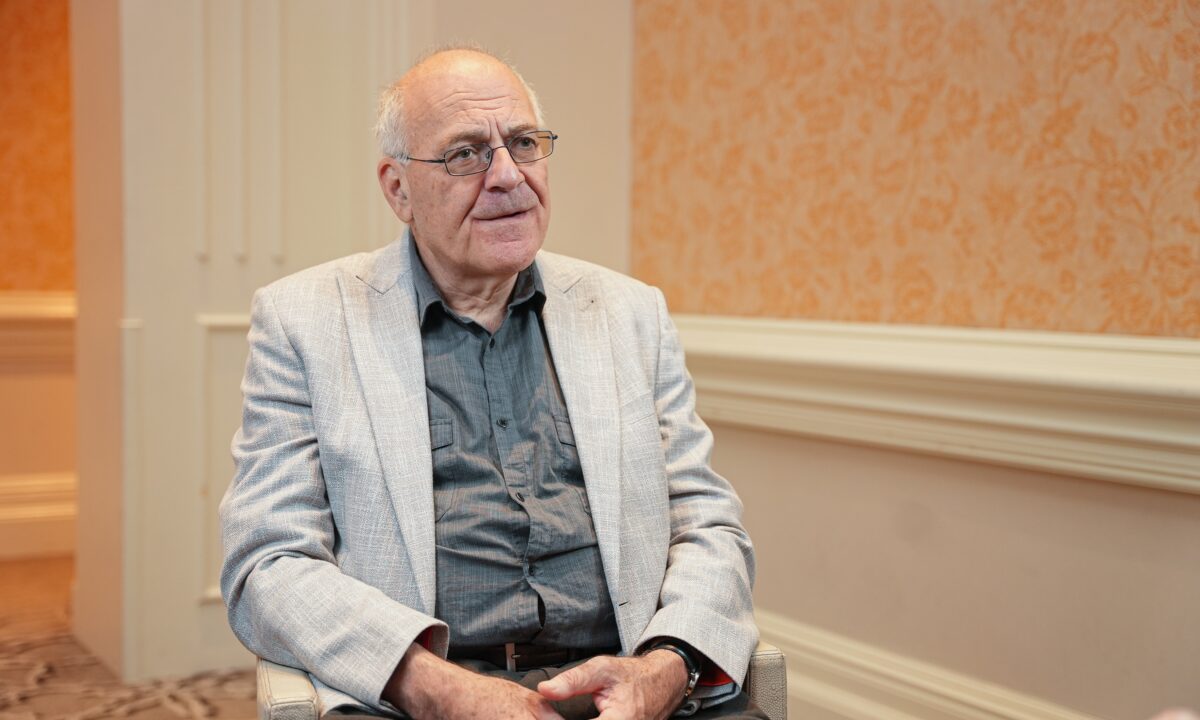
Marik said that a critical aspect of long-term spike protein damage is that it inhibits autophagy, your body’s way of recycling damaged cells. Usually, when cells have been infected with viral particles, the cells will try to break these particles down and remove them as waste. However, studies on SARS-CoV-2 viruses have shown that autophagy processes are reduced in infected patients, with spike proteins present many months after the initial exposure.
“The spike protein is a really wicked protein,” said Marik. “It switches off autophagy, that’s why the spike can stay in the cells for such a long time.”
Immune Cell Dysfunction
The immune dysfunction caused by spike protein not only causes inflammation, but also may also contribute to cancer proliferation, and autoimmunity.
Studies have shown that spike can reduce and exhaust the action of T and natural killer cells. These two cell types are responsible for killing infected cells and cancerous cells. Therefore a reduced cellular immunity from T and natural killer cells can contribute to an untimely clearance of spike-infected cells.
Damage from spike can lead to damaged DNA, and studies have shown that spike can also reduce DNA repair. Psychological and environmental stress such as ultraviolet light, pollutants, oxidants, and many other factors, can routinely damage DNA, requiring constant repair.
Damaged DNA puts cells at risk of becoming cancerous, and these cells should be killed to prevent cancer formations. However, with reduced T and natural killer cell activity, this may lead to unchecked proliferation of potentially cancerous cells.
Other dysfunctions that have been reported following vaccinations include autoimmune diseases. These diseases may be linked to the spike proteins having a high level of molecular mimicry, meaning spike proteins have many regions similar to other proteins in the human body.
So when the immune system attacks the spike protein, due to structural similarities, the antibodies produced against spike protein regions may also react against the body’s own proteins and tissues. Studies have shown that antibodies made against the spike protein can also bind to and attack self tissues.
Spike Protein Causes Fatigue
The spike is also linked with dysfunction in the mitochondria. Colloquially known as the powerhouse of the cell, mitochondria are responsible for harnessing energy from the sugar we ingest.
Human neural cells treated with spike protein have been shown to produce more reactive oxygen species, and this is an indication of mitochondrial dysfunction, suggesting possible reduction in energy production.

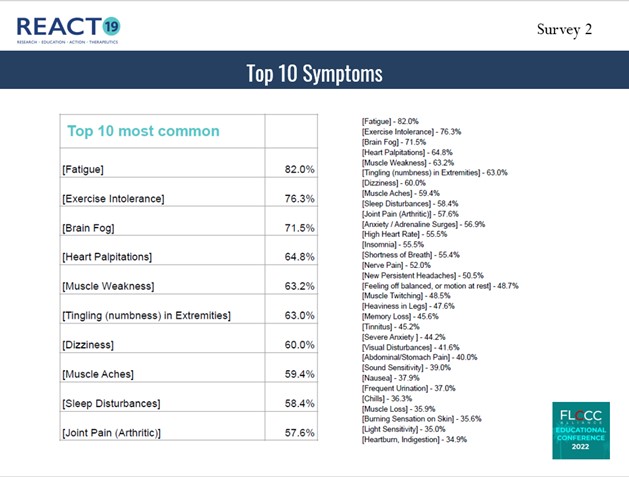
People with long COVID and post-vaccine syndromes often experience chronic fatigue, brain fog, exercise intolerance, and muscle weakness. These symptoms are also often seen in people with mitochondrial dysfunction, indicating a possible link.
Spike Protein Damage to Blood Vessels and Organs
Spike proteins have shown to be particularly damaging to cells that line blood vessels. Spike proteins can bind to ACE2 and CD147 receptors and trigger inflammatory pathways.
These receptors are particularly abundant in cells of the blood vessels, heart, immune system, ovaries, and many other areas. Spike protein can therefore trigger inflammation and damage in blood vessels and its related organs, leading to systemic injury. Marik said that spike protein injury is closer to a systemic syndrome rather than a disease.
“It’s not a disease. It doesn’t fit the traditional model of a disease. This is a syndrome which affects every single organ … the spike goes everywhere … so this is a multi-systems disease and it doesn’t follow the traditional paradigm of a disease which is one symptom, one diagnosis.”
FLCCC’s First Line Treatments
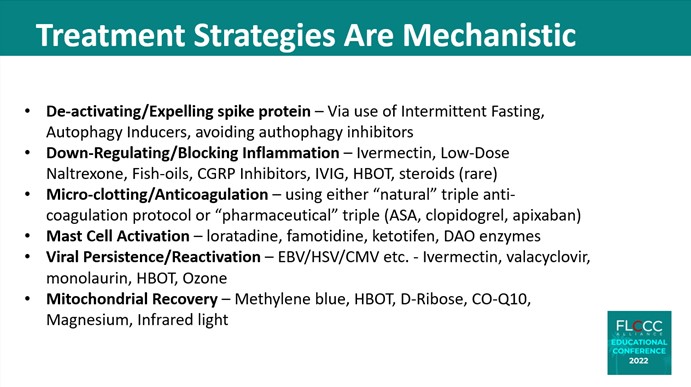
Since long COVID and post-vaccine symptoms are both associated with spike protein presence, the first line treatments recommended by the FLCCC therefore focus on two main steps.
The first step is to remove spike protein, the second step is to reduce its toxicity. The body will then heal itself, and this is “the primary treatment goal,” said Marik. Most of the first line treatments have focused on clearing out the spike protein by reactivating autophagy—a process that is downregulated by spike protein.
Lifestyle implementations can boost autophagy through intermittent fasting, and photobiomodulation. Photobiomodulation can be done by exposing oneself to the sun, since sunlight contains infrared rays that boost autophagy in cells.
Intermittent fasting can result in multiple health benefits including improved insulin sensitivity, weight loss, reduced inflammation and autoimmunity, and many more.
However it should be noted that intermittent fasting is not recommended for people younger than the age of 18, as it can prevent growth. Pregnant and breastfeeding women are also not recommended to fast intermittently. People with diabetes and kidney disease are also recommended to check with their primary care physicians before considering intermittent fasting.
While intermittent fasting may not be suitable for everyone, there are other treatment options that can boost autophagy and reduce spike protein toxicity.

Ivermectin
Ivermectin has been highly recommended by the FLCCC and many doctors treating COVID, long COVID, and post-vaccine syndrome, on the basis that it is inexpensive, highly accessible, has a high safety profile, and a high response rate.
The drug is highly dynamic and has also been documented with a variety of functions: antiviral, anti-parasitic, anti-inflammatory, and also boosts autophagy. Ivermectin can help with the removal of spike protein. Studies have shown that ivermectin has a higher affinity for the spike protein and will bind to its regions, effectively neutralizing and immobilizing it for destruction.
Ivermectin also directly opposes the pro-inflammatory pathways that are triggered by the spike protein including NF-KB pathway that activates inflammatory cytokines and toll-like receptor 4.
FLCCC doctors reason that ivermectin and intermittent fasting can act “synergistically” to remove the body spike protein, and recommends taking ivermectin with or just after a meal.
Ivermectin is also able to bind to ACE2 and CD147, and therefore blocks spike protein from entering and triggering inflammation in cells that display these receptors. Studies have also shown that ivermectin can maintain the energy produced by mitochondria even under conditions of low oxygen.
Kory said that around 70 to 90 percent of his post-vaccine syndrome patients respond to the drug, generally within 10 days.
“Patients can be classified as ivermectin responders or non-responders … the non-responders—[are] actually a group of patients that are more difficult to treat,” said Marik.
Patients that are non-responsive—typically after four to six weeks of treatment—are recommended to go on a more aggressive treatment.
When overdosed, ivermectin can cause confusion, disorientation, and possibly even death. However, the drug has a high safety profile when used in reasonable doses. There is little literature on its use in pregnant women so the FLCCC cautions against the use of it in pregnancy.
“Ivermectin has continually proved to be astonishingly safe for human use,” wrote Dr. Satoshi Ohmura, the discoverer of ivermectin in his co-authored study. “Indeed, it is such a safe drug, with minimal side effects, that it can be administered by non-medical staff and even illiterate individuals in remote rural communities, provided that they have had some very basic, appropriate training.”

Low Dose Naltrexone
Low dose naltrexone (LDN) has recently made the news as an option for long COVID treatment.

“We’ve been using it for many, many months,” said Marik. “Low dose naltrexone is a very potent anti-inflammatory drug. It’s been used in many chronic inflammatory diseases.”
Clinically, FLCCC doctors have seen many of their patients’ symptoms improve following treatment with LDN, though it may take months for the benefits to be clearly visible.
Normal naltrexone is commonly used to prevent overdose in narcotic users. However, when reduced to around a 10th of its normal concentration, to 1 mg to 4.5 mg in LDN, the drug’s mechanism changes dramatically.
LDN has an anti-inflammatory effect; studies show that it is able to block inflammatory toll-like receptors, reduce the production of pro-inflammatory cytokines, and block inflammatory cascades. LDN works to balance the activity between Th1 and Th2 type cytokines.
Th1 type cytokines tend to produce pro-inflammatory response to kill intracellular parasites and propel autoimmune activities. Th2 type cytokines typically have more of an anti-inflammatory activity and can counteract the activity of Th1 cytokines. LDN selectively modulates this balance by reducing Th1 activity and increasing Th2 cytokine activities.
Clinically, LDN has been shown to be effective against post-COVID and post-vaccine neurological symptoms. It has been listed by the FLCCC to be effective against neuropathic pain, brain fog, fatigue, bell’s palsy, and facial paresthesia.
This is because LDN also reduces neuroinflammation. It is neuroprotective and is able to cross the blood-brain barrier and reduce inflammatory actions of the microglia, which function as immune cells in the brain.

Resveratrol
Resveratrol is a nutraceutical commonly found in fruits. It can be found in peanuts, pistachios, grapes, red and white wine, blueberries, cranberries, and even cocoa and dark chocolate.
It can also be obtained through vitamins, though there is generally a low bioavailability of resveratrol, and therefore the FLCCC recommends it to be taken with quercetin. Resveratrol is anti-inflammatory and anti-oxidizing. Studies have shown it to be selective in killing cancer cells. It activates DNA repair pathways and therefore can reduce cellular stress and prevent the formation of cancerous cells.
In stressed cells, resveratrol can reduce reactive oxygen species produced by the mitochondria and promote autophagy. In animal studies on fruit flies and nematodes, the use of resveratrol increased their lifespan, indicating the molecule’s anti-aging and life-extending properties.

Low Dose Aspirin
Similar to ivermectin, aspirin is another drug that has been found to be multifaceted in its effects for health.
Aspirin is anti-inflammatory and an anticoagulant. The drug therefore reduces the chance of micro-clot formation in the blood vessels. Studies have shown that it can also reduce pro-inflammatory pathways, oxidative stress, and is also neuroprotective.
Neurocognitive impairment has been a major complaint of many people suffering from post-COVID vaccine syndromes. This includes brain fog and peripheral neuropathic pain.
Studies on Alzheimer’s disease patients have shown that taking aspirin was associated with slower cognitive decline, though results have been conflicting across different studies.
Animal studies showed that rats that were given aspirin had lower cognitive decline. Studies in rats with damaged nerves suggested that aspirin may also be neuroprotective due to its anti-inflammatory nature. The use of aspirin may cause side effects in pregnancy and such as bleeding.

Melatonin
Melatonin is a hormone produced by the pineal gland to promote a restful sleep. It has both anti-inflammatory and anti-oxidizing properties. In cells, melatonin promotes mitochondrial health by reducing active oxygen species. Because the mitochondria uses a lot of oxygen, when it is stressed through environmental toxins such as radiation or spike protein exposure, it may produce reactive oxygen species.
Melatonin, an antioxidant, can therefore prevent oxidative damage. Studies show that it also prevents leakage of electrons from mitochondria and therefore maximizes energy production. It also promotes autophagy by unblocking the autophagy pathway, helping the cell to break down spike proteins and boost the removal of these toxic proteins.
Due to its anti-oxidizing property, melatonin repairs DNA damaged by free radicals. Melatonin and its metabolites also activate genes that promote DNA repair, and suppress gene activity that may lead to damaged DNA.
Melatonin also has anti-cancerous properties. Animal studies on melatonin have shown that animals that were administered melatonin had a lower rate of tumor generation.
Melatonin has also been recommended by the FLCCC in treating tinnitus, a symptom of post-vaccine and long COVID. The symptom is a ringing in the ears, and can disturb sleep if severe. Melatonin can help reduce the ringing and help people to get a good night’s sleep.

Differences Between Long COVID and Post-Vaccine Syndrome
Both long COVID and post-vaccine syndrome are driven by spike protein load and damage from spike exposure, and therefore share a high degree of overlap in treatment.
However, doctors notice slight differences in certain clinical presentations between the two conditions, and therefore the FLCCC have prioritized different treatments.
“It seems that with the vaccine injured, the predominant symptom and the predominant organ is neurological,” said Marik. In his observation, roughly “more than 80 percent of patients with vaccine injury have some degree of neurological impairment.”
Marik said post-vaccine symptoms can also be harder to treat than long COVID, and are more persistent, with some patients presenting with debilitating symptoms for almost two years. Therefore treatment for people with post-vaccine symptoms are “more aggressive and more brain targeted,” said Marik.
“It seems like long COVID gets better with time. While some patients persist, it seems to be somewhat self resolving to a degree,” said Marik. “The problem with the vaccine-injured is that it can persist. We have patients who were vaccinated in December of 2020 … [who] are still severely, severely injured.”
“The two are similar, but we’ve put much more emphasis on the vaccine-injury because it’s a much more difficult disease to treat.”

Two Storms, One Harvest

Every food crisis in living memory has been a one-shock event. The 2008 price spike was a commodity bubble. The 2020 shortages were a logistics failure. The 2022 grain scare was a war on one exporter’s ports. Each time, the system bent, adjusted, and recovered, and each time the experts assured us afterward that global markets are simply too big and too diversified to fail.
What nobody in Washington seems eager to discuss is that 2026 is shaping up to be something the modern food system has never actually faced. Two independent shocks, one climatic and one geopolitical, are converging on the same harvest cycle at the same time. Not sequentially. Simultaneously.
Start with the weather. The Pacific Ocean is currently building toward what forecasters now openly call a record event. NOAA’s Climate Prediction Center puts the odds of at least a strong El Niño near 88 percent, with roughly two in three odds it reaches “very strong” status, the tier reserved for perhaps three or four events in the entire satellite era. Every major global model now projects a median peak in Super El Niño territory, and most of them project it exceeding the 2015-16 event, which until now held the modern record. Sea surface anomalies were already brushing the super threshold in mid-July, months before these events normally peak. The atmosphere has already shifted into El Niño mode, and the event is forecast to crest in late fall and early winter.
This is not about “climate change.” It’s about the standard cycles of weather, and the cycle we’re currently in is one that has likely devastated societies in the past. We’re better prepared as a society today, but not all Americans are equally prepared.
Serious households have started doing the quiet math on their own. Grocery bills tell part of the story, and the forecast maps tell the rest, which is why long-term food storage has moved from fringe hobby to mainstream line item in the family budget, with established suppliers like Heaven’s Harvest seeing demand from people who five years ago would have rolled their eyes at the idea. That instinct is not paranoia. It is pattern recognition, and the pattern is worth walking through carefully.
Editor’s Note: Heaven’s Harvest IS a sponsor, but the warnings of this article are real and would be written even if we didn’t have a survival food sponsor. With that said, those who take advantage of what they offer can use promo code “Patriot” for 15% off.
The Fertilizer Clock Is Already Running
While the Pacific warms, the second shock has been unfolding in the Strait of Hormuz. The conflict with Iran turned the world’s most important energy chokepoint into a contested waterway, and the consequences reach far beyond the gas pump. Roughly a third of global fertilizer trade moves through Hormuz, and the disruption sent urea prices up 86 percent year over year by March, with a 53 percent jump in a single month.
The World Bank projects energy prices rising about 24 percent in 2026 and fertilizer about 31 percent. By its own accounting, fertilizer prices ran 35 percent higher in the first five months of this year than the same period last year.
Here is the mechanism the nightly news will not explain. Fertilizer is not a grocery item. It is a time-delayed input. The nitrogen a farmer in Iowa or Punjab could not afford to apply this spring does not show up as a problem this spring. It shows up as a thinner harvest six to twelve months later.
The World Bank’s own food security brief concedes that the effects of reduced applications earlier this season “are likely to become visible only later in harvest outcomes.” Translate that from institutional language into plain English and it means this. The damage is already done, it is already in the ground, and we are simply waiting for it to arrive on the shelf.
Now check the calendar. Six to twelve months from the spring planting season lands us squarely in late 2026 and early 2027. Which is precisely when the strongest El Niño in the instrumental record is forecast to peak, bringing its signature droughts to Southeast Asia, Australia, southern Africa, northern Brazil, and South Asia, the very regions that grow the world’s rice, sugar, and oilseeds.
The World Bank warns openly that a strong El Niño “could disrupt multiple crop belts simultaneously” on top of the conflict-driven input costs. Their baseline projection assumes the Middle East disruptions ease by autumn. What in the last two years of Middle East history suggests that assumption is safe?
The System Has No Slack Left
The comfortable answer is that global markets always adjust. But adjustment requires slack, and the slack is gone. Global cereal production is expected to decline from last year’s records even before El Niño does its work. The UN World Food Programme, hardly a den of right-wing preppers, is calling this the most significant disruption to its supply chains since Covid and the invasion of Ukraine, and its supply chain director put the stakes bluntly.
Today’s supply chain challenges are tomorrow’s hunger crisis.
There is also a political dimension that markets cannot price. When food gets scarce, governments do not behave like economists. They behave like politicians. Export bans, hoarding mandates, and panic buying at the national level turned the modest rice shortfall of 2008 into a global crisis, and analysts are already warning that import-dependent nations are the first dominoes.
The 2015-16 Super El Niño, a far weaker event than what is now forecast, threw tens of millions into food stress across Africa and Asia. This one is projected to be stronger, and it arrives with fertilizer already rationed by price and shipping lanes already contested by missiles.
What Joseph Knew
Scripture does not treat preparation for lean years as faithlessness. It treats it as wisdom delivered in advance to those willing to act on it.
Behold, there come seven years of great plenty throughout all the land of Egypt: And there shall arise after them seven years of famine; and all the plenty shall be forgotten in the land of Egypt.
Joseph did not respond to that warning with a hashtag or a committee. He stored grain during the years of abundance, and when the famine came, Egypt stood while its neighbors begged. The lesson is not that famine is certain. It is that the time to prepare is precisely when preparation still looks optional.
Nobody who filled a pantry in a year of plenty has ever regretted it, and nobody standing in an empty aisle has ever been glad he waited for certainty.
None of this calls for panic, and panic is the enemy of sound judgment anyway. It calls for the same unglamorous prudence our grandparents considered ordinary. Keep some cash margin, know your local growers, and put real food in deep storage while it is cheap and available, because the entire arc of this story is that cheap and available is a closing window.
Families looking for a straightforward place to start can visit Heaven’s Harvest and use promo code Patriot for 15 percent off long-term storable food. The forecasts may yet soften, the strait may yet reopen, and we should pray they do. But hope is a fine thing to hold and a foolish thing to eat.

Ha-ha, you’re gonna die, and if you don’t maybe you’ll remember this the next time some huckster comes along with some magic beans.
Proverbs 24:17-18 Do not gloat when your enemy falls; when they stumble, do not let your heart rejoice,
or the Lord will see and disapprove and turn his wrath away from them.
I would like to forward but no choices on this site work for me I.e. text
Hmm, an attack across the globe by a band of civilization destructors in DC and governors across the US.
Despite multiple studies showing ill effects of the jab, the govs still push it. They were supposed to be following science. Many lost jobs, lost family members, could not attend funerals of family members. It looks like western civilization was taken down by these fascists. The Gates Foundation merit investigation. It stinks to high heaven.
Hopefully, a real and serious investigation can be done next January. Trial and the guilty get serious time.
J D how much Melatonin do your studies suggest to take?