

(Alt-Market)—The eyes of the world have been fixated on the war in Iran for the past six months, meanwhile, the single-most dangerous flashpoint on the planet has gone mostly ignored. Until, that is, waves of Ukrainian drone strikes activated a run on global diesel markets. Suddenly, everyone is paying attention again…
Russia is the second largest diesel exporter in the world next to the United States, supplying around 12% of total global exports (the US supplies 22% of exports). To put this in perspective, only 10% of global diesel exports pass through the Strait of Hormuz under normal conditions – And that supply is coming from seven different oil producing nations including Iran.
After western sanctions, Russian diesel shipments have gone primarily to Turkey, Brazil, India and China. However, because Russian supplies continued to circulate on global markets, these countries did not have to draw fuel from alternative sources.
Conditions have now changed, and not for the better. Constant Ukrainianian drone strikes on Russian refineries have forced the Kremlin to stop all diesel exports and retain their existing supply for the population and the war effort.
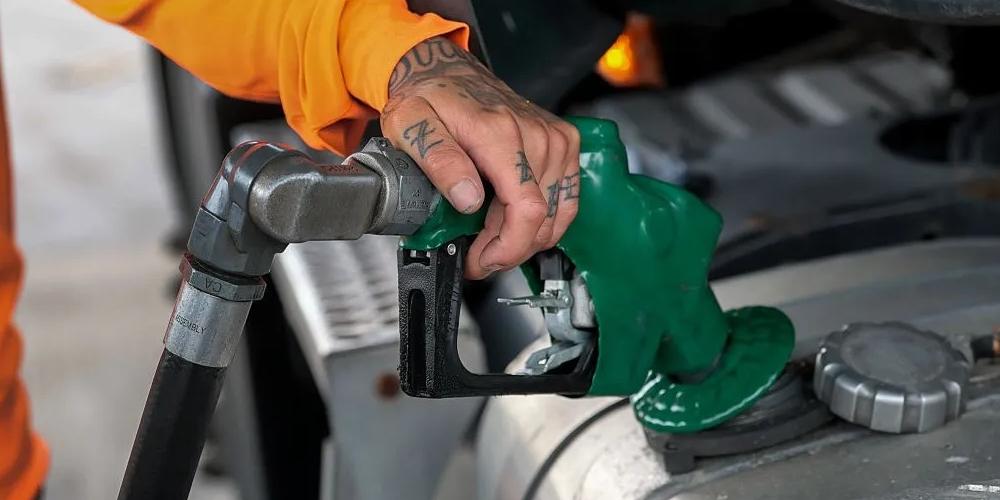
If you want to know why diesel prices have been hit hard since July, Russian export cuts are the reason. Traffic through the Strait of Hormuz has steadily climbed since July according to independent satellite tracking confirmation (anyone using AIS transponder data alone will have a low and inaccurate count). It’s the Russian refinery issue that has inflated diesel prices in recent months.
With Russian sources completely cut off, multiple nations will have to draw from other producers. Meaning, the pie is shrinking, but everyone still wants the same size slice they’ve always had. If the US also stops diesel exports in response, it would be a disaster for foreign markets and result in true supply shortages (Europe would be hard hit; half of their diesel imports come from the US).
In 2024 I questioned why the Ukrainians kept going after odd targets such as nuclear early warning radar stations rather than key resources like oil refineries in order to stop Russia’s attrition strategy. Well, it looks like the Ukrainians finally figured it out.
Russia’s attrition strategy has been highly effective in grinding down Ukraine’s troop strength (to the point that they were recruiting mostly men over 40), but the key flaw of a slow moving front line and a protracted offensive is that it requires a large stockpile of resources. Ukraine’s drone attacks have a low success rate, but if they send a thousand UAVs to attack a refinery and a couple get through, then that’s still a win in the long run because it drags down Russia’s lumbering attrition-based operation.
The Trump Administration has asked Ukraine to stop hitting Russian refineries due to the instability to global markets, but Zelensky has ignored the request. It’s not surprising; they’ve finally found a tactic that works.
Of course, now the rest of the world is being affected by diesel supply shortages when this was not the case a year ago. One would think the Europeans, who have been particularly throttled by price hikes on fuel and energy, would be in a rush to end the war. And maybe they are about to intervene, but not in the way we might hope…
I think it’s fair to say that the Ukraine war would have ended a long time ago had it not been for the interference of European governments propping up Ukraine and encouraging them to NOT make a deal. Ultimately, Russia is going to keep the Donbas region whether Ukraine likes it or not. But Zelensky refuses to accept this outcome, so, the war rages on much longer than it needs to.
The situation gets much more dangerous, though,with the push by European elites to put boots on the ground. They seem to want to start a world war. Beyond the diesel resource problem which puts a timetable on the war for both sides, European governments have increased troop movements to eastern borders and it’s starting to look like they’re getting ready for something big.
Poland has been building extensive trenches and fortifications using German combat engineers on the border of Belarus. Germany has established a 5000-man armored brigade in Lithuania, the first time the Germans have stationed permanent combat troops abroad since 1945. NATO has launched a 9th multinational battle group with regular exercises in Finland near the Russian border. Multiple nations are sending rotating brigades to Latvia, Romania and Estonia. Even the Canadians are sending troops.
Recent weeks have seen repeated Polish and Baltic fighter activations due to alleged drone or aircraft activity near alliance airspace. Allies are pre-positioning equipment and planning much larger stockpiles of ammunition and resources in frontline states. NATO has also published extensive contingency planning for the eastern flank.
There has been a surge in political and civil-preparedness messaging for civilians. Polish warnings about possible disguised drone/missile incidents. French measures to protect critical infrastructure after hybrid-attack briefings. German military-hospital capacity planning. Lithuanian plans for evacuation routes. UK public preparedness bulletins including recommendations for civilians to stock up on food and supplies..
Even Switzerland has been posting security and preparedness messages for citizens, indicating a “deteriorating security situation” in relation to the military build up.
All of this could be viewed as a defensive posture and not necessarily planning for direct engagement with the Russians; but consider for a moment that Russia has not once threatened to attack European or NATO targets and has consistently said that their only interest is Ukraine. Yet, Europe has removed their “trip wire” defense strategy and replaced it with a permanent front. It sure does seem like they are getting ready for an event which might provoke the Russians to strike targets outside of Ukraine.
What would that event be?
To be clear, I’m not a big fan of the Russian government. Evidence suggests that they engage in regular psy-ops in the US and there are far too many conservative influencers who kiss Putin’s ass. That said, I’m not a fan of Ukraine or the Europeans either, and I suspect the EU elites would LOVE to trigger a world war if they thought they could get away with it.
Why? Well, here’s my theory…
Europe has been the primary target of a decade long cultural replacement operation. Mass immigration has been utilized to undermine the stability of economic and social structures. For years I have been warning that these third world migrants are being imported as a mercenary army to control the locals and prevent rebellion against future leftist agendas.
We are already seeing confirmation of this in the UK, where migrants are being integrated into police forces to subdue conservative protesters.
The thing is, this invasion plan has sparked an enormous counter-movement of European patriots in countries like Britain and Germany. Anti-immigration and conservative parties like Restore in the UK and the AFD in Germany are seeing wild success in membership and elections. Meaning, time for leftists/globalists is running out and they need to do something quick before they lose direct governmental power.
A world war sure would come in handy, right? All kinds of restrictions on the populace can be put in place, along with a perfect excuse to delay or eliminate normal elections. Would the progressives actually go that far just to prevent conservatives from taking government? We all know that they would.
So, we have two running clocks that did not exist at the beginning of the Ukraine war: We have a diesel shortage clock, specifically for the Europeans. And, we have an avalanche of conservative movements with major elections happening from 2026 through 2029.
My concern is that the leftists are about to go for broke in an effort to keep power. I don’t think they’re crazy enough to want a nuclear war, and perhaps the Russians want to avoid this as well. If that’s the case, then the result would be a large multi-region conflict that MIGHT turn nuclear if either side feels like they are losing. The main goal of the EU elites at that stage would be to lure the US into the fray.

In any case the aftershocks would be disastrous. Let’s hope that conservative and populist movements in Europe can pull the rug out from under their far-left governments before the situation on the eastern front escalates any further.
If you would like to support the work that Alt-Market does while also receiving content on advanced tactics for defeating the globalist agenda, subscribe to our exclusive newsletter The Wild Bunch Dispatch. Learn more about it HERE.

Two Storms, One Harvest

Every food crisis in living memory has been a one-shock event. The 2008 price spike was a commodity bubble. The 2020 shortages were a logistics failure. The 2022 grain scare was a war on one exporter’s ports. Each time, the system bent, adjusted, and recovered, and each time the experts assured us afterward that global markets are simply too big and too diversified to fail.
What nobody in Washington seems eager to discuss is that 2026 is shaping up to be something the modern food system has never actually faced. Two independent shocks, one climatic and one geopolitical, are converging on the same harvest cycle at the same time. Not sequentially. Simultaneously.
Start with the weather. The Pacific Ocean is currently building toward what forecasters now openly call a record event. NOAA’s Climate Prediction Center puts the odds of at least a strong El Niño near 88 percent, with roughly two in three odds it reaches “very strong” status, the tier reserved for perhaps three or four events in the entire satellite era. Every major global model now projects a median peak in Super El Niño territory, and most of them project it exceeding the 2015-16 event, which until now held the modern record. Sea surface anomalies were already brushing the super threshold in mid-July, months before these events normally peak. The atmosphere has already shifted into El Niño mode, and the event is forecast to crest in late fall and early winter.
This is not about “climate change.” It’s about the standard cycles of weather, and the cycle we’re currently in is one that has likely devastated societies in the past. We’re better prepared as a society today, but not all Americans are equally prepared.
Serious households have started doing the quiet math on their own. Grocery bills tell part of the story, and the forecast maps tell the rest, which is why long-term food storage has moved from fringe hobby to mainstream line item in the family budget, with established suppliers like Heaven’s Harvest seeing demand from people who five years ago would have rolled their eyes at the idea. That instinct is not paranoia. It is pattern recognition, and the pattern is worth walking through carefully.
Editor’s Note: Heaven’s Harvest IS a sponsor, but the warnings of this article are real and would be written even if we didn’t have a survival food sponsor. With that said, those who take advantage of what they offer can use promo code “Patriot” for 15% off.
The Fertilizer Clock Is Already Running
While the Pacific warms, the second shock has been unfolding in the Strait of Hormuz. The conflict with Iran turned the world’s most important energy chokepoint into a contested waterway, and the consequences reach far beyond the gas pump. Roughly a third of global fertilizer trade moves through Hormuz, and the disruption sent urea prices up 86 percent year over year by March, with a 53 percent jump in a single month.
The World Bank projects energy prices rising about 24 percent in 2026 and fertilizer about 31 percent. By its own accounting, fertilizer prices ran 35 percent higher in the first five months of this year than the same period last year.
Here is the mechanism the nightly news will not explain. Fertilizer is not a grocery item. It is a time-delayed input. The nitrogen a farmer in Iowa or Punjab could not afford to apply this spring does not show up as a problem this spring. It shows up as a thinner harvest six to twelve months later.
The World Bank’s own food security brief concedes that the effects of reduced applications earlier this season “are likely to become visible only later in harvest outcomes.” Translate that from institutional language into plain English and it means this. The damage is already done, it is already in the ground, and we are simply waiting for it to arrive on the shelf.
Now check the calendar. Six to twelve months from the spring planting season lands us squarely in late 2026 and early 2027. Which is precisely when the strongest El Niño in the instrumental record is forecast to peak, bringing its signature droughts to Southeast Asia, Australia, southern Africa, northern Brazil, and South Asia, the very regions that grow the world’s rice, sugar, and oilseeds.
The World Bank warns openly that a strong El Niño “could disrupt multiple crop belts simultaneously” on top of the conflict-driven input costs. Their baseline projection assumes the Middle East disruptions ease by autumn. What in the last two years of Middle East history suggests that assumption is safe?
The System Has No Slack Left
The comfortable answer is that global markets always adjust. But adjustment requires slack, and the slack is gone. Global cereal production is expected to decline from last year’s records even before El Niño does its work. The UN World Food Programme, hardly a den of right-wing preppers, is calling this the most significant disruption to its supply chains since Covid and the invasion of Ukraine, and its supply chain director put the stakes bluntly.
Today’s supply chain challenges are tomorrow’s hunger crisis.
There is also a political dimension that markets cannot price. When food gets scarce, governments do not behave like economists. They behave like politicians. Export bans, hoarding mandates, and panic buying at the national level turned the modest rice shortfall of 2008 into a global crisis, and analysts are already warning that import-dependent nations are the first dominoes.
The 2015-16 Super El Niño, a far weaker event than what is now forecast, threw tens of millions into food stress across Africa and Asia. This one is projected to be stronger, and it arrives with fertilizer already rationed by price and shipping lanes already contested by missiles.
What Joseph Knew
Scripture does not treat preparation for lean years as faithlessness. It treats it as wisdom delivered in advance to those willing to act on it.
Behold, there come seven years of great plenty throughout all the land of Egypt: And there shall arise after them seven years of famine; and all the plenty shall be forgotten in the land of Egypt.
Joseph did not respond to that warning with a hashtag or a committee. He stored grain during the years of abundance, and when the famine came, Egypt stood while its neighbors begged. The lesson is not that famine is certain. It is that the time to prepare is precisely when preparation still looks optional.
Nobody who filled a pantry in a year of plenty has ever regretted it, and nobody standing in an empty aisle has ever been glad he waited for certainty.
None of this calls for panic, and panic is the enemy of sound judgment anyway. It calls for the same unglamorous prudence our grandparents considered ordinary. Keep some cash margin, know your local growers, and put real food in deep storage while it is cheap and available, because the entire arc of this story is that cheap and available is a closing window.
Families looking for a straightforward place to start can visit Heaven’s Harvest and use promo code Patriot for 15 percent off long-term storable food. The forecasts may yet soften, the strait may yet reopen, and we should pray they do. But hope is a fine thing to hold and a foolish thing to eat.
