

(American Thinker)—It has been eleven years since investigative journalist Sharyl Attkisson first revealed that Barack Obama’s government was illegally spying on her. Although she has pursued the matter doggedly in court, no high-ranking Obama administration officials have ever been held accountable. The incident remains remarkable not only because it laid bare another instance in which Obama’s administration engaged in unlawful, unconstitutional, and unethical conduct (remember when Attorney General Eric Holder got caught arming international drug cartels in Operation Fast and Furious for reasons that only he could justify?), but also because the silence from the American press corps was deafening.
There was some platitudinal outrage, to be sure, but if the pre-eminent news organs in the United States had truly wanted to defend free speech from government tyranny, they would have robustly condemned Obama for presiding over an administration at war with the First and Fourth Amendments. They would still be running stories to this day reminding Americans that nobody of consequence from the Obama government has been punished. And they would never stop pointing out that neither Obama nor his lieutenants have ever apologized for their impeachable offenses or naked betrayal of their constitutional oaths. Judged from their tepid response, it would appear that most corporate news reporters tacitly approved of Obama’s government conducting espionage operations against the press — at least so long as the “right kind” of reporters were the ones being targeted.
To the great consternation of the Obama regime and its praetorian press supporters, Sharyl Attkisson has always been an “old school” reporter — which is to say, she follows important news stories wherever they may take her and regardless of how her investigations may affect the political fortunes of those fêted by The New York Times or CNN. With neither fear nor favor, she strives to reveal truth — not her truth or the preferred truth of those who pay her, but the truth. Because she sticks to that journalistic creed, she is a thorn in the side to those with power.
In another time or place that regarded journalistic independence as a requisite safeguard for preserving both free speech and a free press, Attkisson would be admired as an exemplar of her profession. And to those who appreciate her work, she is. But for far too many national reporters who would gladly sacrifice truth for the promise of future prestige, her story is best ignored. Why? Because she is a corporeal reminder that American journalism is fake.
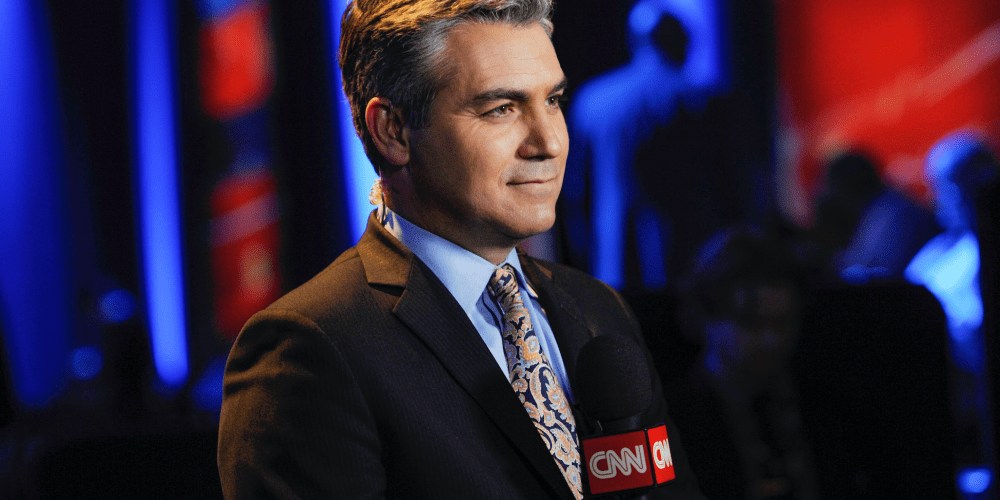
Contrary to the banal assurances that come out of the mouths of intellectual flyweights such as Jim Acosta, reporters regularly do pick sides, omit important facts, and manipulate the coverage of breaking news. Almost all practicing journalists these days are creatures of the left. Fabian socialists, Marxist ideologues, or Democrat partisans — however else they might self-identify, they all view themselves as romantic figures destined to influence history. Who, What, When, Where, and Why are for the schlubs. They are here to engineer narratives, and they take their jobs quite seriously.
“Narrative engineer” is such a perfect sobriquet for today’s reporters. It appeals to their special brand of vanity. Most would love to be known for their literary talents but lack the skill to tell good stories. Most wish others would see them as having the kind of brainpower associated with engineers, but alas, they struggle with basic geometry. Thinking of themselves as master builders of human events allows journalists to carve out a privileged caste for themselves that lies somewhere between that of the academic and the priest. And if anyone honored them as “professors” or bowed deferentially in their presence, members of the journalistic clergy would certainly not object.
This kind of pomposity offends “old school” reporters. In fact, one of the easiest ways to discern whether a journalist is more interested in discovering the truth or engineering a narrative is to look at that person’s bio. “Narrative engineers” love to highlight their journalism degrees, fellowships, exotic assignments, and the list of important corporations that have paid them to say what those corporations need them to say. “Old school” reporters don’t care about telling you where they went to college — or if they even attended one. Rather than refer you to their updated C.V.s, they’d rather let their work product do the talking. They’re not fond of flaunting awards or illustrious former employers because both tend to reflect the mission statements of powerful corporations or wealthy patrons — the exact kinds of groups and people “old school” journos inherently distrust.
Good muckrakers are suspicious of power — in all its forms. If a self-described expert says that something is true, the muckraker says, “Prove it.” If an agent of the government says that something is true, the muckraker says, “Prove it.” If another journalist says that something is true, the muckraker still says, “Prove it.” Neither titles, nor positions of authority, nor membership in the journalistic clergy connotes absolute truth.
In fact, all of those things are red flags to any good reporter. If something is so complicated that its comprehension requires expertise, then it is imperative that dissenting experts be consulted as intellectual counterweights for discovering hidden bias. If a government minister asserts something as true, a reporter must assume that it is false. What good is a Fourth Estate if it does not maintain a position that is in constant tension with — if not diametrically opposed to — all those holding the reins of political power? And when a journalist reports something as truth, the first thought from other journalists must always be: let’s see your sources. Only by knowing who is saying what and why that person is saying it can anyone judge a statement’s veracity. A journalist who accepts another journalist’s recitation of events without first scrutinizing the sources for that information is no journalist at all!
If you take to heart the last paragraph, then you will agree that journalism as a truth-seeking profession is dead — or, if not dead, at least flat on its back and gripping its chest like a fat man after one too many sausages. It is rare these days to find reporters who value research and legwork over prepackaged sound bites from the White House. It is far easier to be fed information than to track down and discover the truth. Reporters would rather consult their on-demand contact list of “who’s who” government celebrities than look for unknown and powerless insiders with important stories to tell.
In many ways, journalism has become the apex manifestation of credentialism — or the celebration of prestigious credentials. In the old days, an editor did not care where a young reporter went to school or whether he played tennis with some Cabinet secretary’s daughter. What mattered was what stories the cub was right then pursuing. The job was to be such a pain to those with power that City Hall put you on a watch list. Newspapers weren’t looking for golfing buddies or acquaintances from the country club; reporting was the vocation of choice for blue-collar Americans who enjoyed sticking it to the man! Somewhere along the line as colleges began teaching students what to think instead of how to think and mega-corporations scooped up newspapers for pennies on the dollar, hard-nosed journalists were replaced with brown-nosing sycophants.
What are “narrative engineers,” after all? During the Cold War, we called them “Soviet propagandists.” In the world of espionage, they are known as “disinformation specialists.” In every time and place, they are skilled liars who distort reality and peddle falsehoods. They are regime protectors and agents of the State.
None of those vile synonyms for modern journalism describes Sharyl Attkisson, though. She’s a truth-teller who doesn’t curtsy to the powerful. That’s why Barack Obama treated her like a domestic enemy.
Two Storms, One Harvest

Every food crisis in living memory has been a one-shock event. The 2008 price spike was a commodity bubble. The 2020 shortages were a logistics failure. The 2022 grain scare was a war on one exporter’s ports. Each time, the system bent, adjusted, and recovered, and each time the experts assured us afterward that global markets are simply too big and too diversified to fail.
What nobody in Washington seems eager to discuss is that 2026 is shaping up to be something the modern food system has never actually faced. Two independent shocks, one climatic and one geopolitical, are converging on the same harvest cycle at the same time. Not sequentially. Simultaneously.
Start with the weather. The Pacific Ocean is currently building toward what forecasters now openly call a record event. NOAA’s Climate Prediction Center puts the odds of at least a strong El Niño near 88 percent, with roughly two in three odds it reaches “very strong” status, the tier reserved for perhaps three or four events in the entire satellite era. Every major global model now projects a median peak in Super El Niño territory, and most of them project it exceeding the 2015-16 event, which until now held the modern record. Sea surface anomalies were already brushing the super threshold in mid-July, months before these events normally peak. The atmosphere has already shifted into El Niño mode, and the event is forecast to crest in late fall and early winter.
This is not about “climate change.” It’s about the standard cycles of weather, and the cycle we’re currently in is one that has likely devastated societies in the past. We’re better prepared as a society today, but not all Americans are equally prepared.
Serious households have started doing the quiet math on their own. Grocery bills tell part of the story, and the forecast maps tell the rest, which is why long-term food storage has moved from fringe hobby to mainstream line item in the family budget, with established suppliers like Heaven’s Harvest seeing demand from people who five years ago would have rolled their eyes at the idea. That instinct is not paranoia. It is pattern recognition, and the pattern is worth walking through carefully.
Editor’s Note: Heaven’s Harvest IS a sponsor, but the warnings of this article are real and would be written even if we didn’t have a survival food sponsor. With that said, those who take advantage of what they offer can use promo code “Patriot” for 15% off.
The Fertilizer Clock Is Already Running
While the Pacific warms, the second shock has been unfolding in the Strait of Hormuz. The conflict with Iran turned the world’s most important energy chokepoint into a contested waterway, and the consequences reach far beyond the gas pump. Roughly a third of global fertilizer trade moves through Hormuz, and the disruption sent urea prices up 86 percent year over year by March, with a 53 percent jump in a single month.
The World Bank projects energy prices rising about 24 percent in 2026 and fertilizer about 31 percent. By its own accounting, fertilizer prices ran 35 percent higher in the first five months of this year than the same period last year.
Here is the mechanism the nightly news will not explain. Fertilizer is not a grocery item. It is a time-delayed input. The nitrogen a farmer in Iowa or Punjab could not afford to apply this spring does not show up as a problem this spring. It shows up as a thinner harvest six to twelve months later.
The World Bank’s own food security brief concedes that the effects of reduced applications earlier this season “are likely to become visible only later in harvest outcomes.” Translate that from institutional language into plain English and it means this. The damage is already done, it is already in the ground, and we are simply waiting for it to arrive on the shelf.
Now check the calendar. Six to twelve months from the spring planting season lands us squarely in late 2026 and early 2027. Which is precisely when the strongest El Niño in the instrumental record is forecast to peak, bringing its signature droughts to Southeast Asia, Australia, southern Africa, northern Brazil, and South Asia, the very regions that grow the world’s rice, sugar, and oilseeds.
The World Bank warns openly that a strong El Niño “could disrupt multiple crop belts simultaneously” on top of the conflict-driven input costs. Their baseline projection assumes the Middle East disruptions ease by autumn. What in the last two years of Middle East history suggests that assumption is safe?
The System Has No Slack Left
The comfortable answer is that global markets always adjust. But adjustment requires slack, and the slack is gone. Global cereal production is expected to decline from last year’s records even before El Niño does its work. The UN World Food Programme, hardly a den of right-wing preppers, is calling this the most significant disruption to its supply chains since Covid and the invasion of Ukraine, and its supply chain director put the stakes bluntly.
Today’s supply chain challenges are tomorrow’s hunger crisis.
There is also a political dimension that markets cannot price. When food gets scarce, governments do not behave like economists. They behave like politicians. Export bans, hoarding mandates, and panic buying at the national level turned the modest rice shortfall of 2008 into a global crisis, and analysts are already warning that import-dependent nations are the first dominoes.
The 2015-16 Super El Niño, a far weaker event than what is now forecast, threw tens of millions into food stress across Africa and Asia. This one is projected to be stronger, and it arrives with fertilizer already rationed by price and shipping lanes already contested by missiles.
What Joseph Knew
Scripture does not treat preparation for lean years as faithlessness. It treats it as wisdom delivered in advance to those willing to act on it.
Behold, there come seven years of great plenty throughout all the land of Egypt: And there shall arise after them seven years of famine; and all the plenty shall be forgotten in the land of Egypt.
Joseph did not respond to that warning with a hashtag or a committee. He stored grain during the years of abundance, and when the famine came, Egypt stood while its neighbors begged. The lesson is not that famine is certain. It is that the time to prepare is precisely when preparation still looks optional.
Nobody who filled a pantry in a year of plenty has ever regretted it, and nobody standing in an empty aisle has ever been glad he waited for certainty.
None of this calls for panic, and panic is the enemy of sound judgment anyway. It calls for the same unglamorous prudence our grandparents considered ordinary. Keep some cash margin, know your local growers, and put real food in deep storage while it is cheap and available, because the entire arc of this story is that cheap and available is a closing window.
Families looking for a straightforward place to start can visit Heaven’s Harvest and use promo code Patriot for 15 percent off long-term storable food. The forecasts may yet soften, the strait may yet reopen, and we should pray they do. But hope is a fine thing to hold and a foolish thing to eat.
