

Editor’s Note: SafeBlackout, the company that author Mike Roth founded, has no affiliation with us. They are not a sponsor and I have never tried anything on their site. But the information he provided in the article is sound, so that’s a good sign. With that said, here’s Mike Roth…
Are you searching for dependable alternative energy solutions as a prepper or survivalist? Given the fragility of the power grid in disaster scenarios, investing in reliable and sustainable power generation is necessary for maintaining safety and connectivity.
Delving into renewable energy sources like solar, wind, and hydropower, this article offers insights into diverse power solutions and their setup requirements.
We will provide the following:
- A comprehensive overview of these energy alternatives.
- Exploring their roles in prepping.
- The pros and cons.
- The critical factors in selecting the ideal power source are tailored to your needs and circumstances.
While some folks are already totally off-grid, the rest of us are still looking for answers. Equipping yourself with this knowledge empowers you to harness nature’s power effectively, fortifying your preparation for any contingency.
Solar Power – Definition and Explanation
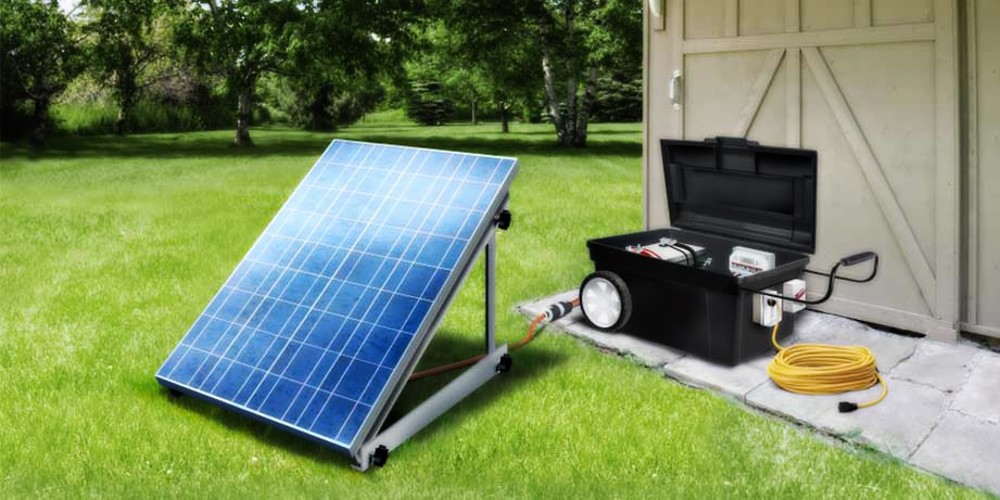
Solar is a renewable energy source that harnesses the energy from the sun and converts it into electricity.
The technology behind solar power has come a long way since its inception in the seventh century, and it is now one of the most significant green energy sources available. It is an environmentally friendly power source that is plentiful, cost-effective, and easy to maintain. Solar power is a great option for preppers and survivalists looking for alternative sources of energy to traditional sources.
Advantages and disadvantages of using solar power
Solar power is considered one of the most popular and widely used forms of alternative energy.
One of the biggest advantages of using solar power is that it is a renewable source of energy that doesn’t produce any harmful emissions or greenhouse gases. It also helps to reduce dependence on fossil fuels, a finite resource becoming increasingly scarce.
However, the initial cost of installing a solar system can be quite expensive, and the storage of solar energy can also be costly. Moreover, solar power is weather dependent, and during periods of low solar activity, homeowners may need to rely on other power sources. Read more here and here.
Factors to consider when using solar power
Several factors need to be considered when solar power is an alternative energy source for prepping and survival planning. Firstly, the location of the area and the specific micro-climate should be analyzed to determine the amount of direct sunlight available and the optimal positioning of solar panels.
Other important factors include the cost of initial installation and maintenance, the lifespan of the panels, and the need for a battery backup system to provide power during periods of low sunlight. Additionally, the system’s capacity should match the prepper’s or survivalist’s energy requirements to ensure a sufficient power supply.
Hydroelectric Power Definition and Explanation
Hydroelectric power, also known as hydropower, is a renewable energy source that harnesses the natural flow of moving water to generate electricity.
It works by using a dam or reservoir to trap water and create a height difference between the water levels on both sides of the dam. The water flows through a small tunnel with turbines that generate electricity from an attached generator.
Hydropower accounts for about 28.7% of total U.S. renewable electricity generation and approximately 6.2% of total U.S. electricity generation. It is also a cost-effective source of electricity that costs less than most other sources.
However, large-scale conventional hydropower dams significantly impact the environment, including displacement of people, loss of valuable farmland and wildlife habitats, and disruption of natural river flow.
Advantages and disadvantages of using hydroelectric power
Hydroelectric power is a popular alternative energy source due to its renewable nature and reliable energy production. It is also considered inexpensive in the long run and associated with job creation and economic benefits.
However, environmental concerns are associated with constructing hydroelectric plants, including the potential disruption of natural river flow and impacts on wildlife.
Additionally, the reliance on river water for energy production makes hydroelectricity susceptible to droughts, which can limit its capacity.
Despite these drawbacks, hydroelectricity remains a viable alternative energy solution for preppers and survivalists to consider in preparing for any disaster. Learn more about it here and here.
Factors to consider when using hydroelectric power
When using hydroelectric power, there are several factors to keep in mind. Firstly, location is key. While not necessary, having a fast-moving river or stream on or near your property can increase the potential for power generation.
Another factor to consider is the amount of water flow available. If the water source is seasonal or unreliable, hydroelectric power may not be a viable option.
It’s also important to take into account the potential impact on the environment and local wildlife. While eco-friendly in theory, dams and other infrastructure can disrupt ecosystems and affect fish populations.
Overall, understanding the limitations and benefits of hydroelectric power can help individuals evaluate whether it’s a suitable alternative energy source for their prepping and survival needs.
Wind Energy Definition and Explanation
Wind is a renewable form of energy that is harnessed through the use of wind turbines.
Wind turbines convert the kinetic energy of the moving air into electrical power, making it a clean and sustainable energy source.
The wind turbine blades are designed to rotate in response to the wind, which turns a generator that produces electricity.

Wind energy has several advantages, including being an abundant and inexhaustible resource that does not produce harmful emissions. However, like all energy sources, it also has its challenges, such as being dependent on wind speeds and the need for suitable locations for wind turbines.
Advantages and disadvantages of using wind energy
Wind energy is one of the cleanest and most sustainable energy sources available. It does not produce any greenhouse gas emissions, nor does it emit any pollutants into the air.
Wind power also has the potential to generate electricity at a lower cost than traditional power sources, and it can provide a reliable and consistent source of power in many areas.
But wind energy also has its drawbacks. Wind turbines can be expensive to install and be noisy and visually unappealing. Additionally, wind turbines can pose a threat to wildlife, particularly birds and bats, and they may require additional infrastructure to connect rural areas to urban centers.
Despite these challenges, wind power remains a promising alternative energy source for many preppers and survivalists.[11]
Factors to consider when using wind energy
When opting for wind energy as an alternative power solution, there are specific considerations you need to bear in mind.
One key factor is the wind speed and direction in your location, which determines the amount of energy that can be generated. Another important consideration is the size and type of turbine, which should be chosen based on your energy needs and the available space.
The cost of installing and maintaining a wind energy system is also a significant factor, and ensuring that the benefits outweigh the costs is important in the long run. Finally, it’s crucial to have a backup energy source in case of low or no wind conditions. Considering all these factors can help you make an informed decision about whether wind energy is a viable option for your needs.
Other Alternative Energy Sources
Apart from solar power systems, hydroelectric power, and wind energy, there are other alternative energy sources that can be explored for prepping and survival planning.
Biomass
One of them is biomass energy, which is produced from nonfossilized plant materials such as wood, wood waste, and biofuels. Biomass energy can be burned to release chemical energy and generate electricity.
Geothermal
Another option is geothermal energy, which derives heat from the earth’s hot interior or near the earth’s surface. Wells drilled into the earth allow a controlled release of steam or water to the surface to generate electricity, with the earth’s constant temperature utilized in geothermal heat pumps for heating and cooling buildings.
Both have advantages and disadvantages, and it is essential to consider individual needs and circumstances when selecting the best alternative energy source.
Advantages and disadvantages of using these alternative energy sources
Biomass is a renewable energy source since it uses organic materials like wood and agricultural waste as fuel. This efficiency makes it a cost-effective energy solution.
However, biomass has a higher carbon footprint compared to other renewable energy sources, and its supply chain can contribute to deforestation and land use issues.
On the other hand, geothermal energy uses the earth’s natural heat as a power source.
It is a reliable and constant energy source.
Still, it requires a specific geography to be viable, and drilling geothermal wells can be expensive. It is essential to weigh the pros and cons of each alternative energy source to select the best solution that fits individual needs and circumstances.
If you need help choosing the right alternative energy for your needs, don’t hesitate to get more information here.
Tailoring Your Energy System to Your Needs
Strategically planning for your energy needs requires an in-depth understanding of your power consumption habits. This process can be streamlined through a series of steps.

Inventory Analysis
Firstly, take stock of all electricity-consuming equipment appliances in your premises. This will provide a comprehensive picture of the devices contributing to your energy usage.
Energy Consumption Metrics
The subsequent step involves identifying the energy usage of each appliance, which is generally indicated in watts or kilowatt-hours (kWh) on the device or in the product specifications.
Appliance Usage Patterns
Consider the average duration each appliance is utilized daily. This will contribute to determining your overall energy consumption.
Individual Energy Consumption
For each appliance, compute the daily energy consumption by multiplying its wattage by the daily usage duration.
Aggregate Energy Consumption
By summing up the daily energy consumption of all appliances, you will get a snapshot of your total daily energy requirements.
Peak and Low Demand Periods
Incorporate considerations for energy needs during peak and off-peak times. This factor is crucial to accurately size your power system to meet fluctuations in usage levels.
Power System Configuration
Decide on your preferred system configuration: complete independence with an off-grid system or a grid-tied setup with net metering capabilities.
Gaining insights into your energy requirements enables you to make informed choices about the most suitable type and size of renewable energy systems for your needs.
Calculating Your Power System Needs and Appliance Energy Usage
Here’s how to figure out how much energy you need.
Daily Energy Demand
Start by determining your daily energy demand in watt-hours like above. This entails adding up the wattage of each appliance and multiplying it by its daily usage duration.
Inefficiency Adjustment
To account for potential system inefficiencies, multiply your total daily energy requirement by a factor of 1.3. This provides a more accurate estimate of your power system requirements.
Power System Size
This systematic approach enables you to estimate your power system needs accurately and ensure the chosen setup can meet your energy demands reliably and efficiently.
How to select the best alternative energy source based on individual needs and circumstances
When it comes to selecting the best alternative energy source, there are various factors to consider.
First, individual needs and circumstances should be taken into account. For example, a solar power system may be the best option for those living in sunny areas.
At the same time, wind energy may be more suitable for those in areas with consistently cloudy weather and strong winds. Other factors to consider include upfront costs, maintenance requirements, and local regulations.
It may also be helpful to consult a professional to determine which alternative energy source would be the most beneficial for a specific situation.
Selecting the right alternative energy source can help save money on energy bills and reduce environmental impact.
Importance of considering alternative energy solutions for prepping and survival planning.
Considering energy sources is crucial for preppers and survivalists due to the unpredictability of natural disasters and other SHTF scenarios. When the power grid fails, we rely on electricity for our essential needs, such as communication, food, and heating. Alternative energy sources provide a sustainable solution, enabling individuals to have enough energy to be independent and prepared even in the toughest times.
While traditional fuel sources such as gasoline or diesel are finite resources, renewable energy sources such as solar, hydro, and wind energy are abundant and have far fewer environmental impacts.
Therefore, considering alternative renewable energy sources for prepping and survival planning is necessary and an environmentally responsible choice. For more information, check out our article on how the odds are for a Massive Global Energy Crisis.
Recap of the different alternative energy solutions
In summary, alternative energy sources offer a viable solution for preppers and survivalists looking to live off the grid or prepare for emergencies.
Solar power, hydroelectric power, and wind energy are the most popular alternative energy sources. Each has its advantages and disadvantages, as well as factors to consider when implementing them. Additionally, biomass and geothermal energy are also alternative energy sources to consider.
Ultimately, selecting the best alternative energy source depends on individual needs and circumstances. It is important to consider these options when prepping and planning for survival.
Do you have any alternative energy sources set up? What do you plan to use when the power goes out? Have you tried any sources that ultimately did not work well for you?
Let’s discuss alternative energy solutions for preppers and survivalists in the comments section at my Late Prepper Substack.
Article cross-posted from The Organic Prepper.
About Mike
Mike Roth, the founder of SafeBlackout, is a dedicated advocate for preparedness and self-sufficiency. His work focuses on educating others on how to handle unpredictable situations confidently. With a commitment to transparency and thorough research, Mike’s writings provide a reliable source of information on survival scenarios, blackout preparedness, and more. His goal is to empower individuals to navigate any challenge with confidence and self-reliance.

Starting the Day With a Scripture-Inspired Roast Helps Center Your Thoughts on Eternal Truths Amid Temporal Pressures
The world can seem chaotic, especially right after we wake up. Many believers start their mornings reaching for something familiar — a hot cup of coffee — yet end up settling for mediocre brews that do little more than deliver a caffeine jolt. The daily grind of life, with its endless distractions, news cycles, and responsibilities, can leave even the most faithful feeling spiritually parched alongside their physical fatigue. What if your morning ritual could do more than wake you up? What if it could ground you in truth, nourish your body with exceptional quality, and quietly advance a kingdom purpose at the same time?
That’s the promise — and the reality — behind Promised Grounds Coffee. This Christian-founded company doesn’t just roast beans; it approaches every step as an act of worship and discipleship. By selecting only the top 10% of specialty-grade beans, ethically sourced from dedicated farmers in Central and South America, and small-batch roasting them with reverence in Austin, Texas, Promised Grounds delivers what many describe as the best coffee available — never burnt, never bland, but rich with origin stories and layered flavors that honor God’s creation.
From the vibrant Psalm 27 Roast (a light, bright medium option) to the bold yet peaceful 2 Timothy 1:7 Decaf, each bag carries a Scripture verse that turns your daily pour into a gentle reminder of faith. And through their Ounce Per Ounce Promise, every ounce of coffee you enjoy provides an equal ounce of clean water to families in need via partnership with Filter of Hope — literally brewing hope for body and soul, one cup at a time.
The challenge for today’s Christians runs deeper than finding a decent cup. In an age of convenience-driven consumerism, it’s easy to support companies that dilute values or remain silent on matters of faith. Many believers want their everyday choices — from what they drink to how they spend — to reflect discipleship rather than just convenience. Promised Grounds solves this by weaving Christian excellence into the entire process: beans nurtured with prayerful stewardship by farming families, roasted as an offering rather than a commodity, and packaged with Bible verses to encourage a mindset of gratitude and purpose from the first sip. Reviewers consistently praise the smooth, rich profiles — whether enjoyed black in a drip maker, iced on a warm day, or shared in fellowship — noting how the quality stands toe-to-toe with premium secular brands while delivering something far more meaningful.
This integration of faith and flavor addresses a real need in Christian households and ministries. Busy parents, church leaders, and remote workers alike report that starting the day with a Scripture-inspired roast helps center their thoughts on eternal truths amid temporal pressures. The coffee’s exceptional character — bright citrus notes in lighter roasts or deep chocolate undertones in bolder ones — comes from meticulous selection and careful roasting that respects the bean’s natural gifts rather than masking them. It’s the kind of coffee that elevates a simple quiet time, fuels productive workdays, or sparks meaningful conversations when shared at Bible studies or outreach events. And because it’s ethically sourced with integrity, every purchase supports sustainable livelihoods for farmers who treat their crops like family harvests.
For those leading churches or small groups, the impact multiplies. Promised Grounds offers bundles and options perfect for hospitality ministries, turning ordinary coffee service into an opportunity to point people toward the living water of Christ. Imagine greeting visitors with a warm cup whose very bag carries God’s Word — a subtle yet powerful witness that aligns with the Great Commission. The company’s Texas roots and commitment to “brewing hope” resonate especially with believers who value American enterprise paired with global compassion.
Of course, quality alone isn’t enough if the experience feels out of reach. Promised Grounds keeps it accessible with practical perks like free shipping on orders over $40, sample sets for discovering favorites, and thoughtful add-ons such as faith-themed mugs. Whether you prefer whole beans for fresh grinding, grounds for convenience, or even bulk options for larger households and ministries, the result is consistently superior coffee that makes discipleship feel integrated rather than added on.
As you consider how to align even the smallest habits with your walk with God, Promised Grounds Coffee stands out as a refreshing solution. It tackles the dual problems of subpar daily sustenance and disconnected consumption by offering a product that genuinely excels in taste while advancing a mission of clean water, farmer dignity, and scriptural encouragement. Believers who make the switch often describe it as more than a beverage upgrade — it becomes part of their rhythm of gratitude, a daily invitation to remember that every good gift comes from above.
If you’re ready to transform your mornings (and perhaps your church gatherings) with coffee that honors both exceptional craftsmanship and Christian values, I encourage you to explore what Promised Grounds has to offer. One sip at a time, you’ll be nourishing your body, refreshing your spirit, and participating in something far greater — all while enjoying what truly is among the best coffee available.
