


(The Epoch Times)—Standing amid a vibrantly colored sea of microgreens at his family’s farm in northern Ohio, Bob Jones laments about what he calls the real cost of cheap food.
“We spend the cheapest amount per capita on food of any industrialization in the world. Conversely, we spend more per capita than any industrialization in the world on health care,” Jones told The Epoch Times.
“The true cost of food is what you paid for the food plus what you paid for the health care because of what that food did to you,” he added.
Flanked by his brother, “Farmer” Lee Jones, and Health and Human Services Secretary Robert F. Kennedy Jr., Bob Jones directed an early May tour of The Chef’s Garden, a 400-acre spread that supplies chefs around the United States and the world with “nutrient dense” microgreens, heirloom vegetables, herbs, and edible flowers while serving consumers through direct shipments and a local farm market.
Kennedy is traveling across the country as part of his “Take Back Your Health” tour and made multiple stops across Ohio last week.
He met with CEOs at the Cleveland Clinic, MetroHealth, and University Hospitals, visited a Head Start program and an addiction recovery facility, and spoke at the City Club of Cleveland highlighting his commitment to a prevention-first approach to the Make America Healthy Again platform.
Kennedy’s appearance at The Chef’s Garden was arranged after a Health and Human Services staffer reached out, asking to see first-hand the farm’s regenerative agriculture and soil health practices.
The invitation signaled that Washington is paying closer attention to what’s happening in the fields and outside of Big Food company board rooms, Bob Jones told The Epoch Times.
“Anytime that someone at that level of the federal government has an interest in regenerative agriculture, soil health, nutrient density, human impact, we welcome those conversations,” Bob Jones said.
Kennedy’s tour of The Chef’s Garden represented his agency’s focus on educating consumers and farmers about the benefits of regenerative agriculture and providing “an off-ramp to farmers who want to transition away from the use of chemicals.”
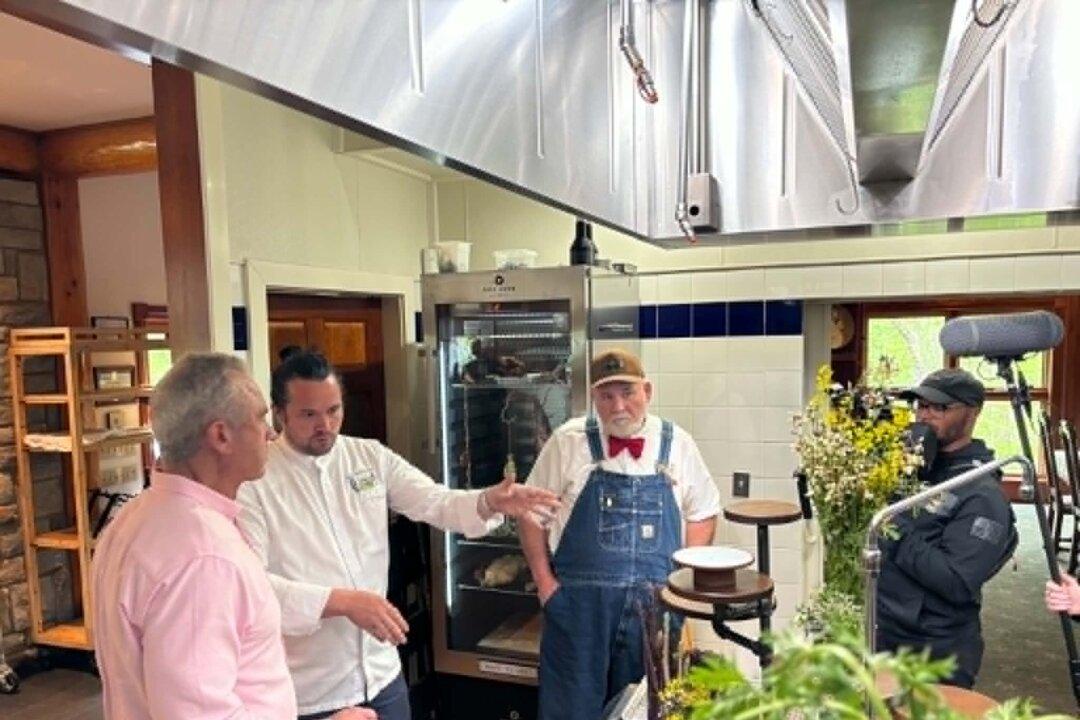
“We produce so much abundance, but we also have a nutrition problem because, for the first time in history, we have obesity and malnutrition occurring in the same people,” Kennedy said.
“Helping farmers grow healthy food is a way to help reverse the chronic disease epidemic.”
Farmers want to reduce chemical inputs, Kennedy said.
“We spoke to over 100 farmers and farm organizations when we were developing the MAHA Report, and what we have frequently heard is that they want to get away from pesticides because they know those chemicals are destroying their soil,” Kennedy said.
“They know it’s making them sick, and many of their products cannot be sold in other countries because they use the pesticides or herbicides.
“Farmers are losing money, and we’ve got to keep them in business while also providing real off-ramps for them to figure out how to transition to less chemically intensive agriculture,” he added.
“It’s important to visit farms like this where they’re making money and dramatically reducing the use of chemical inputs.”
There are parallels between soil microbiomes and the human gut, Bob Jones said.
Researchers at The Chef’s Garden have discovered that degraded soil biology produces plants that are calorie-rich but nutrient-poor.
The produce supplies a food system that prioritizes shelf life and appearance over nutrient density, Lee Jones noted.
“As a result, people are pushed toward cheap, highly processed calories that significantly contribute to chronic diseases,” Bob Jones said.
The Chef’s Garden’s story of resilience features a once-thriving 1,200 acre operation devastated by a hailstorm and a public auction followed by a resurrection on six acres that eventually led to a profitable niche centered on stewardship of the land.
Bob Jones Sr. sold his Lyman boat as a high school junior to buy his first tractor in 1958, laying the foundation for what would become The Chef’s Garden.
He married his middle school sweetheart, Barb, in 1959. Together, they built an operation that grew to 1,200 acres by the early 1980s selling high-volume produce to Kroger, A&P, Big Bear, and other grocery store giants.
The family’s fortunes changed in 1982 when they encountered what Bob Jones calls a perfect storm—soaring interest rates, competition from larger commercial farms, and a hailstorm that wiped out more than 1,000 acres of crops.
Lee Jones, now the family’s elder, was 19 at the time. The man who is known for only wearing overalls, a white shirt, and a bow tie recalled the “heart-wrenching feeling” when the farm was auctioned.

“I stood and watched 20-plus years of my parents work go away in one day, including our house and our mother’s car, and all the equipment,” he said.
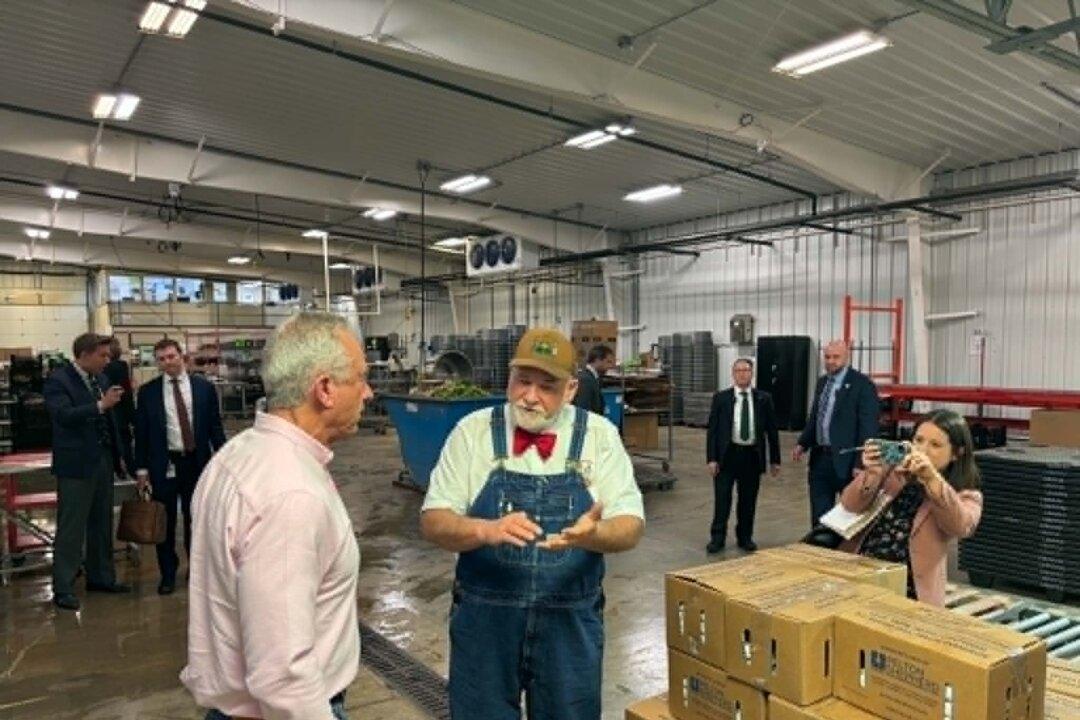
The family lost “just about everything,” Lee Jones said. Determined to rebuild, they rented six acres of nearby land and started over.
Along with the land, the family had an old Jeep and a small farmhouse with a leaking roof. They sold their produce at farmers’ markets, which were sparse in numbers at the time.
They had no choice, he recalled, but to grow for flavor and not volume, and grow without chemicals to conserve on costs.
“You know, we were too stupid to know we couldn’t start over. So we did,” Lee Jones said with a laugh.
In 1984, Lee Jones met chef and future food columnist Iris Bailin, who wanted squash blossoms instead of standard produce. This inspired The Chef’s Garden to shift the farm’s focus from yield-driven commodity crops to chef-specific produce.
“She encouraged us to focus on flavor. Do it without chemicals and grow it the right way,” Lee Jones said. “It was a risk, but we had no choice. We needed a profitable niche.”
Bob Jones describes regenerative agriculture as a group of practices focused on rebuilding soil biology and reducing dependence on synthetic inputs. This includes multi‑species cover crops, more diverse rotations, reduced tillage, and a sharp reduction in pesticides and herbicides, he explained.
The Chef’s Garden cultivates more than 600 varieties of produce sourced from seeds across dozens of countries.
The farm’s signatures are microgreens, heirloom vegetables, specialty herbs, and edible flowers. Produce is harvested at its peak and is directly shipped to restaurants and consumers in all 50 states and several countries, Lee Jones noted.
Researchers at The Chef’s Garden’s lab test vegetables for vitamins, antioxidants, and mineral density.
They often discover higher nutrient values in crops grown under regenerative practices than USDA baselines, Bob Jones said.
Relationships with globally known chefs including Thomas Keller and Charlie Trotter pushed The Chef’s Garden deeper into specialty varieties.
Chefs started driving to the farm to buy food for their restaurants.
“We were taught by amazing culinarians about the food business. Most farmers don’t understand that they grow food. They’re in a commodity world where they have no direct connection to the end user,” Bob Jones said.
“There’s not a feedback loop, and they just don’t have that opportunity to hear directly from their customers about what their customers really want, and that immediate feedback loop is unbelievably valuable. It’s not always fun, but it is unbelievably valuable.”
“Chefs would say to us, well, you’re growing lettuce, so would you consider growing some tomatoes to go on the lettuce for salad. A few years later, it was ‘You’re growing lettuce, you’re growing tomatoes. How about basil, because I’d like to do a tomato mozzarella, basil salad?”
“‘Sure, we’ll grow basil,’ we said,” Jones added.

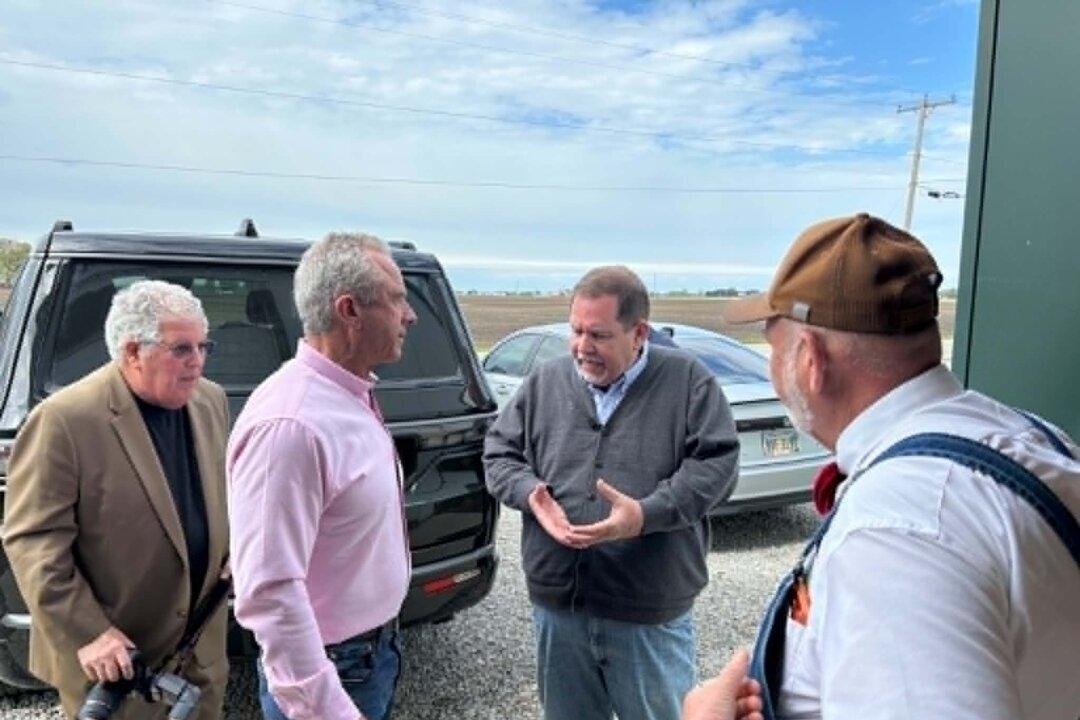
The majority of The Chef’s Garden’s 600 varieties of edible plants were added “because a chef requested it, and we figured out a way to grow it.”
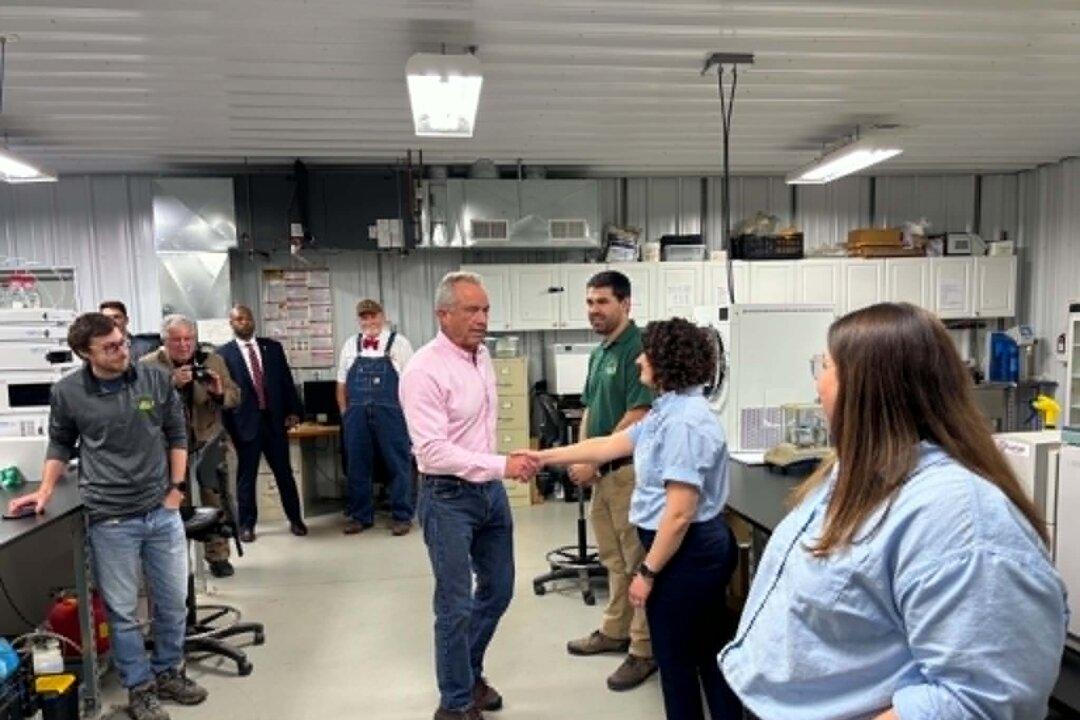
At the heart of the farm’s operation is a research lab that treats soil samples and vegetable samples.
Researchers use microbiome-focused tools to analyze soil biology and then places harvested vegetables through chemistry analyzers to measure antioxidants, mineral density, and nutrients.
As soil biology has improved, The Chef’s Garden has cut pesticide use by around 80 percent while maintaining quality and yield, Bob Jones said.
“For a number of years, chefs told us our produce looks better, tastes better, and lasts longer than anything else they can buy. Dad said we have to figure out why, so he built the lab,” Bob Jones said.
The first lab occupied the interior of an old semi-truck.
“He took the tires off, set it on the ground, and had a microscope and a germination chamber. The lab you see now was his second version. This is the equipment we use to test the finished products so we can verify how our practices are working, or if they are not working,” Jones said.
“We’re very fortunate because in the restaurant business and in the vegetable business specifically, we get to rotate the crop cycles often,” he added.
“Farmers who grow corn and beans will get 40 to 50 crop cycles if they stay in business for their entire life. With lettuce being a 12-week crop and some of the microgreens being a seven-week crop, we get 50 cycles a year. We discover our mistakes, and we learn a lot faster.”
Built by Bob Jones Sr. as a bridge between the field and the kitchen, and located around a mile from the farm, the Culinary Vegetable Institute offers feedback that most farmers never see.
The facility is an on‑site teaching kitchen and event space designed with input from an advisory board of chefs from around the country.
It serves as a hub where chefs cook with the farm’s produce, develop menus, train staff, and learn how ingredient quality and soil health translate to the plate.
Recovering from the 1980s hailstorm and public auction was not the only time The Chef’s Garden fought for survival.
Before the COVID-19 pandemic, restaurants represented around 90 percent of the farm’s sales. Within a few days, Bob Jones recalled, that market disappeared. Restaurants were shuttered. Orders ceased. Revenue dried up.
“It was another time we weren’t sure if we would make it,” Lee Jones said. “But we didn’t give up then, just as we didn’t give up all those years before.”
The company opened a roadside stand for the first time in four decades, Bob Jones said, called the Farmer Jones Farm Market.
The Chef’s Garden joined the USDA Farm to Families program, which provided fresh produce for emergency food channels.
The farm debuted subscription boxes and an online shop to reach consumers at home, offering fresh produce, heritage flours, and seasonal items year-round.
The Chef’s Garden has 168 “team members” with positions rooted in skilled work such as agronomy, research, culinary education, logistics, and packing compared to the seasonal, lower-wage labor that defines much of industrial agriculture, Bob Jones explained.
Through solar energy, the farm generates roughly 70 percent of its annual electricity.
In 2025, the United States lost around 15,000 farms, according to the USDA.
Small and mid-sized operations are squeezed by input costs and corporate consolidation, Bob Jones said. Costs of synthetic fertilizers and herbicides such as glyphosate have soared while commodity prices remain flat.
The Chef’s Garden keeps thriving by operating smaller and smarter, he added.
“We happen to believe, and many others believe, that regenerative agriculture can be that tide that raises all ships,” Bob Jones said.
“The healthier soil becomes, the healthier the plants become. The healthier the plants become, the healthier people become. It’s just that simple.”
On Aug. 4, 2020—amid the COVID pandemic—the Jones family experienced “a full circle moment,” Lee Jones said.
They purchased the farmhouse and 60 of the acres they lost back in the early 1980s on the day Bob Jones Sr. died.
“It’s not a rags‑to‑riches story, but I think it is a lesson in fortitude,” Bob Jones said about his family’s journey.
Bob and Lee Jones talk about their family’s faith in God, and they have comfort knowing that the farm “will continue beyond our lives.”
The Chef’s Garden is a multi-generational family operation. Barb, the matriarch, still frequents the farm. Lee Jones’s son, and Bob Jones’s son, daughter-in-law, and daughter are involved, as are a niece and her husband.

“Someone told me several years ago that the best way to understand regenerative agriculture is when you understand that you didn’t inherit the land from your grandparents. You’re borrowing it from your grandchildren,” Bob Jones said.
“It’s about stewardship. Leave it better than you found it.”

Two Storms, One Harvest

Every food crisis in living memory has been a one-shock event. The 2008 price spike was a commodity bubble. The 2020 shortages were a logistics failure. The 2022 grain scare was a war on one exporter’s ports. Each time, the system bent, adjusted, and recovered, and each time the experts assured us afterward that global markets are simply too big and too diversified to fail.
What nobody in Washington seems eager to discuss is that 2026 is shaping up to be something the modern food system has never actually faced. Two independent shocks, one climatic and one geopolitical, are converging on the same harvest cycle at the same time. Not sequentially. Simultaneously.
Start with the weather. The Pacific Ocean is currently building toward what forecasters now openly call a record event. NOAA’s Climate Prediction Center puts the odds of at least a strong El Niño near 88 percent, with roughly two in three odds it reaches “very strong” status, the tier reserved for perhaps three or four events in the entire satellite era. Every major global model now projects a median peak in Super El Niño territory, and most of them project it exceeding the 2015-16 event, which until now held the modern record. Sea surface anomalies were already brushing the super threshold in mid-July, months before these events normally peak. The atmosphere has already shifted into El Niño mode, and the event is forecast to crest in late fall and early winter.
This is not about “climate change.” It’s about the standard cycles of weather, and the cycle we’re currently in is one that has likely devastated societies in the past. We’re better prepared as a society today, but not all Americans are equally prepared.
Serious households have started doing the quiet math on their own. Grocery bills tell part of the story, and the forecast maps tell the rest, which is why long-term food storage has moved from fringe hobby to mainstream line item in the family budget, with established suppliers like Heaven’s Harvest seeing demand from people who five years ago would have rolled their eyes at the idea. That instinct is not paranoia. It is pattern recognition, and the pattern is worth walking through carefully.
Editor’s Note: Heaven’s Harvest IS a sponsor, but the warnings of this article are real and would be written even if we didn’t have a survival food sponsor. With that said, those who take advantage of what they offer can use promo code “Patriot” for 15% off.
The Fertilizer Clock Is Already Running
While the Pacific warms, the second shock has been unfolding in the Strait of Hormuz. The conflict with Iran turned the world’s most important energy chokepoint into a contested waterway, and the consequences reach far beyond the gas pump. Roughly a third of global fertilizer trade moves through Hormuz, and the disruption sent urea prices up 86 percent year over year by March, with a 53 percent jump in a single month.
The World Bank projects energy prices rising about 24 percent in 2026 and fertilizer about 31 percent. By its own accounting, fertilizer prices ran 35 percent higher in the first five months of this year than the same period last year.
Here is the mechanism the nightly news will not explain. Fertilizer is not a grocery item. It is a time-delayed input. The nitrogen a farmer in Iowa or Punjab could not afford to apply this spring does not show up as a problem this spring. It shows up as a thinner harvest six to twelve months later.
The World Bank’s own food security brief concedes that the effects of reduced applications earlier this season “are likely to become visible only later in harvest outcomes.” Translate that from institutional language into plain English and it means this. The damage is already done, it is already in the ground, and we are simply waiting for it to arrive on the shelf.
Now check the calendar. Six to twelve months from the spring planting season lands us squarely in late 2026 and early 2027. Which is precisely when the strongest El Niño in the instrumental record is forecast to peak, bringing its signature droughts to Southeast Asia, Australia, southern Africa, northern Brazil, and South Asia, the very regions that grow the world’s rice, sugar, and oilseeds.
The World Bank warns openly that a strong El Niño “could disrupt multiple crop belts simultaneously” on top of the conflict-driven input costs. Their baseline projection assumes the Middle East disruptions ease by autumn. What in the last two years of Middle East history suggests that assumption is safe?
The System Has No Slack Left
The comfortable answer is that global markets always adjust. But adjustment requires slack, and the slack is gone. Global cereal production is expected to decline from last year’s records even before El Niño does its work. The UN World Food Programme, hardly a den of right-wing preppers, is calling this the most significant disruption to its supply chains since Covid and the invasion of Ukraine, and its supply chain director put the stakes bluntly.
Today’s supply chain challenges are tomorrow’s hunger crisis.
There is also a political dimension that markets cannot price. When food gets scarce, governments do not behave like economists. They behave like politicians. Export bans, hoarding mandates, and panic buying at the national level turned the modest rice shortfall of 2008 into a global crisis, and analysts are already warning that import-dependent nations are the first dominoes.
The 2015-16 Super El Niño, a far weaker event than what is now forecast, threw tens of millions into food stress across Africa and Asia. This one is projected to be stronger, and it arrives with fertilizer already rationed by price and shipping lanes already contested by missiles.
What Joseph Knew
Scripture does not treat preparation for lean years as faithlessness. It treats it as wisdom delivered in advance to those willing to act on it.
Behold, there come seven years of great plenty throughout all the land of Egypt: And there shall arise after them seven years of famine; and all the plenty shall be forgotten in the land of Egypt.
Joseph did not respond to that warning with a hashtag or a committee. He stored grain during the years of abundance, and when the famine came, Egypt stood while its neighbors begged. The lesson is not that famine is certain. It is that the time to prepare is precisely when preparation still looks optional.
Nobody who filled a pantry in a year of plenty has ever regretted it, and nobody standing in an empty aisle has ever been glad he waited for certainty.
None of this calls for panic, and panic is the enemy of sound judgment anyway. It calls for the same unglamorous prudence our grandparents considered ordinary. Keep some cash margin, know your local growers, and put real food in deep storage while it is cheap and available, because the entire arc of this story is that cheap and available is a closing window.
Families looking for a straightforward place to start can visit Heaven’s Harvest and use promo code Patriot for 15 percent off long-term storable food. The forecasts may yet soften, the strait may yet reopen, and we should pray they do. But hope is a fine thing to hold and a foolish thing to eat.
