

STORY AT-A-GLANCE
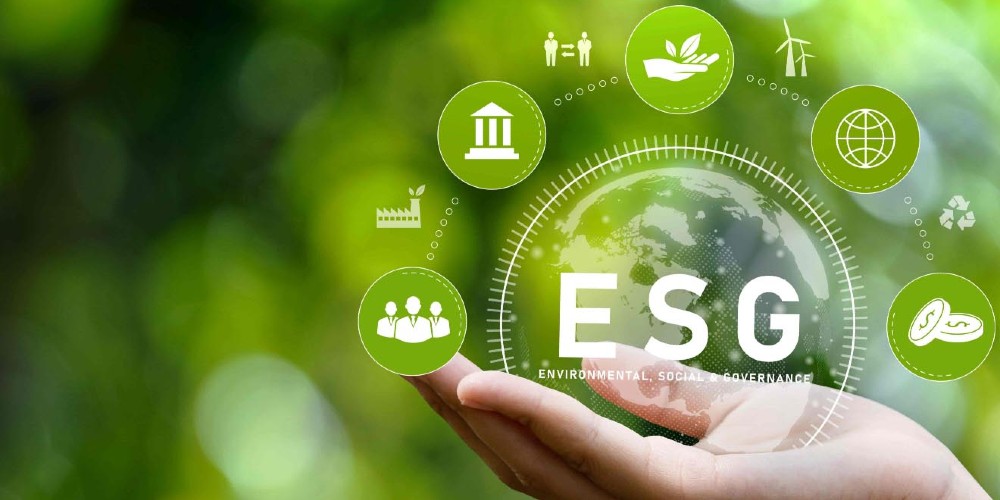
- ESG, or environmental, social and governance, funds are supposed to be those focused on companies with strong environmental ethics and responsibility
- Further investigation reveals rampant greenwashing has occurred, and many ESG-labeled funds are far from “sustainable”
- The SEC is investigating Goldman Sachs overs its ESG funds, including whether the bank’s management of ESG funds differs from what it has disclosed to investors
- In May 2022, electric vehicle manufacturer Tesla was removed from the S&P 500 ESG Index, despite its focus on creating environmentally conscious vehicles
- Tesla’s CEO Elon Musk tweeted in response that ESG is a scam, considering Exxon Mobil is still listed in the S&P 500 ESG Index top 10
Pouncing on investors’ interest in environmentally friendly, sustainable investing, the S&P 500 ESG Index was launched in 2019.1 ESG, or environmental, social and governance, funds are supposed to be those focused on companies with strong environmental ethics and responsibility, but further investigation reveals rampant greenwashing has occurred, and many ESG-labeled funds are far from “sustainable.”
The Securities and Exchange Commission (SEC) has been scrutinizing ESG funds for years, as their popularity soared. While funds focused on socially responsible investing were valued at $2.83 billion in 2015, this grew to $17.67 billion by 2019, when Alex Bernhardt, U.S. head of responsible investments at investment consultant Mercer, told The Wall Street Journal, “In every asset class, in every region, ESG product development is the thing right now.”2
Fast-forward to 2022, and the SEC is cracking down on ESG labels, with multiple investigations launched into ESG greenwashing on Wall Street by multiple mega-banks. Globally, $41 trillion are expected to flow into ESG funds in 2022.3
Murky Guidelines Mire ESG Label Credibility
A glaring problem with ESG labels is the lack of regulations that define what qualifies as a company that’s environmentally or socially responsible. In 2019, the SEC began sending letters to asset managers asking for what models were used to determine ESG investments.
In 2019, Betty Moy Huber, co-head of law firm Davis Polk & Wardwell LLP’s environmental, social and corporate governance group, told The Wall Street Journal, “This is a relatively new area. Now the SEC is saying, ‘Wait, how do you know these are ESG products and that you don’t have a fossil fuel company with known, poor ESG performance in there?’”4
S&P and MSCI have established their own ratings system for ESG labels, with controversial methodologies. For instance, ESG funds may hold up to 20% of their shares in non-ESG stocks, such that “fossil fuel-free” funds may actually hold fossil fuel companies.5
“As a result, many “ESG” funds still hold major emitters like ExxonMobil, and are only marginally less carbon-intensive than the market average,” Quartz reported.6 It wasn’t until May 2022 that the SEC announced plans to develop stricter standards for ESG labels.7
SEC Goes After Goldman Sachs
After an investigation into greenwashing by Deutsche Bank in 2021 — that led to a raid of the bank’s offices in Germany by German authorities8 — and a $1.5 million fine to BNY Mellon for “misstatements and omissions about ESG considerations,” the SEC is now going after Goldman Sachs.
In the BNY Mellon case, one ESG fund included 185 investments, 67 of which had no ESG-quality score when the security was purchased, but shareholders were told its strategy included “identifying and considering the environmental, social and governance risks, opportunities and issues throughout the research process.”9 But in the case of Goldman, as reported by Quartz:10
“The Goldman investigation is focused on mutual funds. Because there is no legal standard for ESG definitions, the SEC will determine whether the bank’s actual methods for managing ESG funds differ from what it has disclosed to investors, not whether the funds are really green or not.”
Goldman manages at least four ESG or “clean energy” funds and renamed its Blue Chip Fund the U.S. Equity ESG Fund in June 2020. According to The Wall Street Journal:11
“Goldman says in regulatory documents that its ESG fund aims to keep 80% of its net assets in stocks issued by companies that meet the fund manager’s criteria. They exclude companies that earn most of their revenue from selling alcohol, tobacco, weapons, coal, oil and gas, and some other products.
Goldman says holdings in the U.S. Equity ESG Fund undergo an ESG analysis but reserves the right to invest in some companies without such a screening. It can also invest up to 20% of its net assets in stocks that deviate from its ESG standards.”
When the SEC first began scrutinizing ESG labels, it was done via compliance examiners, who would forward any concerns to SEC enforcement attorneys. An SEC enforcement task force was launched in 2021 to further investigate greenwashing related to ESG investing products, and the Goldman investigation could result in formal enforcement action.12
‘The World’s Largest Ponzi Scheme’
BlackRock founder and CEO Larry Fink, who has close ties to the World Economic Forum’s (WEF) head Klaus Schwab, and joined WEF’s board in 2019, stated in October 2021, “Short-term policies related to environmentalism in terms of restricting supply of hydrocarbons has created energy inflation, and we’re going to be living with that for some time … We’re in a new regime.”13
On Twitter, Russ Greene wrote, “ESG advocates have sought to portray as a conspiracy theory the link between ESG and higher oil and gas prices, but if so it’s one that’s shared by many of the most successful figures in finance, including ESG investors,” referring to Blackstone cofounder, billionaire Steve Schwarzman, who has said that a focus on ESG is “driving a credit crunch for oil and gas companies.”14
However, investment firm BlackRock has more power than most governments on Earth, and it also controls the Federal Reserve, mega-banks like Goldman Sachs and the WEF’s Great Reset, according to F. William Engdahl, a strategic risk consultant and lecturer who holds a degree in politics from Princeton University.15
BlackRock also has ties to Blackstone — the largest landlord in the U.S. as well as the largest real estate company worldwide, with a portfolio worth $325 billion16 — as Schwarzman and Fink started out in business together.17 BlackRock, Engdahl believes, may control the world’s economic future, in part via ESG investing:18
“Fink … now stands positioned to use the huge weight of BlackRock to create what is potentially, if it doesn’t collapse before, the world’s largest Ponzi scam, ESG [Environment, Social values and Governance] corporate investing. Fink with $9 trillion to leverage is pushing the greatest shift of capital in history into a scam known as ESG Investing.
The UN ‘sustainable economy’ agenda is being realized quietly by the very same global banks which have created the financial crises in 2008. This time they are preparing the Klaus Schwab WEF Great Reset by steering hundreds of billions and soon trillions in investment to their hand-picked ‘woke’ companies, and away from the ‘not woke’ such as oil and gas companies or coal.
BlackRock since 2018 has been in the forefront to create a new investment infrastructure that picks “winners” or “losers” for investment according to how serious that company is about ESG — Environment, Social values and Governance.
For example a company gets positive ratings for the seriousness of its hiring gender diverse management and employees, or takes measures to eliminate their carbon “footprint” by making their energy sources green or sustainable to use the UN term.
How corporations contribute to a global sustainable governance is the most vague of the ESG, and could include anything from corporate donations to Black Lives Matter to supporting UN agencies such as WHO.
… Oil companies like ExxonMobil or coal companies no matter how clear are doomed as Fink and friends now promote their financial Great Reset or Green New Deal.”
Elon Musk Calls ESG a ‘Scam’
In May 2022, electric vehicle manufacturer Tesla was removed from the S&P 500 ESG Index, despite its focus on creating environmentally conscious vehicles. Incidents of racial discrimination at a company factory were cited as one factor in its removal, and Tesla was said to be “ineligible for index inclusion due to its low S&P DJI ESG Score, which fell in the bottom 25% of its global GICS® industry group peers.”19
Tesla’s CEO Elon Musk tweeted in response “@SPGlobalRatings has lost their integrity [sic],” considering Exxon Mobil is still listed in the S&P 500 ESG Index top 10.20 Musk tweeted:21
“Exxon is rated top ten best in world for environment, social & governance (ESG) by S&P 500, while Tesla didn’t make the list! ESG is a scam. It has been weaponized by phony social justice warriors.”
What’s more, TIME reported, “According to Bloomberg, the world’s largest ESG-focused exchange-traded fund has almost invested 3.1% of its assets in the oil and gas sector …”22
A New System of Control Via Allocation of Resources
ESG is one tactic being used to push the “green” agenda forward. While the notion of a pollution-free world is an attractive one, ultimately this isn’t about the environment — it’s all about creating a control system in which the world’s resources are owned by the richest of the rich, while the rest of the population can be controlled through the allocation of those resources, including energy. As explained in an anonymous Winter Oak article:23
“Under such an economic construct, asset holding conglomerates can redirect the flow of global capital by aligning investments with the UN’s SDGs [sustainable development goals] and configuring them as Environmental, Social, and Corporate Governance (ESG) compliant so that new international markets can be built on the disaster and misery of potentially hundreds of millions of people reeling from the economic collapse caused by war.
Therefore, the war offers a huge impetus for the governments pushing the reset to actively pursue energy independence, shape markets towards ‘green and inclusive growth’ and eventually move populations towards a cap-and-trade system, otherwise known as a carbon credit economy.
This will centralize power in the hands of stakeholder capitalists under the benevolent guise of reinventing capitalism through fairer and greener means, using deceptive slogans like ‘Build Back Better’ without sacrificing the perpetual growth imperative of capitalism.”
The WEF also discusses ESG as part of its “sustainable” resource-based economic system:24
“Digital finance refers to the integration of big data, artificial intelligence (AI), mobile platforms, blockchain and the Internet of things (IoT) in the provision of financial services. Sustainable finance refers to financial services integrating environmental, social and governance (ESG) criteria into the business or investment decisions.
When combined, sustainable digital finance can take advantage of emerging technologies to analyze data, power investment decisions and grow jobs in sectors supporting a transition to a low-carbon economy.”
But it’s important to be aware of the downside of reliance on suspect labels like ESG, which could ultimately tie large parts of the global population, including small farmers, to a new form of data slavery. According to one of Navdanya’s reports:25
“A global ‘seal’ of approval based on fake science, fake economics of maximizing profits through extraction will create new data slavery for farmers. Instead of using their own heads and cocreating with the Earth, they will be forced to buy ‘Big Data.’ Instead of obeying the laws of Mother Earth, they will be forced to obey algorithms created by Big Tech and Big Ag.”
- 1, 20, 22 TIME May 25, 2022
- 2, 4 The Wall Street Journal December 16, 2019
- 3, 6, 7, 10 Quartz June 13, 2022
- 5 Quartz May 26, 2022
- 8, 9, 11, 12 The Wall Street Journal June 10, 2022
- 13, 14 Twitter, Russ Greene June 10, 2022
- 15, 18 WilliamEngdahl.com June 18, 2021
- 16 ZeroHedge June 22, 2021
- 17 Yahoo Finance June 22, 2017
- 19 S&P Dow Jones Indices May 17, 2022
- 21 Twitter, Elon Musk May 18, 2022
- 23 Winter Oak March 9, 2022
- 24 World Economic Forum, Sustainable Digital Finance Can Unlock a Low-Carbon Economy
- 25 Navdanya
Two Storms, One Harvest

Every food crisis in living memory has been a one-shock event. The 2008 price spike was a commodity bubble. The 2020 shortages were a logistics failure. The 2022 grain scare was a war on one exporter’s ports. Each time, the system bent, adjusted, and recovered, and each time the experts assured us afterward that global markets are simply too big and too diversified to fail.
What nobody in Washington seems eager to discuss is that 2026 is shaping up to be something the modern food system has never actually faced. Two independent shocks, one climatic and one geopolitical, are converging on the same harvest cycle at the same time. Not sequentially. Simultaneously.
Start with the weather. The Pacific Ocean is currently building toward what forecasters now openly call a record event. NOAA’s Climate Prediction Center puts the odds of at least a strong El Niño near 88 percent, with roughly two in three odds it reaches “very strong” status, the tier reserved for perhaps three or four events in the entire satellite era. Every major global model now projects a median peak in Super El Niño territory, and most of them project it exceeding the 2015-16 event, which until now held the modern record. Sea surface anomalies were already brushing the super threshold in mid-July, months before these events normally peak. The atmosphere has already shifted into El Niño mode, and the event is forecast to crest in late fall and early winter.
This is not about “climate change.” It’s about the standard cycles of weather, and the cycle we’re currently in is one that has likely devastated societies in the past. We’re better prepared as a society today, but not all Americans are equally prepared.
Serious households have started doing the quiet math on their own. Grocery bills tell part of the story, and the forecast maps tell the rest, which is why long-term food storage has moved from fringe hobby to mainstream line item in the family budget, with established suppliers like Heaven’s Harvest seeing demand from people who five years ago would have rolled their eyes at the idea. That instinct is not paranoia. It is pattern recognition, and the pattern is worth walking through carefully.
Editor’s Note: Heaven’s Harvest IS a sponsor, but the warnings of this article are real and would be written even if we didn’t have a survival food sponsor. With that said, those who take advantage of what they offer can use promo code “Patriot” for 15% off.
The Fertilizer Clock Is Already Running
While the Pacific warms, the second shock has been unfolding in the Strait of Hormuz. The conflict with Iran turned the world’s most important energy chokepoint into a contested waterway, and the consequences reach far beyond the gas pump. Roughly a third of global fertilizer trade moves through Hormuz, and the disruption sent urea prices up 86 percent year over year by March, with a 53 percent jump in a single month.
The World Bank projects energy prices rising about 24 percent in 2026 and fertilizer about 31 percent. By its own accounting, fertilizer prices ran 35 percent higher in the first five months of this year than the same period last year.
Here is the mechanism the nightly news will not explain. Fertilizer is not a grocery item. It is a time-delayed input. The nitrogen a farmer in Iowa or Punjab could not afford to apply this spring does not show up as a problem this spring. It shows up as a thinner harvest six to twelve months later.
The World Bank’s own food security brief concedes that the effects of reduced applications earlier this season “are likely to become visible only later in harvest outcomes.” Translate that from institutional language into plain English and it means this. The damage is already done, it is already in the ground, and we are simply waiting for it to arrive on the shelf.
Now check the calendar. Six to twelve months from the spring planting season lands us squarely in late 2026 and early 2027. Which is precisely when the strongest El Niño in the instrumental record is forecast to peak, bringing its signature droughts to Southeast Asia, Australia, southern Africa, northern Brazil, and South Asia, the very regions that grow the world’s rice, sugar, and oilseeds.
The World Bank warns openly that a strong El Niño “could disrupt multiple crop belts simultaneously” on top of the conflict-driven input costs. Their baseline projection assumes the Middle East disruptions ease by autumn. What in the last two years of Middle East history suggests that assumption is safe?
The System Has No Slack Left
The comfortable answer is that global markets always adjust. But adjustment requires slack, and the slack is gone. Global cereal production is expected to decline from last year’s records even before El Niño does its work. The UN World Food Programme, hardly a den of right-wing preppers, is calling this the most significant disruption to its supply chains since Covid and the invasion of Ukraine, and its supply chain director put the stakes bluntly.
Today’s supply chain challenges are tomorrow’s hunger crisis.
There is also a political dimension that markets cannot price. When food gets scarce, governments do not behave like economists. They behave like politicians. Export bans, hoarding mandates, and panic buying at the national level turned the modest rice shortfall of 2008 into a global crisis, and analysts are already warning that import-dependent nations are the first dominoes.
The 2015-16 Super El Niño, a far weaker event than what is now forecast, threw tens of millions into food stress across Africa and Asia. This one is projected to be stronger, and it arrives with fertilizer already rationed by price and shipping lanes already contested by missiles.
What Joseph Knew
Scripture does not treat preparation for lean years as faithlessness. It treats it as wisdom delivered in advance to those willing to act on it.
Behold, there come seven years of great plenty throughout all the land of Egypt: And there shall arise after them seven years of famine; and all the plenty shall be forgotten in the land of Egypt.
Joseph did not respond to that warning with a hashtag or a committee. He stored grain during the years of abundance, and when the famine came, Egypt stood while its neighbors begged. The lesson is not that famine is certain. It is that the time to prepare is precisely when preparation still looks optional.
Nobody who filled a pantry in a year of plenty has ever regretted it, and nobody standing in an empty aisle has ever been glad he waited for certainty.
None of this calls for panic, and panic is the enemy of sound judgment anyway. It calls for the same unglamorous prudence our grandparents considered ordinary. Keep some cash margin, know your local growers, and put real food in deep storage while it is cheap and available, because the entire arc of this story is that cheap and available is a closing window.
Families looking for a straightforward place to start can visit Heaven’s Harvest and use promo code Patriot for 15 percent off long-term storable food. The forecasts may yet soften, the strait may yet reopen, and we should pray they do. But hope is a fine thing to hold and a foolish thing to eat.


Black Rock needs to be broken up by regulators. Black Rock put 3 directors on the board of 12 at Exxon while owning only 10% of the stock. Their mission is to turn Exxon into an “energy” company which likely means Exxon will start making windmills and lithium ion batteries. The problem with that as an investor, I want to own an OIL company. If I want to own windmills, there are shares of windmill companies available.
I they think I will willingly go to my grave of starvation because “they” want some New Green Deal” idiocy they can go “F”uque” themselves. Just wait you sick POS. When TSHTF we will come after you with fire in our eyes, and I’ll guarantee you, you won’t like the outcome.