

When I was a child, I stumbled upon philosophy through a tummy ache. I had eaten too much or run around too hard and found myself feeling miserable outside on a hot summer day. While I was in my own private agony, I remember thinking, “I’ll never take all the hours I’ve spent without stomach pains for granted again.” And I never did. Sometimes when other childhood problems had me down, I’d think, “Well, at least you don’t have a stomachache,” and I’d nod in agreement to the voice in my head. I learned to appreciate something simple — living without pain. Yet I also remember wondering, “Did I really have to go through that momentary misery just to appreciate normal existence?” I think the answer is “yes.”
No matter how effectively my parents warned me about running hard right after eating a big meal, I do not think I would have learned the lesson without some painful experience driving the message home. That epiphany, I realized, was bigger than a stomachache. There was a fine line between painful consequences I could imagine and painful consequences that, for whatever reason, I had to experience firsthand. Too often, in fact, I correctly imagined painful consequences in life and still insisted on experiencing them personally just to make sure they lived up to the hype in my head. What can I say? We humans are a strange lot.
Looking around today at this rumbling, raging contest between individual freedom and State-imposed control has me pondering that early childhood memory once again. Can people imagine the costs of securing freedom without having to endure its attendant struggles? Or is it necessary, from time to time, for some contingent of humanity to suffer through tyranny just so that it might subsequently fight for personal liberation? “Freedom isn’t free.” It’s a great bumper sticker, a message of sublime truth. Do most people actually understand it, though, if they haven’t become personally acquainted with its painful meaning? Or must they first lose what they were freely given before learning why liberty is so dear? The past two years of COVID-1984 madness and Western governments’ increasing obsession with “climate change” fear porn necessitating today’s food and fuel rationing suggest an obvious, if dispiriting, answer.
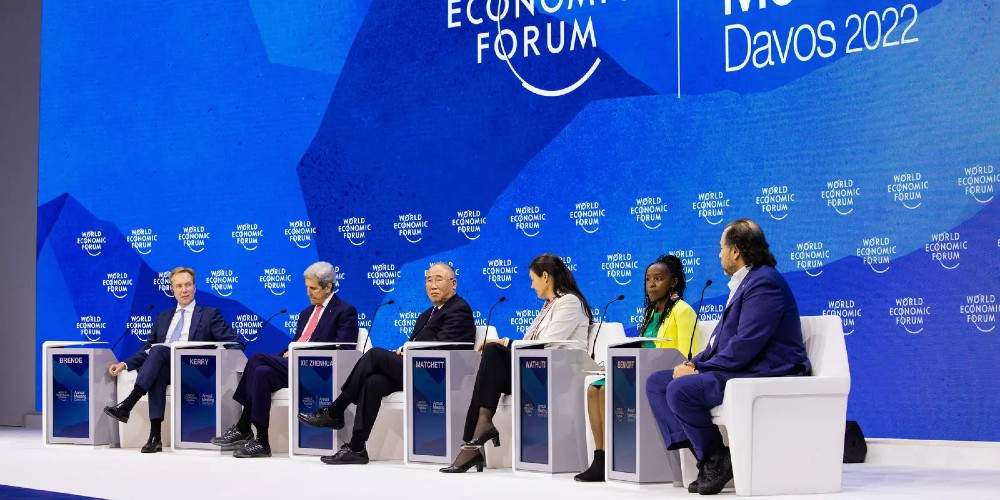
If Americans required a State-sanctioned stomachache to remind them of freedom’s natural bounties, they have certainly suffered the mother of all ipecac remedies. As frustratingly difficult as it is to watch American politicians befoul the land with their Green New Deal communism and allegiance to the World Economic Forum’s New World Order, their attacks on Americans’ freedoms are simultaneously stirring in the collective American consciousness an equal and opposite effect that might not have previously been possible. Until experiencing a pandemic police state that arbitrarily shut down lives and livelihoods at the whims of cynical and calculating bureaucrats, too many Americans put their faith in the government’s shameless cult of expertise. Before the DOJ and FBI openly targeted fed up parents who objected to public schools’ abhorrently racist and sexualized curricula, most had no understanding of the Marxists’ pervasive indoctrination of their young children. Before Congress’s J-6 Soviet show trials and the Deep State’s years of criminal persecution against Donald Trump and his voters, conservatives gave the federal government’s institutions entirely too much blind deference.
Only when the U.S. government accused half the American population of being “domestic terrorists” for their political beliefs did many finally understand how dangerous the national security surveillance state had become. Only when it became clear that Big Tech and Big Government were actively working together to censor Americans’ free speech and punish certain points of view did many finally grasp how serious the threats to liberty now are. Like some weary beast waking up from a deep slumber, the American people have begun stretching, looking around, and rejecting a lot of what they see. A growing contingent even realize that the freedoms they hold most dear have been under attack for quite some time.
Now, I wish that none of this discomfort were necessary in the struggle for human liberty. I wish most people would permit history to be such a stinging reminder of how difficult it is to achieve and maintain freedom that they would never carelessly let it slip from their grasp. I wish that humans were impervious to smooth-talking politicians who promise gifts in exchange for servitude. I wish that Memorial Day, Veterans’ Day, and Independence Day were sufficient to remind those who have benefited from the comforts of freedom without risking anything for its blessings not to throw away carelessly what they have yet to defend. Alas, it does seem as if human nature demands a little self-inflicted misery from time to time so that those who have not suffered can learn the costs of ensuring that liberty lasts.
The battles taking shape today, after all, involve nothing less than what it means to be human. On one side sit the oligarchs, communists, and New World Order globalist types who think of human beings as nothing more than cogs or inputs to be used, manipulated, and discarded. On the other side are those of us who understand life and liberty as precious, sacred gifts that deserve enduring respect. The Great Resetters and Build Back Better enthusiasts see people as digital ones and zeroes that can be made to obey society’s programming codes. Friends of freedom, on the other hand, understand both free will and moral intuition as the hallmarks of human existence. Communism and its global government derivatives seek to deny individual choice. Liberty-lovers know that without individual choice, there can be no real life.
These two starkly different visions for the future are easy to understand. Nobody could mistake State control for individual rights. Nobody could mistake the “Great Reset” as having anything to do with free will. However, perhaps only the World Economic Forum’s threats against Westerners’ self-determination could awaken Americans to exactly what’s at stake. Perhaps only the emerging pain of totalitarianism could prove why freedom isn’t free but always worth the fight. Perhaps only the agony of liberty lost could remind Americans why liberty is theirs by right.

Two Storms, One Harvest

Every food crisis in living memory has been a one-shock event. The 2008 price spike was a commodity bubble. The 2020 shortages were a logistics failure. The 2022 grain scare was a war on one exporter’s ports. Each time, the system bent, adjusted, and recovered, and each time the experts assured us afterward that global markets are simply too big and too diversified to fail.
What nobody in Washington seems eager to discuss is that 2026 is shaping up to be something the modern food system has never actually faced. Two independent shocks, one climatic and one geopolitical, are converging on the same harvest cycle at the same time. Not sequentially. Simultaneously.
Start with the weather. The Pacific Ocean is currently building toward what forecasters now openly call a record event. NOAA’s Climate Prediction Center puts the odds of at least a strong El Niño near 88 percent, with roughly two in three odds it reaches “very strong” status, the tier reserved for perhaps three or four events in the entire satellite era. Every major global model now projects a median peak in Super El Niño territory, and most of them project it exceeding the 2015-16 event, which until now held the modern record. Sea surface anomalies were already brushing the super threshold in mid-July, months before these events normally peak. The atmosphere has already shifted into El Niño mode, and the event is forecast to crest in late fall and early winter.
This is not about “climate change.” It’s about the standard cycles of weather, and the cycle we’re currently in is one that has likely devastated societies in the past. We’re better prepared as a society today, but not all Americans are equally prepared.
Serious households have started doing the quiet math on their own. Grocery bills tell part of the story, and the forecast maps tell the rest, which is why long-term food storage has moved from fringe hobby to mainstream line item in the family budget, with established suppliers like Heaven’s Harvest seeing demand from people who five years ago would have rolled their eyes at the idea. That instinct is not paranoia. It is pattern recognition, and the pattern is worth walking through carefully.
Editor’s Note: Heaven’s Harvest IS a sponsor, but the warnings of this article are real and would be written even if we didn’t have a survival food sponsor. With that said, those who take advantage of what they offer can use promo code “Patriot” for 15% off.
The Fertilizer Clock Is Already Running
While the Pacific warms, the second shock has been unfolding in the Strait of Hormuz. The conflict with Iran turned the world’s most important energy chokepoint into a contested waterway, and the consequences reach far beyond the gas pump. Roughly a third of global fertilizer trade moves through Hormuz, and the disruption sent urea prices up 86 percent year over year by March, with a 53 percent jump in a single month.
The World Bank projects energy prices rising about 24 percent in 2026 and fertilizer about 31 percent. By its own accounting, fertilizer prices ran 35 percent higher in the first five months of this year than the same period last year.
Here is the mechanism the nightly news will not explain. Fertilizer is not a grocery item. It is a time-delayed input. The nitrogen a farmer in Iowa or Punjab could not afford to apply this spring does not show up as a problem this spring. It shows up as a thinner harvest six to twelve months later.
The World Bank’s own food security brief concedes that the effects of reduced applications earlier this season “are likely to become visible only later in harvest outcomes.” Translate that from institutional language into plain English and it means this. The damage is already done, it is already in the ground, and we are simply waiting for it to arrive on the shelf.
Now check the calendar. Six to twelve months from the spring planting season lands us squarely in late 2026 and early 2027. Which is precisely when the strongest El Niño in the instrumental record is forecast to peak, bringing its signature droughts to Southeast Asia, Australia, southern Africa, northern Brazil, and South Asia, the very regions that grow the world’s rice, sugar, and oilseeds.
The World Bank warns openly that a strong El Niño “could disrupt multiple crop belts simultaneously” on top of the conflict-driven input costs. Their baseline projection assumes the Middle East disruptions ease by autumn. What in the last two years of Middle East history suggests that assumption is safe?
The System Has No Slack Left
The comfortable answer is that global markets always adjust. But adjustment requires slack, and the slack is gone. Global cereal production is expected to decline from last year’s records even before El Niño does its work. The UN World Food Programme, hardly a den of right-wing preppers, is calling this the most significant disruption to its supply chains since Covid and the invasion of Ukraine, and its supply chain director put the stakes bluntly.
Today’s supply chain challenges are tomorrow’s hunger crisis.
There is also a political dimension that markets cannot price. When food gets scarce, governments do not behave like economists. They behave like politicians. Export bans, hoarding mandates, and panic buying at the national level turned the modest rice shortfall of 2008 into a global crisis, and analysts are already warning that import-dependent nations are the first dominoes.
The 2015-16 Super El Niño, a far weaker event than what is now forecast, threw tens of millions into food stress across Africa and Asia. This one is projected to be stronger, and it arrives with fertilizer already rationed by price and shipping lanes already contested by missiles.
What Joseph Knew
Scripture does not treat preparation for lean years as faithlessness. It treats it as wisdom delivered in advance to those willing to act on it.
Behold, there come seven years of great plenty throughout all the land of Egypt: And there shall arise after them seven years of famine; and all the plenty shall be forgotten in the land of Egypt.
Joseph did not respond to that warning with a hashtag or a committee. He stored grain during the years of abundance, and when the famine came, Egypt stood while its neighbors begged. The lesson is not that famine is certain. It is that the time to prepare is precisely when preparation still looks optional.
Nobody who filled a pantry in a year of plenty has ever regretted it, and nobody standing in an empty aisle has ever been glad he waited for certainty.
None of this calls for panic, and panic is the enemy of sound judgment anyway. It calls for the same unglamorous prudence our grandparents considered ordinary. Keep some cash margin, know your local growers, and put real food in deep storage while it is cheap and available, because the entire arc of this story is that cheap and available is a closing window.
Families looking for a straightforward place to start can visit Heaven’s Harvest and use promo code Patriot for 15 percent off long-term storable food. The forecasts may yet soften, the strait may yet reopen, and we should pray they do. But hope is a fine thing to hold and a foolish thing to eat.
